By Penny Langford

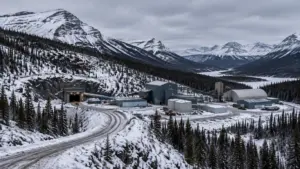
In the high-stakes world of critical minerals, the Skaergaard intrusion in East Greenland has long been viewed as a sleeping giant. Historically defined by its technical complexity and the sheer logistical wall of the High Arctic, the project is entering 2026 with a radically different profile. Under the stewardship of Greenland Mines Ltd (Nasdaq: GRML), Skaergaard is transitioning from a dormant geological curiosity into what leadership describes as an “active execution” phase.
The primary shift is one of scale and strategy. While earlier studies focused on a targeted underground operation, 2026 marks the year Greenland Mines evaluates a transition to a large-scale open-pit scenario. By leveraging modern ore-sorting technology and a unique "North Atlantic Critical Minerals Corridor" that links Greenlandic ore to Icelandic geothermal power, the project is positioning itself as a primary Western source for palladium, gold, and platinum.
The Geological Prize: $68 Billion in the Rock
The Skaergaard project is anchored by a massive NI 43-101 resource that ranks among the largest undeveloped precious metal systems outside of South Africa and Russia. As of February 2026, the gross, undiscounted in-situ value of the deposit is estimated at approximately US$68 billion.
This valuation is driven by a potent mix of palladium and gold. The current resource base includes roughly 17.15 million ounces of palladium and 6.83 million ounces of gold, with significant platinum upside. In the context of the current gold price forecast 2026, which sees sustained central bank demand and geopolitical hedging, the gold component alone provides a massive economic floor for the project.
| Resource Category | Tonnage (Mt) | PdEq (Moz) | AuEq (Moz) |
|---|---|---|---|
| Indicated | 159 | 11.4 | 10.5 |
| Inferred | 205 | 14.1 | 13.0 |
| Total | 364 | 25.5 | 23.5 |
| Source: Greenland Mines Ltd NI 43-101 Technical Report Data (2026 Update). |
Beyond the core precious metals, the company is also investigating by-product potential for vanadium, gallium, iron, and titanium: metals increasingly essential for the energy transition and defense sectors.


The 2026 Field Program: Moving to Active Execution
To validate the shift toward a massive open-pit operation, Greenland Mines has launched a comprehensive 2026 field and study program. This season is less about discovery and more about de-risking the engineering and permitting hurdles that have historically slowed Arctic projects.
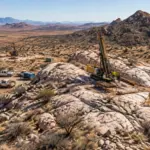
Key components of the 2026 program include:
- Resource Expansion Drilling: Focused on refining the geological model to support a wider, shallower pit shell.
- Bulk Sampling: A 30–50 tonne bulk sample is being extracted for detailed metallurgical test work with GTK Mintec in Finland.
- EIA Baseline with WSP Denmark: In March 2026, the company engaged WSP Denmark to implement a full Environmental Impact Assessment (EIA) baseline program. This data is critical for the exploitation license application targeted for late 2027.
The technical team has also been bolstered by the appointment of SLR Consulting as the Geological Consultant and Qualified Person, ensuring that the aggressive expansion of the resource meets strict international standards for transparency and accuracy.
The Open-Pit Pivot: Why Scale Matters Now
The move toward evaluating an open-pit mine marks a significant departure from the project's historical development path. By targeting a larger tonnage at a lower cutoff grade, Greenland Mines aims to maximize the throughput and capitalize on the massive scale of the Skaergaard intrusion.
Modern mining technology is the primary enabler here. Advanced ore sorting and sensor-based processing can now separate high-grade material from waste rock more efficiently than in previous decades. This reduces the volume of material that needs to be transported and processed, directly lowering the operational cost (OPEX) in a region where logistics are the single largest line item.
For investors tracking the top 50 mining companies 2026, Skaergaard represents a rare "pure play" on the Western supply of PGMs (Platinum Group Metals), which are currently dominated by jurisdictions with high geopolitical risk.

The North Atlantic Corridor: Iceland as the Green Engine
Perhaps the most innovative aspect of the Skaergaard 2026 strategy is the "North Atlantic Critical Minerals Corridor." Mining in the Arctic is notoriously energy-intensive, often relying on expensive, carbon-heavy diesel generators. Greenland Mines’ solution is to decouple the mining from the energy-heavy refining process.
The company has secured a First Right of Refusal over the Helguvík industrial complex in southwest Iceland. The plan involves pre-processing ore in East Greenland and then shipping the semi-upgraded concentrate 450 km across the water to Iceland.
The advantages of this hub-and-spoke model are compelling:
- Energy Costs: Industrial power in Iceland is available for approximately US$0.03/kWh via geothermal and hydropower, compared to US$0.20/kWh for diesel in Greenland.
- Carbon Profile: Using Iceland’s renewable grid allows the project to market its palladium and gold as some of the lowest-carbon precious metals in the world.
- Logistics: The Port of Helguvík is a deep-water harbor with existing industrial infrastructure, providing a ready-made gateway to European and North American markets.
This strategy mirrors recent moves in the rare earth supply chain, where companies are increasingly seeking to verticalize operations across friendly, low-cost jurisdictions to secure supply lines.

Geopolitics and the Western Supply Chain
The strategic importance of Skaergaard is not lost on European policymakers. In May 2026, Greenland Mines joined the European Raw Materials Alliance (ERMA). This membership aligns the project with EU efforts to reduce dependency on Russian palladium and Chinese-controlled critical mineral supply chains.
As the energy transition accelerates, the demand for PGMs in hydrogen fuel cells and industrial catalysts remains robust. By positioning Skaergaard as a "Western-aligned" asset, Greenland Mines is opening doors to institutional funding and policy support that were previously inaccessible to Arctic exploration plays.
2026 Outlook: The Path to "Mine-Ready"
As the 2026 field season progresses, the mining industry will be watching for the results of the bulk metallurgical tests and the refined pit-shell modeling. While the project remains in the pre-feasibility stage, the momentum is undeniable.
The risks, of course, remain significant. Arctic logistics are unforgiving, and the transition to an open-pit model requires a massive capital investment (CAPEX) that will test the company's financing capabilities. However, with an in-situ value nearing $70 billion and a low-carbon processing solution in Iceland, Skaergaard is no longer just a geological curiosity. It is a strategic imperative in the race for mineral sovereignty.
Social Media Snippet (LinkedIn/X):
Greenland’s Skaergaard project is entering a high-impact 2026. With a $68B in-situ valuation and a strategic pivot to open-pit scale, Greenland Mines Ltd (Nasdaq: GRML) is rewriting the playbook for Arctic PGM and gold extraction. From the 2026 drilling campaign to the innovative "North Atlantic Critical Minerals Corridor" using Icelandic geothermal power, the project is positioning itself as a cornerstone of Western supply security. Read the full analysis at Skillings Mining Intelligence. #Mining #Gold #Palladium #Greenland #CriticalMinerals #EnergyTransition