BUENOS AIRES : The Argentine federal government has introduced a comprehensive regulatory overhaul designed to accelerate permitting for lithium exploration and extraction in “frontier” basins, aiming to solidify the nation’s position as the world’s primary growth engine for battery metals. The move comes as global demand for critical minerals reaches a fever pitch, driven by the U.S. doubling down on critical minerals funding and the European Union’s $50 billion strategic reserve plan.

By Salini Krishnan
The new federal framework, dubbed the “Frontier Mineral Acceleration Initiative,” seeks to standardize Environmental Impact Assessment (EIA) requirements across provincial lines, specifically targeting underexplored areas outside the traditional “Lithium Triangle” hotspots. While the Argentine Constitution grants provinces ownership of natural resources, the federal executive branch is leveraging the Incentive Regime for Large Investments (RIGI) to offer “fast-track” federal certification for projects that meet specific sustainability and production milestones by late 2026.
Standardizing the Frontier: A Response to Global Scarcity
The urgency behind these administrative changes is fueled by a projected supply-demand gap in the lithium market as the 2026 production cycle begins. Investors have grown increasingly wary of the “permitting bottleneck” that has historically delayed South American brine projects by an average of three to five years. Under the new guidelines, the Ministry of Mining intends to reduce the administrative lead time for exploration permits in frontier regions by up to 40%.
“The goal is not to lower the bar, but to make the bar predictable,” stated a senior official within the Secretariat of Mining. “For frontier projects: those located in higher altitudes or previously unmapped salars: the lack of geological data has often led to circular permitting delays. We are providing the technical and legal scaffolding to move these projects into the feasibility stage faster.”
More Read

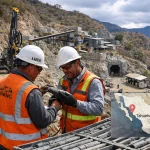
This initiative is particularly relevant for the Vicuña District, a region traditionally known for copper-gold porphyries that is now showing significant potential for lithium-bearing brines at depth.


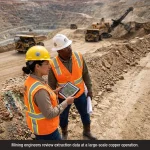
Argentina’s frontier lithium basins remain central to the 2026 energy transition despite evolving regulatory hurdles.
The Federal-Provincial Friction
Despite the federal push for streamlining, the implementation faces significant judicial and regional headwinds. In March 2026, the Supreme Court of Catamarca province issued a landmark ruling halting new mining authorizations in the Salar del Hombre Muerto region. The court’s decision mandates that all future projects must undergo “cumulative and integral” environmental impact reports that account for the total water usage of all operators in a basin, rather than assessing projects in isolation.
More Read

This local resistance highlights the complexity of mining in Argentina. While the federal government offers tax incentives and streamlined federal oversight, provincial courts remain the final arbiters of land use. For operators in frontier regions, this means the “streamlining” promised in Buenos Aires must be balanced against rigorous community-led consultation requirements in the Andean highlands.
Industry analysts suggest that the federal government’s focus on “frontier” projects is a strategic move to bypass the legal gridlock in established salars like Hombre Muerto. By incentivizing exploration in basins where fewer stakeholders are currently active, the administration hopes to create a “clean slate” for modern, DLE-ready (Direct Lithium Extraction) permitting processes.
Operator Outlook: Advancing Through the Red Tape
Several mid-tier and junior miners are already testing the efficacy of these new measures. Argentina Lithium & Energy Corp. recently announced a partnership to advance its Rincon West project through feasibility-level evaluation. The company continues to lead in environmental permitting and community engagement, positioning itself as a primary beneficiary of the standardized federal guidelines.
Similarly, Galan Lithium has successfully secured its Phase 2 mining permit for the Hombre Muerto West project. While located in a high-scrutiny province, Galan’s ability to navigate the permitting landscape serves as a blueprint for other frontier operators. The company’s success is attributed to its “cumulative impact” modeling, which aligns with the new provincial requirements recently upheld by the courts.
| Project Name | Location | Status (April 2026) | Key Permitting Milestone |
|---|---|---|---|
| Rincon West | Salta | Feasibility Stage | EIA for Phase 2 Drilling Approved |
| Hombre Muerto West | Catamarca | Production Ramp-up | Phase 2 Mining Permit Secured |
| Antofalla North | Catamarca | Exploration | Cumulative Impact Study Underway |
| Tres Quebradas | Catamarca | Early Production | Expansion Permit Pending Review |

Modern mineral processing and Direct Lithium Extraction (DLE) modular units are becoming the standard for projects seeking fast-track federal approval in 2026.
The Role of DLE and Water Management
A core component of the “streamlined” permitting process is the integration of Direct Lithium Extraction (DLE) technology. Unlike traditional evaporation ponds, which can take up to 24 months to produce concentrate and consume vast amounts of water, DLE systems offer a much smaller environmental footprint.
The federal government’s new guidelines explicitly prioritize projects that utilize DLE, offering them a “green lane” through the environmental review process. This policy shift is aimed at addressing the primary concern of provincial courts and Indigenous communities: water scarcity. By reinjecting spent brine back into the salar, DLE operators can theoretically bypass the “cumulative impact” concerns that have halted projects in the Salar del Hombre Muerto.
However, the technology remains capital-intensive and unproven at a massive commercial scale in frontier environments. The 2026 Lithium Power Map details the specific projects currently transitioning to DLE and the associated technical risks.
Strategic Geopolitics: The Race for 2026
The streamlining of permits in Argentina is not happening in a vacuum. It is a direct response to the aggressive mineral procurement strategies of the G7 nations. As the United States and the EU look to diversify away from Chinese-dominated supply chains, Argentina has emerged as the most viable “neutral” ground for large-scale lithium expansion.
The “Silicon-Lithium Nexus,” a concept explored in recent Skillings Mining Intelligence reports, suggests that the speed of permitting in the Lithium Triangle will determine the pace of global EV adoption and renewable energy storage deployment through 2030.

The Lithium 2026 Landscape Report highlights Argentina as a critical node in the global energy transition, provided regulatory hurdles can be cleared.
Risk Assessment for Frontier Investors
For investors and operators, the “streamlining” of permits in Argentina presents a classic high-reward, high-risk scenario. While the federal government is providing a clearer path to production, the provincial judicial system remains a significant wildcard.
Key Risks in 2026 include:
- Judicial Intervention: As seen in Catamarca, provincial courts can halt projects even after federal incentives are granted.
- Infrastructure Gaps: Frontier projects often lack access to the power grids and transportation networks available in established regions.
- Community Consultation: The requirement for “free, prior, and informed consent” is becoming more stringent, not less, despite administrative streamlining.
Operators who succeed in this environment are those who view permitting not as a bureaucratic checkbox, but as a continuous social and environmental negotiation. Companies that proactive address the “cumulative impact” of their operations are finding the path through the Argentine bureaucracy much smoother than those relying solely on federal decrees.
Conclusion: The Road Ahead
As we move further into 2026, the success of Argentina’s “Frontier Mineral Acceleration Initiative” will be measured by the number of projects that move from the exploration phase to ground-breaking. With the global mining sector facing bottlenecks in smelting and refining, the ability to secure a stable, permitted supply of raw lithium carbonate is the industry’s highest priority.
Argentina’s move to streamline permits is a bold attempt to capture this demand. While legal challenges persist, the alignment of federal incentives with modern extraction technologies suggests a new era for South American mining: one where “frontier” projects may soon become the new industry standard.
Market Snapshot: Lithium Carbonate (99.5% Li2CO3)
- Current Spot Price: $18,400 / tonne (CIF North Asia)
- 2026 Q2 Forecast: $19,200 (Bull Case) / $16,500 (Bear Case)
- Key Driver: Argentine Permitting Velocity & Australian Spodumene Curtailments.
For more in-depth analysis on the lithium supply chain, visit our Skillings Mining Intelligence portal.