By Penny Langford

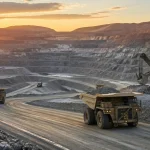
The year 2026 marks a decisive pivot point for the global mining industry as autonomous haulage systems (AHS) transition from high-capital experiments at Tier 1 sites to a baseline operational requirement for competitive mineral extraction. Driven by persistent labor shortages and the escalating costs of conventional operations, the adoption of autonomous haul trucks is no longer merely a strategy for efficiency: it is increasingly the only viable path to maintaining margins in volatile commodity markets.
Recent operational data from major hubs in the Pilbara, the Canadian oil sands, and the copper belts of South America suggest that the return on investment for autonomy has reached a critical threshold. As the global autonomous truck market scales toward a projected $47 billion in 2026, the underlying economics of load-and-haul units are being rewritten through a combination of higher utilization, reduced maintenance overhead, and a fundamental shift in mine safety protocols.
The 2026 Economic Drivers: Beyond Labor Displacement
While early arguments for autonomy focused heavily on the reduction of in-cab labor costs, the 2026 economic landscape reveals a more nuanced set of drivers. Labor remains a primary factor: especially as the industry faces a structural deficit of skilled operators: but the most significant gains are now being found in the "hidden" efficiencies of machine-driven consistency.
1. Machine Utilization and "The 24-Hour Yardstick"
Unlike human operators, autonomous haul trucks do not require shift changes, meal breaks, or administrative pauses. In a conventional manned environment, the cumulative downtime associated with shift handovers and breaks can account for 10% to 15% of a truck’s daily productive capacity.

By 2026, mature AHS deployments are reporting utilization rates exceeding 23 hours per day. This consistency allows operators to achieve the same annual tonnage with smaller fleets or, conversely, to increase throughput by 10% to 20% using existing capital equipment. For a large-scale copper or iron ore operation, this effectively reduces the "capital per tonne" metric, as fewer trucks are needed to meet production targets.

2. Fuel Efficiency and Component Life
AHS software optimizes every gear change and braking event. By following prescribed, computer-modeled haul routes with centimeter-level precision, autonomous trucks avoid the aggressive acceleration and "short-braking" patterns common in human-driven fleets.
Operational data from early 2026 indicates that autonomous fleets are achieving between 8% and 12% better fuel economy than their manned counterparts. Furthermore, the reduction in mechanical shocks to engines and drivetrains has extended the mean time between failures (MTBF) for critical components. Tires, which represent one of the highest consumable costs in open-pit mining, are seeing life extensions of up to 15% as autonomous systems maintain perfect speed-to-grade ratios and avoid cornering stress.

The Safety Nexus: Removing Risk from the Pit
The safety implications of autonomous haulage are arguably its most significant secondary benefit, though the economic impact of "safety as a service" is often under-quantified. By 2026, the industry has seen a dramatic reduction in high-potential incidents (HPIs) directly related to fatigue and human error.

Modern AHS platforms utilize overlapping layers of perception, including LiDAR, radar, and high-precision GNSS (Global Navigation Satellite System). These systems provide 360-degree situational awareness that exceeds the visibility limits of a human operator, particularly in the challenging environmental conditions of dust, fog, or night operations.
The shift to autonomy effectively "desegregates" risk. By removing operators from the high-risk zones of the pit bottom and haul ramps, mining companies are eliminating exposure to vehicle rollovers and collisions. In the current regulatory environment, where ESG (Environmental, Social, and Governance) performance is tied to capital access, the reduction in recordable injuries is a powerful lever for institutional investors.
Table: Comparative Analysis of Haulage Performance (2026 Estimates)
| Metric | Manual Haulage (Tier 1) | Autonomous Haulage (Tier 1) | Estimated Variance |
|---|---|---|---|
| Utilization (Hours/Day) | 18.5 – 20.0 | 22.5 – 23.5 | +15% to 20% |
| Fuel Consumption | Baseline | 0.88x – 0.92x | -8% to 12% |
| Tire Life (Operating Hours) | 4,500 – 5,500 | 5,200 – 6,300 | +15% |
| Labor Cost (Direct) | 100% | 15% – 20%* | -80% (Direct) |
| Safety Incidents (HPI) | Baseline | 0.10x | -90% |
*Reflects transition from in-cab operators to remote supervision and control room staffing.
Connectivity: The Backbone of the Autonomous Fleet
The economic viability of these systems in 2026 is inextricably linked to the maturation of private LTE and 5G networks. For an autonomous fleet to operate safely, it requires low-latency communication with a centralized Remote Operations Center (ROC).

These control rooms, often located hundreds of miles from the actual mine site, allow a single supervisor to oversee multiple haul units. The convergence of compute and commodities has led to a situation where the "operator" of 2026 is more likely to be a data analyst than a driver. This transition requires a significant upfront investment in digital infrastructure, but the long-term payoff is a more stable, predictable, and scalable operation.
As noted in recent analysis regarding the convergence of compute and commodities, the ability to process vast amounts of telemetry data in real-time is what allows for the predictive maintenance and "just-in-time" dispatching that drives these 2026 cost savings.
Implementation Challenges and 2026 Risks
Despite the clear economic advantages, the path to autonomy is not without obstacles. The primary barrier remains the high initial capital expenditure (Capex). Retrofitting an existing fleet with AHS capability or purchasing new "autonomy-ready" ultra-class trucks requires a multi-year commitment that can be difficult for smaller operators to justify.
Furthermore, change management remains a critical bottleneck. Transitioning a workforce from manual operations to a digital-first environment requires significant investment in re-skilling. Companies that fail to address the human element of the autonomy transition often see a "productivity dip" during the initial integration phase, which can last 12 to 18 months.
Conclusion: The 2026 Outlook
By the end of 2026, the "autonomous or manual" debate will largely be settled for the world’s major open-pit operations. The 10% to 30% reduction in overall haulage costs per tonne, combined with a near-total elimination of vehicle-related safety incidents, has made the business case for AHS irrefutable.
For investors and decision-makers, the focus is now shifting from "why" to "how fast." As Tier 2 miners begin to adopt these technologies through flexible leasing models and as-a-service software agreements, the competitive gap between the digital leaders and laggards will continue to widen. In a decade defined by the 2026 resource realignment, autonomous haulage is no longer a futuristic concept; it is the operational standard for the modern mine.

Featured Lead: M&A and Autonomy Adoption
Social Media Snippet (LinkedIn/X):
Is your mine site prepared for the $47B autonomous shift? By 2026, autonomous haul trucks are delivering 15% higher utilization and a 90% reduction in high-potential safety incidents. For Tier 1 and Tier 2 miners, the move to AHS is no longer a luxury; it’s a margin requirement. Penny Langford breaks down the 2026 economics of the driverless pit. #MiningTech #AutonomousHaulage #MineSafety #AHS2026 #SkillingsMining