By Penny Langford

BUKA, Bougainville : The Autonomous Bougainville Government (ABG) has officially revoked the long-standing exploration licence of Bougainville Copper Limited (BCL) over the Panguna mine, effectively seizing control of one of the world's largest untapped copper and gold deposits.
In a move that has sent shockwaves through the regional mining sector and the Australian Securities Exchange (ASX), the ABG announced on June 18, 2026, that it has granted a new 25-year Large Scale Mining Lease (LSML-01) to a state-backed entity, Bougainville Minerals. The decision terminates BCL’s EL1 exploration licence, a permit that the company had fought decades to maintain and, as recently as 2024, had seen as the definitive pathway toward reopening the historic site.
The revocation marks a decisive pivot toward resource nationalism for the ABG as it pursues economic independence from Papua New Guinea (PNG). For BCL, a company once majority-owned by Rio Tinto and now largely held by the governments of PNG and Bougainville, the loss of the Panguna licence represents an existential crisis.
The Rise of Bougainville Minerals
The newly minted licence holder, Bougainville Minerals, is described by government officials as a "locally controlled, state-backed vehicle" designed to ensure that the wealth generated by Panguna remains within the autonomous region. This structural shift is intended to bypass foreign-listed corporate interests and place the decision-making power directly in the hands of the ABG and local landowners.
"This is a historic day for the people of Bougainville," said a spokesperson for the ABG’s Department of Mineral and Energy Resources. "For too long, the fate of our most precious resource was tied to the fluctuations of a foreign stock exchange and the legacy of a colonial-era mining regime. By granting this lease to Bougainville Minerals, we are asserting our sovereignty and securing our economic future."

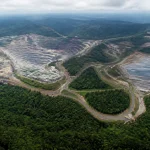
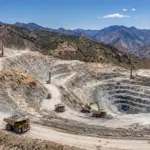
Under the new arrangement, Bougainville Minerals will oversee the redevelopment of the Panguna pit, which has been dormant since the outbreak of the Bougainville Civil War in 1989. The move effectively sidelines BCL, despite the ABG itself holding a significant equity stake in the company.


Market Turmoil: BCL Shares Plummet
Investors reacted swiftly to the news. On the ASX, shares in Bougainville Copper Limited (ticker: BOC) plunged by as much as 36% during the first day of trading following the announcement. The sudden loss of its core asset: and only viable project: has left the company in a precarious legal and financial position.
In a statement to the exchange, BCL confirmed it had received formal notification of the licence revocation and was seeking urgent legal advice. "The company is reviewing its strategic and legal options," the statement read. "BCL has a long history with the Panguna project and remains committed to the sustainable development of the resource in a way that benefits all stakeholders."
The crash comes at a time when the global copper market is already under significant pressure. As reported in our 2026 copper price forecast reset, the increasing demand from AI data centers and the energy transition has made any disruption to future supply a high-stakes event for global commodities traders.
A Resource of Global Significance
The scale of the Panguna deposit is difficult to overstate. Estimates suggest the site contains approximately 5.3 million tonnes of copper and 19.3 million ounces of gold. At current market valuations, the resource is worth an estimated US$160 billion.
The mine was once the engine of the Papua New Guinea economy, contributing nearly 45% of the nation’s export earnings before its closure. Its reopening is viewed by the ABG as the essential "missing piece" in its drive for full independence from PNG, following the 2019 referendum where 98% of Bougainvilleans voted to break away.
However, the path to production remains fraught with technical and political hurdles. The pit has been reclaimed by tropical overgrowth for over three decades, and the environmental damage from the original operations remains a point of deep contention with local landowners.

Geopolitical Friction and PNG Relations
The revocation of BCL’s licence is not just a commercial dispute; it is a geopolitical flashpoint. The government of Papua New Guinea, which still holds a 36.4% stake in BCL, has expressed "grave concerns" over the ABG’s unilateral move.
Prime Minister James Marape has previously advocated for a collaborative approach to Panguna, suggesting that the mine’s reopening should be a joint effort that supports the broader stability of the region. The move by the ABG to grant the lease to its own entity, Bougainville Minerals, suggests a breakdown in the delicate power-sharing negotiations between Buka and Port Moresby.
Industry analysts suggest that the move could deter foreign investment in the region if it is perceived as a breach of established mining law. "Resource nationalism of this scale tends to spook the major miners," said a senior analyst at Skillings Mining Intelligence. "While the ABG wants control, they still need the multi-billion dollar capital and technical expertise that only a global major can provide."
This tension mirrors challenges seen in other major copper regions, such as the supply shocks at Kamoa-Kakula, where government interventions have complicated long-term production timelines.
Strategic Outlook for 2026
As Bougainville Minerals takes the reins, the immediate focus will be on securing a technical partner capable of navigating the complex redevelopment. The ABG has indicated it is open to discussions with "partner entities that respect Bougainville’s sovereignty," but whether any Tier-1 miners will step into a project with such a volatile legal history remains to be seen.
Furthermore, the impact on gold markets is significant. With gold prices hitting record highs in early 2026, the 19.3 million ounces locked within Panguna represent a vital strategic reserve.
For the people of Bougainville, the decision is a gamble on self-reliance. If successful, it could fund a new nation. If bogged down in litigation and lack of capital, the "Copper Giant" may remain in its crisis-induced slumber for another generation.
Panguna Project: Key Data Points (2026 Forecast)
| Metric | Detail |
|---|---|
| Primary Resource | Copper, Gold, Silver |
| Estimated Copper Reserves | 5.3 Million Tonnes |
| Estimated Gold Reserves | 19.3 Million Ounces |
| Estimated Resource Value | US$160 Billion |
| New Licence Holder | Bougainville Minerals (LSML-01) |
| Previous Licence Holder | Bougainville Copper Limited (EL1) |
| Market Reaction (BCL) | -36% Stock Price (June 18-19) |
| Target Production Commencement | 2032 (Optimistic) |
Shareable Social Media Snippet (LinkedIn/X)
? BREAKING: Bougainville Revokes Panguna Licence. The ABG has officially sidelined BCL, granting a 25-year mining lease to state-backed Bougainville Minerals. Shares in BCL ($BOC) plunged 36% on the news. This is a massive shift toward resource nationalism for the US$160B copper-gold giant. Read the full analysis on Skillings Mining Intelligence. #MiningNews #Copper #Bougainville #Gold #Panguna #BOC