By Penny Laneford

The numbers out of Beijing are ugly, and iron ore traders are feeling every bit of it this morning.
Chinese steel production has cratered by roughly 4% over the first 11 months of 2025, with annual output now tracking below the psychologically critical 1 billion tonne threshold. October alone saw crude steel output collapse by a staggering 12% year-on-year: the kind of drop that sends shockwaves through commodity trading floors from Singapore to London.
For anyone tracking iron ore news closely, this isn’t just another data point. This is the canary, and it’s gasping.
The Beijing Edict Nobody Saw Coming
Here’s the thing about China’s steel sector right now: it’s caught between government mandates and cold market reality.
More Read

Beijing issued an official production cut order demanding a 50 million tonne reduction in 2025 output. The actual cuts? Closer to 19 million tonnes, bringing total production down to roughly 955 million tonnes. That gap between what the government wanted and what actually happened tells you everything about the tension simmering beneath the surface.


The construction sector: traditionally the beating heart of Chinese steel demand: has absolutely cratered. Steel consumption from construction plunged 13% in 2025, down to around 400 million tonnes. When your biggest customer starts pulling back that hard, the math gets brutal fast.
More Read

And it’s not stopping. Steel demand across China fell 2% in 2025 and forecasters are penciling in another 1% decline for 2026. That’s two consecutive years of contraction in the world’s largest steel market.
Iron Ore Bears Are Having Their Moment
The iron ore market is responding exactly how you’d expect when your biggest buyer starts ordering less.
Major iron ore benchmarks have tumbled on the back of these production figures, with traders repricing expectations for Chinese import demand well into 2026. The overnight session saw particularly heavy selling pressure as Asian markets digested the full implications of October’s 12% production cliff.
For the big iron ore miners: BHP, Rio Tinto, Vale, Fortescue: this represents a fundamental challenge to demand assumptions that have underpinned capital allocation decisions for years. When China sneezes, the Pilbara catches cold. That old adage has never felt more relevant.
The pricing dynamics get even messier when you factor in inventory levels. Chinese port stockpiles have been building as imports outpace the reduced steel production pace, creating a supply overhang that keeps downward pressure on spot prices.
The Export Paradox
Here’s where things get genuinely weird.
Despite tanking domestic demand, Chinese steelmakers have actually ramped up exports to record territory. Shipments blew past 100 million tonnes in the first 11 months of 2025. Read that again. Domestic consumption is falling, but exports are surging.
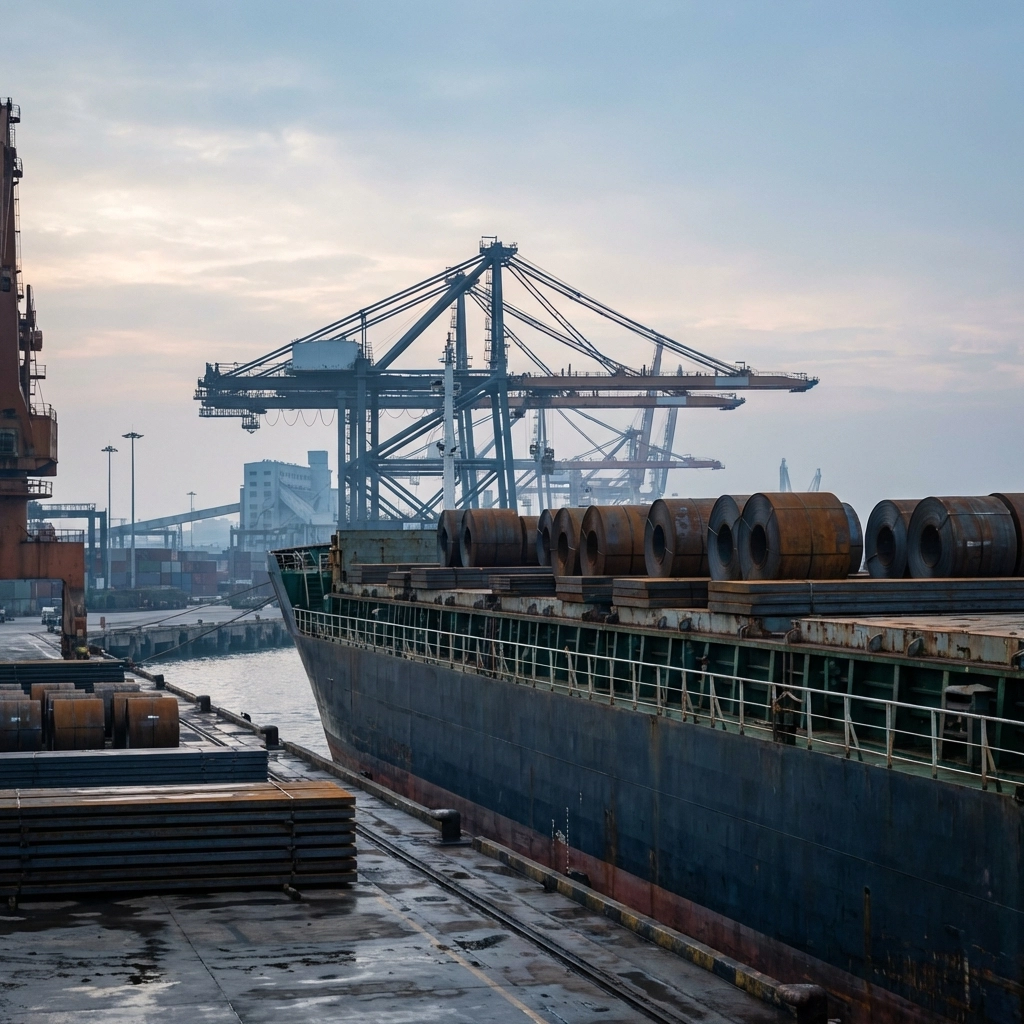
This isn’t a sign of strength: it’s a symptom of overcapacity so severe that mills are essentially dumping steel into global markets at compressed margins just to keep furnaces running. The OECD projects global excess steelmaking capacity will hit a mind-bending 721 million tonnes by 2027. That’s not a typo. Seven hundred and twenty-one million tonnes of capacity the world doesn’t need.
For iron ore producers, this creates a bizarre dynamic. Chinese mills are still consuming ore: just not as much, and with a lot less pricing power on the finished steel side. Margin compression at the mill level eventually translates to more aggressive iron ore procurement negotiations.
What This Means for Global Miners
Let’s cut to what actually matters for the folks running mining operations.
The demand picture is structurally shifting. This isn’t a cyclical dip that bounces back when stimulus kicks in. China’s construction boom is genuinely over. The property sector restructuring that’s been grinding through the economy represents a permanent step-down in steel-intensive activity. Anyone banking on a return to 2021-era demand is holding onto a fantasy.
Australian miners are most exposed. The Pilbara’s iron ore giants have built their entire business models around Chinese steel demand. Rio Tinto, BHP, and Fortescue ship the vast majority of their production to Chinese buyers. When that demand softens, there’s no easy pivot to alternative markets at the same scale.
Brazilian producers face similar headwinds. Vale’s comeback story was premised partly on Chinese appetite for higher-grade ore. A structural demand decline complicates that narrative considerably.
The M&A implications are real. We’ve already seen consolidation pressure building in the mining sector, and persistent demand weakness could accelerate that trend. Weaker players get squeezed first.
The Week Ahead: What Traders Are Watching
Market participants are laser-focused on several catalysts heading into the trading week.
First, any additional policy signals from Beijing regarding production quotas for 2026. The gap between mandated cuts and actual cuts in 2025 suggests enforcement has been spotty: but that could change if economic planners decide to get serious about capacity reduction.
Second, January steel production data when it drops. December and January figures will show whether the October plunge was a one-off or the start of a steeper decline trajectory.
Third, the demand side of the equation. Chinese infrastructure spending announcements, local government bond issuance for construction projects, and any signals about stimulus measures could shift sentiment quickly. Markets are desperate for any indication that the demand floor is near.

The Bigger Picture for Iron Ore News
Zoom out from the overnight price action and the structural story comes into sharper focus.
China’s steel industry is undergoing a generational transition. The urbanization and infrastructure buildout that drove 20 years of relentless growth is winding down. What replaces it: if anything at the same scale: remains unclear.
For iron ore, this means the glory days of ever-increasing Chinese demand are almost certainly over. The question now is how quickly producers adjust their expectations, their capex plans, and their cost structures to a world where the marginal tonne of demand isn’t automatically coming from a new Chinese construction site.
The zero-carbon transition reshaping mining equipment adds another layer of complexity. Decarbonization investments compete for capital that might otherwise go toward volume expansion: and in a demand-constrained world, that trade-off becomes more acute.
Meanwhile, the global coal demand picture offers a reminder that commodity markets rarely move in straight lines. But iron ore’s linkage to steel production: and steel’s linkage to Chinese construction: creates a more direct transmission mechanism from demand weakness to price pain.
Bottom Line
The overnight iron ore selloff isn’t an overreaction. It’s the market doing what markets do: repricing assets to reflect deteriorating fundamentals.
Chinese steel production is falling. Demand is contracting. Exports are surging from overcapacity. And the construction sector that drove two decades of iron ore demand growth is structurally impaired.
None of this is particularly new information: but the October production data put an exclamation point on trends that some market participants were still hoping might reverse.
For miners, the message is pretty clear: plan for a lower-demand world and hope you’re wrong. Hope isn’t a strategy, but given the uncertainty around Chinese policy and potential stimulus, it’s about the best anyone can do right now.
We’ll be tracking the iron ore news closely as this week unfolds. The trading floor is going to be interesting.