By Penny Langford

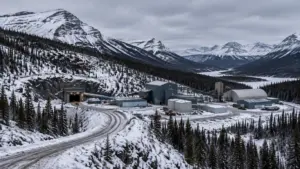
The global uranium market received a critical stabilization signal this week as Cameco Corporation confirmed the resumption of mining operations at Cigar Lake in northern Saskatchewan. The restart follows a brief suspension initiated on July 1, 2026, triggered by emergency repairs at Orano’s McClean Lake mill: the exclusive processing facility for Cigar Lake’s ultra-high-grade ore.
While the two-week disruption was brief, its occurrence during a period of structural market tightness underscores the operational fragility of the primary uranium supply chain. As the industry faces a projected 30 million pound supply deficit by the end of 2026, the reliability of Tier-1 assets like Cigar Lake has become the primary focus for utilities and investors alike.
Operational Context: The McClean Lake Restart
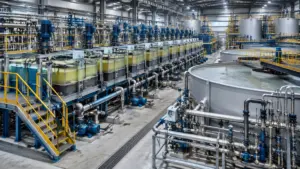
The suspension was necessitated by mechanical failures at the McClean Lake mill’s sulfuric acid plant. Sulfuric acid is a non-negotiable reagent in the leaching process required to extract uranium from the complex, high-grade ore found at Cigar Lake. Orano, the mill’s operator, successfully completed repairs and secured alternative acid supplies to ensure a return to nameplate capacity.
Cameco has reaffirmed its 2026 production outlook for Cigar Lake at 17.5 million to 18 million pounds of U3O8 (on a 100% basis). The company stated that the temporary halt would not materially impact its annual delivery commitments, as stockpiled ore was available to bridge the processing gap.
Cigar Lake is widely considered the world’s highest-grade uranium mine, with average grades frequently exceeding 14% U3O8: a figure that dwarfs the 0.1% to 0.5% averages found in most global deposits. This high concentration allows for significant output from a relatively small physical footprint but also necessitates complex jet-boring mining methods and specialized processing at McClean Lake.


Uranium Market Outlook 2026: The 30M lb Deficit
The restart of Cigar Lake helps mitigate immediate supply fears, but it does little to close the widening structural gap. Market analysts project that by year-end 2026, the delta between primary mine production and global reactor requirements will reach approximately 30 million pounds.

Several factors are converging to create this deficit:
- Inventory Depletion: Utilities have largely exhausted the "carry trade" inventories that characterized the post-Fukushima era.
- Long-Term Contracting: A shift back to long-term procurement has removed mobile spot-market material.
- Secondary Supply Contraction: Reduced availability of under-feding and government stockpiles.
Uranium Price Forecast 2026: Base, Bull, and Bear Cases
The persistent deficit has led to a upward revision of the uranium price forecast 2026 across major financial institutions. While spot prices remain volatile, the floor has moved significantly higher.
| Scenario | 2026 Price Forecast (US$/lb) | Primary Drivers |
|---|---|---|
| Bear Case | $75 – $85 | Rapid ramp-up of Kazatomprom production; slower SMR deployment. |
| Base Case | $95 – $115 | Consistent utility contracting; moderate AI-driven demand growth. |
| Bull Case | $145 – $175 | Operational disruptions at Tier-1 mines; accelerated "Big Tech" nuclear deals. |
The "higher-for-longer" narrative is gaining traction as the industry recognizes that a price of at least $90–$100/lb is required to incentivize the development of greenfield projects needed by 2030.
Demand Drivers: SMR Uranium Demand 2026 and AI Energy
The uranium market outlook 2026 is increasingly influenced by non-traditional demand sources. While large-scale reactors in China and India remain the bedrock of consumption, the role of Small Modular Reactors (SMRs) and Artificial Intelligence (AI) data centers is shifting from theoretical to operational impact.
SMR Uranium Demand 2026
SMRs are moving toward commercial deployment, with several pilot projects in North America and Europe reaching critical licensing milestones in 2026. Because many SMR designs utilize High-Assay Low-Enriched Uranium (HALEU), they require a more intensive initial fuel load compared to traditional Light Water Reactors (LWRs). This "front-loading" of demand is expected to put additional pressure on the 2026–2028 supply window.
The AI-Nuclear Nexus
The surging energy requirements of AI data centers have forced technology giants to seek "24/7" carbon-free baseload power. Following the trend set by recent power purchase agreements (PPAs) in the United States, 2026 is expected to see more direct investments or off-take agreements from tech firms into nuclear generation. This dynamic is mirroring trends seen in other critical minerals; for instance, the copper price forecast 2026 is similarly driven by data center infrastructure needs.

Geopolitical Shifts: Brazil and the Australia-India Deal
While Saskatchewan remains the global hub for high-grade supply, geopolitical developments are reshuffling the mid-term supply map.
- Brazil's Private Pivot: Brazil has begun loosening its state monopoly on uranium exploration. By opening the sector to private partnerships, Brazil aims to leverage its significant untapped resources to become a net exporter by the early 2030s. This move follows a broader trend of South American nations seeking to capitalize on the energy transition, similar to the rare earths supply chain developments in the Monte Alto district.
- Australia-India Nuclear Relations: The Australia-India civil nuclear deal has matured into a steady flow of concentrate. India’s aggressive reactor build-out: targeting 22.4 GW of capacity by 2031: is heavily reliant on Australian exports. This bilateral anchor provides a predictable demand floor that limits the "surplus" Australian material available to the spot market.
Strategic Implications for the Industry
For mining operators, the Cigar Lake restart highlights the necessity of "active" maintenance and redundant infrastructure. The reliance on a single processing mill (McClean Lake) represents a single point of failure that many companies are now looking to avoid through diversified milling arrangements or on-site processing upgrades.
For investors, the uranium market outlook 2026 remains one of the most compelling sectors within the broader commodities space. Unlike the silver price forecast 2026, which is often influenced by monetary policy and industrial hedging, uranium is a pure-play bet on the structural energy deficit.
2026 Supply Gap Summary Table
| Metric | 2025 (Estimated) | 2026 (Projected) |
|---|---|---|
| Global Reactor Demand | 180 M lbs | 188 M lbs |
| Primary Mine Production | 158 M lbs | 163 M lbs |
| Secondary Supply | 18 M lbs | 15 M lbs |
| Market Balance | -4 M lbs | -10 M lbs (Structural) |
| Investment/SMR Demand | 12 M lbs | 20 M lbs |
| Total Deficit | -16 M lbs | -30 M lbs |
Source: Skillings Mining Intelligence Analysis

Conclusion
The restart of Cigar Lake is a vital reprieve for a market that can ill-afford the loss of its highest-grade producer. However, the fundamental reality of the 2026 uranium market remains unchanged: demand is growing faster than the industry’s ability to bring new, high-grade pounds to market. Between SMR deployments, AI energy hunger, and a global "nuclear renaissance," the pressure on Tier-1 assets will only intensify.
As we move into the second half of 2026, the focus will likely shift from temporary operational restarts to the long-term project pipeline. The current price environment supports development, but as the Cigar Lake outage demonstrated, the path from "ore in the ground" to "yellowcake in the drum" remains fraught with technical and operational risks.
LinkedIn/Social Snippet
? Uranium Supply Alert: Cameco has officially restarted mining at Cigar Lake following repairs at the McClean Lake mill. While production guidance for 2026 remains at 17.5–18M lbs, the market is still staring down a massive 30M lb deficit by year-end. With SMR demand and AI data centers rewriting the demand curve, is the "Bull Case" for $150 uranium now the base case?
Read our deep dive on the 2026 outlook: [Link] #Uranium #Mining #EnergyTransition #SMR #NuclearEnergy #Cameco