By Penny Langford
The red dust of Western Australia’s Pilbara region has long been the testing ground for the world’s most grueling industrial experiments. Since December 2025, it has served as the frontline for one of the most significant shifts in the history of mineral extraction: the transition from diesel-mechanical power to battery-electric haulage.
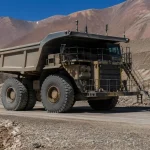
As we cross the first six months of the joint "Early Learner" trials between Caterpillar, BHP, and Rio Tinto, the mining industry is finally seeing real-world data on the mine electrification benefits 2026 targets have demanded. The Caterpillar 793 XE battery-electric truck: a 250-tonne payload beast: is no longer a prototype on a proving ground in Arizona; it is a working asset at BHP’s Jimblebar mine.
The results from these trials are beginning to redefine how operators approach decarbonization, operational efficiency, and the massive capital requirements of the energy transition.
More Read

The "Early Learner" Mandate: Performance Parity
When Caterpillar first unveiled the 793 battery-electric concept, the industry’s primary concern was whether an electric drivetrain could match the relentless duty cycles of the diesel 793F, a mainstay of the iron ore industry. The "Early Learner" program was designed specifically to answer this question under the extreme heat and abrasive conditions of the Pilbara.

Data from the first half of 2026 indicates that the 793 XE is meeting its primary design goal: performance parity. The electric units are achieving top loaded speeds of approximately 38 mph (61 km/h), identical to their diesel counterparts. For mine planners, this is the "holy grail" of electrification: the ability to swap power sources without having to rewrite the haulage schedule or accept lower productivity.
Key Specifications of the 793 XE Early Learner:
- Battery Capacity: ~564 kWh Lithium Iron Phosphate (LFP) pack.
- Traction Motor: ~480 kW (645 hp) electric motor.
- Payload: ~250 tonnes (matching the ultra-class diesel standard).
- Operational Readiness: Integration with Caterpillar’s MineStar™ and Command for Hauling.

More Read
Efficiency Gains and the Regenerative Braking "Free Lunch"
The most compelling data point emerging from the Pilbara is the impact of regenerative braking. In traditional diesel-mechanical trucks, the kinetic energy generated during a loaded downhill haul is dissipated as heat through retarders. In the 793 XE, that energy is captured and pumped back into the 564 kWh battery.
At Jimblebar, where mine profiles often involve significant downhill gradients for loaded trucks, the regenerative braking system has shown the potential for "no-charge" cycles. Under optimal conditions: where the energy recovered during the descent exceeds or matches the energy required for the empty ascent: the truck can theoretically operate for extended shifts without ever plugging into a stationary charger.
Current 2026 projections suggest that for mines with favorable topography, mine electrification benefits could include a 30% to 60% reduction in "fuel" (energy) costs per tonne-kilometer compared to diesel fleets. This isn't just a sustainability win; it's a massive shift in the valuation metrics for long-life open-pit assets.
The Infrastructure Hurdle: Charging vs. Payload
Despite the success of the truck’s performance, the first year of results has highlighted a significant bottleneck: charging infrastructure. The Cat 793 XE’s ~564 kWh battery is relatively small for a truck of its size. This design choice was intentional to prevent "payload cannibalization": the loss of ore-carrying capacity due to the immense weight of larger batteries.
However, a smaller battery necessitates a more sophisticated charging strategy. The Pilbara trials are testing two primary methods:
- Stationary High-Power Charging: Utilizing the Megawatt Charging System (MCS) to deliver massive amounts of energy in short "opportunity" bursts during operator breaks or loading.
- Dynamic Charging (Trolley-Assist): While the Jimblebar trials focus on battery-only performance, the industry is increasingly looking at hybrid trolley-battery systems. These allow the truck to draw power from overhead lines on steep ramps while simultaneously charging the battery for the "off-wire" segments of the haul road.
The CAPEX required for these systems remains the primary deterrent for smaller operators. As noted in our 2026 Global Mining Outlook, the transition to electric requires a complete redesign of mine power grids, often involving on-site renewable generation and large-scale stationary storage to handle the "peaky" loads of a charging fleet.

Operating Costs: Diesel vs. Electric 2026
While the upfront cost of a battery-electric truck and its associated infrastructure can be 2x to 3x higher than a diesel equivalent, the 2026 operational data is starting to show the long-term payoff.
| Metric | Diesel 793F | Battery-Electric 793 XE | Impact |
|---|---|---|---|
| Energy Cost | High (Diesel Price Volatility) | Low (Renewable/Grid Power) | 30-60% Reduction |
| Preventative Maintenance | High (Engine/Driveline Overhauls) | Low (Fewer Moving Parts) | 25-30% Reduction |
| Brake Wear | Standard Consumables | Minimal (Regen Braking) | Significant Savings |
| Carbon Exposure | High (Carbon Tax/Offsets) | Zero (Tailpipe Emissions) | Future-Proofed |
For the iron ore majors, the maintenance savings alone are a key driver. Electric drivetrains eliminate the need for complex diesel exhaust fluid (DEF) systems, oil changes, and engine rebuilds, which are among the most frequent causes of unplanned downtime in the Pilbara.
Integration with Autonomous Haulage Systems (AHS)
The shift to electric is not happening in a vacuum. It is being integrated directly with Autonomous Haulage Systems (AHS). At Jimblebar, the electric 793 trucks are being run through Caterpillar’s Command for Hauling.
This integration is critical because electric trucks require much more precise "energy management" than diesel ones. An autonomous system can optimize the speed and acceleration of the truck to maximize regenerative braking or ensure the truck reaches a charging station with a specific State of Charge (SoC). We recently covered similar advancements in our report on Utah’s Copper One, which serves as a blueprint for the fully autonomous, fully electric mines of the next decade.

Decarbonization Milestones: The 2030 Countdown
For BHP and Rio Tinto, the 793 XE trial is more than a technical exercise; it is a survival strategy. Both companies have committed to net-zero operational emissions by 2050, with significant interim targets for 2030. Given that haulage typically accounts for 40% to 80% of a mine’s direct (Scope 1) emissions, there is no path to those targets without the successful electrification of the ultra-class fleet.
The first-year results from the Pilbara suggest that the technology is ready, but the "ecosystem" is still maturing. The industry is currently moving from the "can we build it?" phase to the "how do we scale it?" phase.
The Road Ahead
As the "Early Learner" program concludes its initial phase later this year, the focus will shift to scaled trials. BHP and Rio Tinto will begin evaluating how to roll out these units across entire fleets of hundreds of trucks.
The mine electrification benefits 2026 data has shown that the performance is there, the maintenance savings are real, and the energy recovery potential is higher than many anticipated. However, the success of the next phase will depend on the industry’s ability to standardize charging protocols and secure the massive amounts of green energy required to power these giants.
For investors and decision-makers, the message is clear: the diesel age is entering its twilight. Those who master the electrical infrastructure today will be the ones with the lowest cost-per-tonne in 2030.

Shareable Snippet for LinkedIn/X:
The data is in from the Pilbara! ?⚡️ The first year of Caterpillar’s 793 battery-electric trials at Jimblebar shows performance parity with diesel, up to 60% reduction in energy costs, and the incredible potential of regenerative braking. Is your mine ready for the infrastructure shift? Read the deep dive on the 2026 results from Skillings Mining Intelligence. #MiningTechnology #Decarbonization #MineElectrification #Caterpillar #BHP #RioTinto