By Charles Pitts
The gold-copper porphyry landscape in South America has shifted significantly following the release of GoldMining Inc.’s updated Preliminary Economic Assessment (PEA) for its La Mina Project. Located in the heart of the Mid-Cauca Belt in Antioquia, Colombia, the project has emerged as a top-tier asset with a valuation that challenges the narrative of capital intensity often associated with large-scale mining developments.
As of early May 2026, the updated PEA reveals an after-tax Net Present Value (NPV) at a 5% discount rate of $1.0 billion in the base case. However, the true “investor magnet” lies in the spot price analysis. At current market benchmarks: approximately $4,775/oz gold, $5.75/lb copper, and $77/oz silver: the after-tax NPV surges to a staggering $1.8 billion. This represents a 265% increase over previous assessments, signaling a robust de-risking phase for a project that now boasts an Internal Rate of Return (IRR) of 49.1% at spot prices.
The Porphyry Engine: La Garrucha and Geological Context
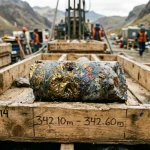
The exponential growth in La Mina’s valuation is not merely a product of rising commodity prices; it is a testament to efficient exploration and the inclusion of the La Garrucha deposit. Discovered through a disciplined drilling program that cost just $1.2 million, La Garrucha added approximately 1.0 million ounces of gold equivalent to the project’s inferred resource category.
More Read

La Mina is situated 51 kilometers southwest of Medellín, covering approximately 3,208 hectares. The project comprises several known porphyry deposits: La Cantera, Middle Zone, and the high-grade La Garrucha. These systems are characterized by multi-phase diorite porphyry intrusions, which are typical of the prolific gold-copper districts in Colombia. The geological model now supports a mine life of 11.2 years, with total life-of-mine (LOM) production estimated at 1.5 million ounces of gold equivalent (AuEq).


For operators and investors, the “first five years” metrics are particularly compelling. GoldMining Inc. projects an average annual production of 152.4 thousand ounces of gold equivalent during this initial phase. This early high-grade production is designed to accelerate capital payback, which is currently estimated at just 1.9 years under spot price assumptions.
More Read
Decoding the Economics: Base Case vs. Spot Reality
The mining industry has long debated the use of “conservative” vs. “spot” pricing in economic studies. In the case of La Mina, the gap is wide but the floor remains high. The base case utilizes $3,500/oz gold and $4.70/lb copper: figures that, while conservative compared to today’s levels, still yield a formidable $1.0 billion NPV and a 32.2% IRR.
The following table breaks down the project’s economic sensitivities as per the 2026 update:
| Metric | Base Case ($3,500 Au) | Spot Price Case (~$4,775 Au) |
|---|---|---|
| After-Tax NPV (5%) | $1.0 Billion | $1.8 Billion |
| After-Tax IRR | 32.2% | 49.1% |
| Payback Period | 2.7 Years | 1.9 Years |
| Initial CAPEX | $523.3 Million | $523.3 Million |
| LOM Gold Production | 1.2 Million Oz | 1.2 Million Oz |
| LOM Copper Production | 195 Million Lbs | 195 Million Lbs |
One of the most notable features of the La Mina PEA is the capital intensity ratio. With an initial CAPEX of $523.3 million, the project maintains a 0.5x ratio of initial capital to base-case NPV. In an era where large-scale copper-gold projects often require multi-billion dollar upfront investments, La Mina’s relatively modest entry cost makes it an attractive target for mid-tier producers or strategic partners. This efficiency is critical as the industry faces a widening copper deficit in 2026.
Operational Strategy and Infrastructure
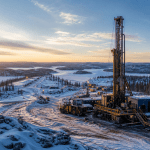
The operational plan for La Mina centers on an open-pit mining method with a focus on low strip ratios. Previous studies indicated a strip ratio of roughly 3.6:1, which significantly reduces operational expenditures (OPEX) by minimizing waste movement. The proposed 10,000 tonne-per-day concentrator will utilize standard flotation processes to produce a high-quality gold-copper concentrate.

Antioquia’s existing infrastructure provides a major tailwind. Unlike remote projects in the high Andes or the deep Amazon, La Mina benefits from its proximity to Medellín. Access to a skilled labor force, paved roads, and established power grids reduces the logistical hurdles that often plague greenfield developments. This infrastructure advantage is a key reason why Colombian projects are increasingly seen as viable alternatives to more challenging jurisdictions.
Colombia: The Jurisdictional Shift in 2026
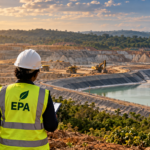
The Colombian mining sector has undergone a period of intense scrutiny and regulatory evolution. However, the “Antioquia advantage” remains a constant. The region has a deep-rooted mining culture and a government that, while focused on ESG (Environmental, Social, and Governance) standards, recognizes the economic necessity of large-scale mineral extraction.
GoldMining’s approach to La Mina reflects this shift. The PEA incorporates modern environmental benchmarks and community engagement strategies. By focusing on critical minerals like copper alongside gold, the project aligns with global trends toward the energy transition: a strategy we’ve analyzed extensively in our 2026 Lithium and Energy Nexus forecasts.
CEO Alastair Still noted that the updated PEA “highlights the underlying quality of the La Mina porphyry gold-copper mineral system.” He emphasized that the project demonstrates a level of capital efficiency that is increasingly rare in the current market, especially as mining tech stacks and automation continue to drive up indirect costs for remote operations.
Strategic Outlook: GoldMining Inc.’s Portfolio Play
For GoldMining Inc., La Mina is a cornerstone asset, representing roughly 9% of its global Measured and Indicated Resources. The company’s strategy of acquiring undervalued assets and de-risking them through exploration and engineering is paying dividends. As the project moves toward a Pre-Feasibility Study (PFS), the focus will likely shift to further resource expansion and metallurgical optimization.

The upside potential at La Mina remains open. Several satellite targets and depth extensions at La Garrucha have yet to be fully tested. If the company can prove up additional high-grade zones, the already impressive $1.8 billion NPV could see further revisions upward.
In a broader South American context, La Mina is competing for capital with other major projects, such as those being developed by Hudbay Minerals and Solis Minerals. However, with a sub-2-year payback and a 49% IRR at spot prices, GoldMining Inc. has carved out a unique position in the gold-copper hierarchy.
Summary of Key Findings
- Valuation: $1.8 billion NPV at spot prices represents a massive leap for a junior mining asset.
- Geology: The La Garrucha discovery is the primary driver of recent resource growth.
- Economics: Low capital intensity (0.5x ratio) and a rapid 1.9-year payback period at current prices.
- Jurisdiction: Proximity to Medellín offers significant infrastructure and labor advantages.
- Copper Leverage: 195 million pounds of copper LOM provides exposure to the ongoing energy transition.
The La Mina PEA update is more than a routine report; it is a roadmap for how to develop a high-margin, capital-efficient project in a challenging global environment. As GoldMining Inc. advances the asset, the industry will be watching to see if this Colombian gem can maintain its trajectory toward production.