By Penny Langford

The global copper market is approaching a structural pivot point. While 2024 and 2025 have seen a delicate balance of supply and demand, 2026 is emerging as the year the refined copper market flips into a sustained deficit. Forecasts from J.P. Morgan and S&P Global suggest a shortfall ranging from 330,000 to 600,000 tonnes as mine supply growth slows and demand from the energy transition, AI data centers, and grid modernization accelerates.
In this environment of scarcity, a significant valuation gap has opened between "average" copper projects and Tier-1 assets. Investors are no longer merely looking for copper exposure; they are paying a premium for quality, scale, and operational security. This "quality premium": often reaching 1.4x the valuation of standard assets: is being driven by the strategic necessity of securing long-life, low-cost supply in a market defined by structural under-investment.
The 2026 Deficit: Driven by Convergence
The anticipated 2026 deficit is not the result of a single factor but a convergence of three powerful demand drivers meeting a stalled supply pipeline.
First, the integration of artificial intelligence into the global economy is requiring a massive expansion of data centers. These facilities are significantly more copper-intensive than traditional servers due to their higher power density. Second, the global push for electrification continues to strain current grid infrastructure, which requires vast amounts of high-purity copper. Third, the ongoing transition to electric vehicles (EVs) and renewable energy storage remains a foundational floor for demand.
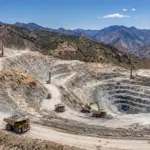
On the supply side, the industry is struggling to bring new "greenfield" projects online. The lead time for a new copper mine has stretched to over 15 years, hampered by permitting delays, social license challenges, and the increasing technical complexity of deeper, lower-grade ore bodies. This lack of new supply is forcing the market to rely on existing mines and a handful of world-class developmental projects that are now being treated as the "anchors" of the 2026 market.

Why Quality Assets Command a 1.4x Premium
In mining finance, a Tier-1 asset is generally defined as a project capable of producing over 200,000 tonnes of copper per year with a mine life exceeding 20 years and costs in the lower half of the global cost curve. These assets are increasingly rare, and the market is rewarding them with a valuation premium that averages 1.4x above mid-tier peers on an EV/EBITDA or EV/Resource basis.
Several factors justify this premium:
- Operational Resilience: Large-scale projects typically have better economies of scale and are more resilient to inflationary pressures.
- By-Product Credits: Many top-tier copper deposits, particularly in the Andes, contain significant gold and silver. These by-products can lower the net cash cost of copper production, sometimes into the first quartile of the global cost curve.
- Expansion Optionality: A Tier-1 asset often sits within a larger district, providing the potential for multi-decade expansions that smaller, single-pit mines cannot offer.
- Sponsor Depth: These projects are usually held by majors or robust joint ventures (JVs), which reduces execution and financing risk.

The Vicuña District: A Case Study in Quality
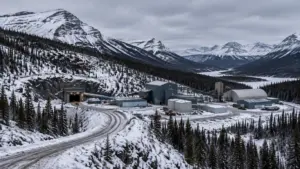
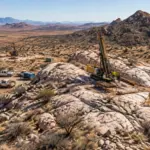
Nowhere is the quality premium more evident than in the Vicuña district, a border-straddling region between Chile and Argentina. Recently, BHP and Lundin Mining entered into a 50/50 joint arrangement to develop this world-class district, which includes the Filo del Sol and Josemaria deposits.
The Vicuña district is currently ranked among the top 10 copper-gold-silver resource endowments globally. Estimates suggest the area could eventually produce upwards of 395,000 tonnes of copper and 711,000 ounces of gold per year over its first 25 years. By combining BHP’s technical and capital depth with Lundin's specialized base-metals expertise, the JV has effectively derisked the project, leading to a valuation that far outpaces smaller regional explorers.
Investors are valuing the Vicuña district not just on its current resource, but on its "top five" potential. The district offers a combination of high-grade cores and massive scale that is essential for meeting the 2026 copper supply forecast.
The Technology Gap: Efficiency as a Value Driver
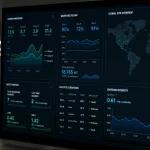
As grades decline globally, technology is becoming a key differentiator in asset valuation. Projects that integrate autonomous haulage, advanced telemetry, and real-time operations control are commanding higher premiums because they offer predictable production in a volatile market.
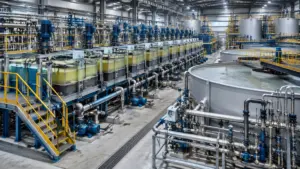
Modern mining facilities are utilizing sensor-based ore sorting and advanced mineral processing to extract more value from lower-grade material. This technological edge is critical for maintaining margins as the industry moves toward the 2026 deficit.

For example, the use of ultra-class haul trucks and electric shovels reduces carbon footprints: a key requirement for institutional investors focused on ESG metrics. Assets that can demonstrate a clear path to net-zero operations are increasingly favored, as they face fewer permitting hurdles and lower carbon tax risks.
Geopolitical and Regulatory Stability
The valuation premium is also heavily influenced by "above-ground" risks. In 2026, the location of an asset will be as important as its geology. Jurisdictions that offer stable fiscal regimes and clear permitting pathways allow for lower discount rates in Net Present Value (NPV) calculations.
While traditional regions like Chile and Peru remain dominant, they are facing evolving royalty structures. Meanwhile, Argentina is emerging as a significant growth frontier, particularly in the San Juan province. The premium paid for assets in these regions is sensitive to the balance between high-grade geological potential and the evolving policy and regulatory environment.
2026 Copper Market Snapshot
| Metric | 2025 Forecast | 2026 Forecast | Change |
|---|---|---|---|
| Refined Market Balance | +50k t (Surplus) | -330k to -600k t (Deficit) | Significant Flip |
| Average Copper Price | $4.20 – $4.50/lb | $5.20 – $5.50/lb | +22% |
| Demand: Data Centers/AI | 2.1 Mt | 2.8 Mt | +33% |
| Tier-1 Asset Premium | 1.1x | 1.4x | +27% |
| Global Mine Supply Growth | 3.2% | 1.8% | -44% |
Strategic Implications for Investors
As we move toward 2026, the "flight to quality" will likely intensify. Retail and institutional investors are increasingly focusing on companies that hold a "seat at the table" in major districts. The 1.4x premium is not just a market quirk; it is a reflection of the high cost of failure in a copper-starved world.
The copper price forecast for 2026 suggests that prices could test record highs, but the real winners will be the operators of large-scale, low-cost assets. These companies will capture the lion's share of the margin while smaller, high-cost producers struggle with the capital intensity of modern mining.

Conclusion
The copper deficit of 2026 is a structural reality that is reshaping the mining investment landscape. The era of "any copper is good copper" has passed. In its place, a sophisticated market is placing a massive premium on Tier-1 assets like the Vicuña district. These projects offer the scale, by-product support, and technological advancement necessary to navigate a high-demand, low-supply future. For those looking to capitalize on the energy transition and the AI boom, understanding why quality assets command a 1.4x premium is the first step toward building a resilient resources portfolio.
Shareable Snippet for LinkedIn/X
The copper market is flipping. By 2026, we’re looking at a structural deficit of up to 600kt. Investors are already paying a 1.4x premium for Tier-1 assets like the Vicuña district. Why? Because in a world of scarcity, scale and low costs are the only hedges that matter. #Mining #Copper #EnergyTransition #SkillingsMining