By Charles Pitts

The global copper market in 2026 stands at a critical juncture, defined by a “balanced but tight” paradox. While the industry has seen several high-profile brownfield expansions reach nameplate capacity, the structural demand generated by the energy transition and the burgeoning AI-driven data center boom continues to absorb supply as quickly as it can be produced. For mining operators, investors, and policymakers, the 2026 outlook is less about a runaway price spike and more about the persistent floor established by a lack of new “greenfield” discoveries.
As of mid-2026, the consensus among major financial institutions suggests that copper will maintain its elevated valuation, though forecasts diverge on the exact scale of the looming deficit. Goldman Sachs points to a narrow surplus of approximately 160,000 tonnes, while S&P Global and J.P. Morgan warn of a concentrate market so tight that even minor operational disruptions could trigger a deficit exceeding 300,000 tonnes.
Copper Price Forecast 2026: Drivers and Market Balance
The primary driver of copper prices in 2026 is the exhaustion of the “low-hanging fruit” in supply. Most of the production growth seen over the last 24 months has come from Tier-1 asset expansions rather than new discoveries. This has left the market vulnerable to the “hollowing out” of the project pipeline.
According to S&P Global Market Intelligence, 2026 prices are being underpinned by supply tightness rather than just explosive demand growth. The market has moved into a regime where the cost of production: driven by lower grades and higher ESG compliance costs: has effectively raised the price floor to roughly $10,000 per tonne.
More Read

2026 Copper Market Snapshot: Supply vs. Demand
| Scenario | Price Forecast (LME / tonne) | Supply Balance | Key Driver |
|---|---|---|---|
| Base Case | $12,075 | Balanced / -50kt | Modest grid upgrades; steady brownfield output. |
| Bull (Deficit) | $14,500 | -330,000t | Accelerated AI data center build-out; supply shocks in LatAm. |
| Bear (Macro) | $10,500 | +200,000t | Global industrial slowdown; delayed renewable projects. |
The “New Supply” Reality Check: Brownfield vs. Greenfield
One of the most significant themes in the 2026 landscape is the dominance of brownfield expansions. Projects like the Kamoa-Kakula Phase 3 and various Chilean “operational improvements” have provided the bulk of new tonnage. However, these expansions are essentially running to stand still.


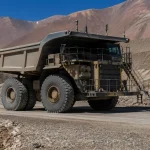
“The industry hasn’t seen a major greenfield discovery that has moved the needle in nearly a decade,” notes a recent S&P Global report. This lack of new projects means that by 2026, the market is relying on aging assets that face naturally declining ore grades. This trend is pushing miners toward advanced technologies to maintain margins, particularly in the realm of autonomous haul trucks and cost-saving fleet management, which have become standard for Tier-1 operators.
More Read

The AI-Energy Nexus: A New Layer of Demand
While electric vehicles (EVs) were the primary narrative of the early 2020s, the 2026 copper story is increasingly dominated by the AI-energy nexus. Data centers required to power generative AI are significantly more copper-intensive than traditional facilities.
High-density servers require advanced cooling systems and massive quantities of copper cabling. When combined with the necessary power grid upgrades to support these centers, the incremental demand is substantial. Goldman Sachs analysts have noted that while AI demand is a smaller percentage of the total 30-million-tonne refined market, its growth rate is nearly triple that of traditional industrial sectors.

Geopolitical and Regulatory Risks
Supply remains geographically concentrated, with Chile and Peru still accounting for a massive share of global output. However, the 2026 outlook is complicated by “fiscal creep”: the tendency of governments to increase taxes and royalties as commodity prices rise.
This geopolitical risk is driving a pivot toward more stable jurisdictions, even if they offer lower-grade deposits. We are seeing a resurgence in North American exploration and a renewed focus on rare earths and critical mineral supply chains as a matter of national security, which indirectly impacts copper through combined “critical mineral” permitting reforms.
2026 Outlook: The Strategic View
For decision-makers, the 2026 copper price forecast suggests a period of “sticky” high prices. The market is unlikely to see the $6,000/t levels of the previous decade because the incentive price to build new mines has moved significantly higher.
Key 2026 Operational Trends:
- Grade Decline Management: Massive investment in ore-sorting technology and leaching processes.
- Electrification of Fleets: A move away from diesel to reduce Scope 1 emissions, as seen in many major copper pits.
- Concentrate Tightness: Smelters in China and Europe are competing fiercely for available concentrate, leading to historically low treatment and refining charges (TC/RCs).

Summary of the 2026 Copper Forecast
The 2026 copper market is a story of resilience and structural scarcity. While “new supply” from projects like Quellaveco and Quebrada Blanca Phase 2 has successfully integrated into the market, it has served only to prevent a catastrophic shortage rather than create a surplus.
With prices likely to average between $11,500 and $12,500 per tonne, the industry remains in a high-margin environment for low-cost producers but faces immense pressure to fast-track the next generation of mines. Without a significant uptick in greenfield approvals by the end of 2026, the 2028-2030 period could see the “balanced” market tilt into a permanent structural deficit.