By Penny Langford

The global copper market is entering a pivotal transition phase. After a period of relative supply stability, the industry is now navigating a shift from a modest surplus toward a sustained structural deficit. By 2026, the convergence of declining ore grades in primary producing regions, aging infrastructure, and a surge in high-tech demand is expected to create a significant supply-demand gap that could redefine commodity pricing for the remainder of the decade.
While the International Copper Study Group (ICSG) has historically fluctuated in its outlook, its most widely cited 2026 projections point toward a refined copper deficit of approximately 150,000 tonnes. Financial institutions are even more hawkish; J.P. Morgan and Morgan Stanley have modeled shortfalls ranging from 330,000 to 600,000 tonnes. This deepening deficit is not merely a temporary market imbalance but the result of systemic constraints across the global copper supply chain.
The Chilean Bottleneck: A 9% Output Slide
Chile, the world’s largest copper producer, remains the center of gravity for global supply. However, the nation’s output is facing severe headwinds. Reports indicate that Chilean production could slip by as much as 9% year-over-year in 2026. This decline is largely driven by a two-pronged challenge: deteriorating ore grades at legacy mines and the physical limitations of aging infrastructure.
Decades of intensive extraction have naturally depleted the highest-grade portions of major deposits like Escondida and Chuquicamata. As miners move more earth for less metal, operational costs rise while total output plateaus or falls. Furthermore, the transition of several major Chilean assets from open-pit to underground operations is proving capital-intensive and subject to technical delays. These regional constraints are a primary driver behind the copper price forecast for 2026, as the market realizes that "easy" copper has largely been mined.


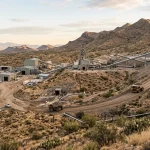
Processing infrastructure at a major copper operation, highlighting the scale of equipment needed to manage declining ore grades.

Refining Realities and TC/RC Dynamics
The tightness in the copper market is not limited to the pit; it is increasingly visible in the midstream. Treatment and Refining Charges (TC/RCs): the fees paid by miners to smelters: have hovered near historic lows, occasionally dipping toward zero. In a balanced market, higher TC/RCs indicate an abundance of concentrate for smelters to process. Near-zero figures suggest a desperate scramble for concentrate among global smelters, particularly in China.
Global refined copper production growth is expected to remain muted at roughly 0.9% in 2026. This anemic growth is a direct consequence of the concentrate shortage. Even as new smelting capacity comes online, particularly in Indonesia and India, there may not be enough raw material to keep these facilities running at full capacity. This refined metal bottleneck ensures that even if mine production recovers slightly, the actual "pigs" of copper reaching the market will remain scarce.

Demand Drivers: The AI and Energy Nexus
While supply is contracting, demand is accelerating. Global copper usage is forecast to grow by approximately 2.1% in 2026. This growth is increasingly decoupled from traditional industrial cycles and tied instead to the secular trends of the energy transition and digital infrastructure.
- AI and Data Centers: High-performance computing requires massive amounts of electrical infrastructure. J.P. Morgan estimates that hyperscale data centers alone could consume 475,000 tonnes of copper annually by 2026. The wiring, busbars, and power distribution systems required for AI-capable facilities are significantly more copper-intensive than traditional servers.
- Electrification and Grids: The global push for renewable energy integration requires a massive expansion of electrical grids. Wind and solar installations, along with the EV charging networks, rely heavily on copper for transmission and efficiency.
- The China Factor: Despite a broader economic moderation, China continues to represent roughly 58% of global copper consumption. While its traditional property sector has cooled, its leadership in EV manufacturing and renewable energy deployments ensures it remains the dominant consumer of the red metal.

The logistical complexity of large-scale extraction is increasing as miners target deeper and lower-grade deposits.
Price Consensus and the $150 Billion Investment Gap
The financial implications of this structural deficit are clear. Market analysts have established a base-case price target for copper at approximately $12,075 per tonne for 2026, with significant upside risks if supply disruptions in Chile or Indonesia worsen. Some bullish scenarios suggest prices could test the $14,000 per tonne level if tech-related demand exceeds current projections.
To bridge the long-term gap, the industry requires an estimated $150 billion in new investment by 2030. However, the mining sector faces a significant "time-to-market" challenge. The average lead time for a greenfield copper mine, from discovery to first production, now exceeds 10 years. This long gestation period, combined with tightening ESG regulations and political risks in key jurisdictions, means that even a sustained price rally may not trigger an immediate supply response.
2026 Copper Market Snapshot
| Metric | Forecast Value (2026) | Source/Notes |
|---|---|---|
| Market Balance | 150k – 600k Tonne Deficit | ICSG / JP Morgan / Morgan Stanley |
| Chile Output Growth | -9.0% YoY | Supply constraint due to grade decline |
| Refined Production Growth | ~0.9% | Bottlenecked by concentrate availability |
| Global Demand Growth | ~2.1% | Driven by AI, EVs, and Grid Upgrades |
| Average Price Target | $12,075 / Tonne | Base case institutional consensus |
| Investment Required | $150 Billion | Capital needed by 2030 to meet demand |
Operational Efficiency and Autonomous Technology
As the cost of extraction rises, operators are turning to technology to preserve margins. The adoption of autonomous haulage systems (AHS) and advanced telemetry is no longer a luxury but a necessity for managing the low-margin environments of 2026. By optimizing fuel consumption and reducing equipment downtime, these technologies allow miners to extract lower-grade ore more economically.

Data-driven decision-making in modern control rooms is essential for managing the operational complexities of the 2026 market.
Outlook for Investors and Operators
The 2026 outlook for the copper sector is defined by a paradox: record-high demand visibility met with unprecedented supply fragility. For operators, the focus will remain on operational excellence and brownfield expansions to mitigate the 9% slide seen in primary production hubs. For investors, the structural deficit suggests that copper is no longer a cyclical bet on global GDP but a strategic play on the core infrastructure of the 21st century.
With TC/RCs signaling extreme concentrate tightness and refined production failing to keep pace with the electrification of the global economy, the transition to a structural deficit appears inevitable. The "red metal" remains the indispensable element of the energy transition, and its availability: or lack thereof: will be the defining story of the 2026 commodities market.
LinkedIn/X Shareable Snippet:
The copper market is hitting a wall. With Chile’s output slipping 9% and AI/Data centers demanding 475k tonnes by 2026, we are looking at a structural deficit that could push prices toward $12,000/t. The age of "easy copper" is over. #CopperMining #EnergyTransition #CriticalMinerals #MiningNews #SkillingsMining