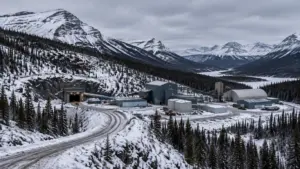
VANCOUVER, British Columbia : The Canadian federal government has committed C$500 million (approximately US$352 million) to support the multi-billion dollar expansion of the Red Chris copper-gold mine, marking one of the largest strategic investments in the nation’s critical minerals sector to date. Announced Monday under the landmark Canada–British Columbia Cooperative Prosperity Agreement, the funding clears a primary financial hurdle for operator Newmont Corporation and its joint-venture partner, Imperial Metals, as they transition the site into a high-tier underground operation.

The capital injection is specifically earmarked for the Red Chris Block Cave expansion in northwest British Columbia’s "Golden Triangle." Once fully operational, the project is projected to increase Canada’s total annual copper production by more than 15%, positioning the mine as a cornerstone of the North American energy transition supply chain.
For Newmont, which holds a 70% stake in the project following its 2023 acquisition of Newcrest Mining, the federal backing provides a critical de-risking mechanism for a project that has faced the typical inflationary and technical pressures of large-scale block cave development. Imperial Metals, holding the remaining 30%, saw its shares rally on the news as the federal commitment significantly improves the joint venture’s internal rate of return (IRR) ahead of a final investment decision.
A Pillar of the Cooperative Prosperity Agreement
The C$500 million allocation is the first major disbursement under the Canada–British Columbia Cooperative Prosperity Agreement, a federal-provincial framework designed to fast-track resource projects that align with "Net Zero" industrial goals.
"Red Chris is not just a mine; it is a strategic asset for the 21st-century economy," said a senior federal official during the announcement in Vancouver. "By backing the transition to block cave mining, we are securing a stable, long-term supply of copper that is essential for everything from electric vehicle grids to advanced manufacturing, while creating thousands of high-wage jobs in British Columbia."
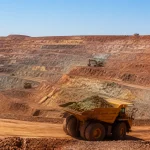
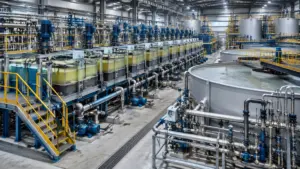
The funding is structured as a combination of direct grants and low-interest infrastructure loans intended to support the massive electrical and logistics upgrades required for the underground transition. This includes a conditional $44.2 million specifically for Northwest Transmission Line upgrades, which will supply up to 145 MW of clean hydroelectricity to the site, replacing diesel-intensive processes currently used in the open-pit configuration.

Technical Deep Dive: The Block Cave Transition
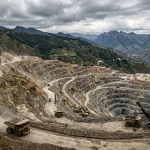
The expansion represents a fundamental shift in the site’s operational DNA. Since its inception, Red Chris has operated as a conventional open-pit mine. However, the discovery of the deep, high-grade "East Zone" ore body necessitated a move toward block cave mining: a sophisticated underground method where an ore body is undercut, allowing it to progressively collapse under its own weight into "drawbells" for extraction.

According to the 2021 Pre-Feasibility Study (PFS) and subsequent technical updates from Newmont, the transition will unlock approximately 80,000 tonnes of copper per year at full ramp-up. This is a nearly fourfold increase over the current realized output of approximately 18,000 tonnes (18 kt) in 2023.
| Metric | Current Open-Pit (FY2023/24) | Block Cave Expansion (Projected) |
|---|---|---|
| Annual Copper Output | ~18,000 Tonnes | ~80,000 Tonnes |
| Annual Gold Output | ~40,000 Ounces | ~316,000 Ounces |
| Ore Processing Rate | 11 Mt / Year | 13.6 Mt / Year |
| Projected Mine Life | ~2038 | Mid-2040s+ |
| Emissions Profile | Baseline | >70% Reduction |
The move to block cave mining is technically demanding but offers superior economics for deep, massive deposits. The initial 31-year mine life projected in the PFS is now expected to extend well into the 2050s as Newmont continues to explore the deeper reaches of the volcanic-intrusive complex. The scale of the project mirrors recent high-stakes moves in the sector, including the Rio-BHP race for Tier 1 copper dominance, where long-life, expandable assets are the primary prizes.
Labor and Economic Impact
The expansion is expected to be a major labor driver for British Columbia. Newmont estimates that the construction phase will create over 1,800 jobs, with roughly 1,500 permanent operational roles required once the block cave reaches steady-state production.
Crucially, the expansion is being developed under a consent-based partnership with the Tahltan Nation. The federal funding announcement specifically highlighted that the project aligns with Indigenous engagement frameworks, ensuring that a significant portion of the C$500 million will flow into community-benefit agreements, local procurement, and specialized training programs for the Tahltan workforce.
"The federal support validates our belief that Red Chris is one of the world's premier copper-gold opportunities," said a spokesperson for Imperial Metals. "This isn't just about capital; it's about the confidence it instills in the entire Golden Triangle as a hub for critical mineral development."
ESG and the Clean Energy Mandate
A central requirement for the federal funding was a measurable commitment to decarbonization. Newmont has pledged that the expanded Red Chris operation will achieve a 70% reduction in greenhouse gas emissions compared to the current open-pit baseline.
This will be achieved through:
- Electrification of the underground fleet: Moving away from diesel-powered haulage to battery-electric and tethered-electric machinery.
- Hydroelectric Integration: Leveraging the B.C. grid's low-carbon power profile via the Northwest Transmission Line.
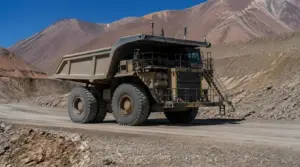
- Operational Efficiency: Block cave mining generally requires less material movement per tonne of ore compared to massive open pits, reducing the overall energy intensity of the operation.
This focus on ESG aligns with broader industry trends where investors are increasingly scrutinizing digital twins and carbon footprints over simple drill results.
Market Context: Copper and Gold in 2026
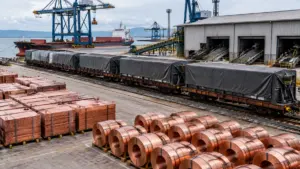
The timing of the investment coincides with a structural supply deficit in the global copper market. As the energy transition accelerates, the demand for high-purity copper cathodes is outstripping new mine supply. Simultaneously, the gold market remains robust, with prices recently reclaiming key resistance levels at $4,180 amid shifts in global monetary policy.

For investors, the Red Chris expansion represents a "margin-expansion" story. The 2021 PFS estimated an all-in sustaining cost (AISC) for gold on a co-product basis at negative US$144 per ounce, thanks to the massive copper by-product credits. Even with post-2021 inflation adjustments, Red Chris remains positioned at the bottom of the global cost curve.
Risks and Forward Outlook
Despite the federal backing, the project still faces significant execution risks. Block cave mining is notorious for its "ramp-up" volatility: technical challenges such as rock fragmentation, mud rushes, and cave propagation can delay full production by years.
Furthermore, Newmont is navigating a complex global portfolio. As the company continues to refine its assets, it must balance the capital-heavy requirements of Red Chris against other Tier 1 priorities. However, the C$500 million federal commitment significantly lowers the "hurdle rate" for the project, making it almost certain that Newmont will green-light construction following the completion of the current Definitive Feasibility Study (DFS).
Skillings Market Snapshot: July 6, 2026
To provide context for the day’s developments, the following table summarizes key commodity and equity benchmarks as of the New York market open today.
| Asset | Price / Value | Change (24h) |
|---|---|---|
| Copper (LME 3-Month) | $5.12 / lb | +1.4% |
| Gold (Spot) | $4,192 / oz | +0.8% |
| Silver (Spot) | $74.20 / oz | +1.1% |
| Newmont Corp (NEM) | $84.15 | +2.2% |
| Imperial Metals (III) | $4.88 | +8.7% |
| TSX Mining Index | 12,450 | +1.2% |
Strategic Implications
The federal intervention at Red Chris marks a departure from traditional "hands-off" resource policy in Canada. It signals that Ottawa views copper production not just as a commercial venture, but as a matter of national security and economic sovereignty.

As the industry looks toward the 2030s, the Red Chris expansion serves as a blueprint for how large-scale miners can partner with government and Indigenous nations to unlock the "super-mines" required for the energy nexus. With a 15% boost to national output on the horizon, Canada is making its move to become the dominant copper supplier for the Western Hemisphere.
By Penny Langford
Skillings Mining Intelligence