As of early 2026, the global narrative surrounding Artificial Intelligence (AI) has shifted from large language model capabilities to the physical constraints of the power grid. While silicon chips and cooling fans dominate the conversation, a more fundamental material is dictating the pace of the digital revolution: copper.

The rapid expansion of hyperscale data centers is creating an unprecedented demand spike for red metal. In the transition from general-purpose computing to AI-accelerated workloads, copper has emerged as the critical infrastructure backbone, serving as the primary medium for power distribution, high-speed signal transmission, and advanced thermal management.
The AI-Energy Nexus: Why Copper Intensity is Surging
The shift toward AI-centric data centers is not merely an incremental change in scale; it is a fundamental shift in energy density. Traditional data centers require significant copper for power cabling and busbars, but AI facilities are “copper hogs” on a different magnitude.
According to recent industrial data, a single hyperscale AI data center can consume up to 50,000 metric tons of copper. To put this in perspective, conventional data centers typically require between 5,000 and 15,000 metric tons. The tenfold increase in copper intensity is driven by the sheer power density required to run modern GPU clusters.
Comparative Copper Consumption in Infrastructure
| Facility Type | Average Copper Intensity (Metric Tons) |
|---|---|
| Traditional Enterprise Data Center | 5,000 – 8,000 |
| Standard Hyperscale Facility | 12,000 – 15,000 |
| AI-Dedicated Hyperscale Facility | 40,000 – 55,000 |
| Average Modern Office Building | < 100 |
This surge is reflected in the capital expenditure of technology giants. In the first quarter of 2024, Alphabet, Amazon, and Microsoft collectively invested $40 billion, a figure that has only accelerated into 2026 as these firms race to secure the physical infrastructure necessary for AI dominance.
More Read


Internal technical diagram illustrating high-density copper busbar configurations in an AI server rack.

Technical Focus: Wiring and the 86kg Chip Cabinet
The technical driver of this demand starts at the chip level. Nvidia’s GB200 Blackwell chips, which have become the industry standard for AI training, represent a massive leap in copper usage. Each chip cabinet in a Blackwell-based cluster requires approximately 86.5 kg of copper.
This copper is utilized in:
More Read

- Internal High-Speed Cabling: Minimizing latency between GPUs requires dense copper interconnects.
- Power Distribution Units (PDUs): Converting high-voltage utility power down to the sub-1V levels required by chips involves massive copper-wound transformers and thick busbars.
- Heat Sinks and Cold Plates: Copper’s superior thermal conductivity makes it the material of choice for the plates that sit directly atop processors.
The annual demand from just one chip manufacturer’s growth forecasts can translate to over 4,300 metric tonnes of copper. When scaled across the entire ecosystem of AI hardware providers, the pressure on global supply chains becomes clear. You can read more about the intersection of tech and mining in our report on Codelco and Microsoft’s “Digital Brain”.
Cooling Infrastructure: The Liquid Transition
As power densities per rack rise from 15kW to over 100kW, traditional air cooling is no longer viable. The industry is rapidly pivoting to liquid cooling, a transition that significantly increases copper requirements.
Liquid cooling systems rely on complex networks of copper piping and heat exchangers. Unlike air, which uses aluminum fins and fans, liquid systems utilize “cold plates” manufactured from high-purity copper to wick heat away from the silicon. The secondary loops, which transport heated fluid to external cooling towers, require miles of copper tubing. This shift in cooling methodology adds a “thermal premium” to the copper demand already present in the electrical systems.

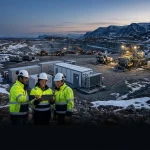
Modern mineral processing facilities are scaling up to meet the technical grades required for high-purity copper components in liquid cooling systems.
The Infrastructure Lag: 2 Years vs. 18 Years
The primary risk to the AI boom is a structural mismatch in development timelines. A state-of-the-art AI data center can be planned, permitted, and constructed in approximately 18 to 23 months. In contrast, bringing a new copper mine from discovery to commercial production takes an average of 18 years.
This “speed gap” means that the supply side of the equation cannot react in real-time to the demands of the tech sector. While companies like Microsoft and Amazon can pivot their 2027 roadmaps in a single board meeting, the mining industry is still working to bring online projects that were discovered in the early 2010s.
We are seeing this play out in high-potential regions like the Vicuña District. Companies are racing to expand capacity, as seen in Lundin Mining’s recent stake increases, yet the physical constraints of extraction remain.

The Vicuña District represents one of the few global regions capable of delivering the massive scale of copper required for the AI-energy nexus.
Market Forecast: The 10 Million Ton Deficit
The forecast for copper consumption in data centers suggests a 114% increase between 2023 and 2030, eventually reaching 1 million metric tonnes annually for this sector alone. However, the data center boom is not happening in a vacuum. It is competing for the same copper supply needed for:
- Electric Vehicles (EVs): Which use 3x to 4x more copper than internal combustion engines.
- Renewable Energy Grid Ties: Solar and wind farms require massive electrical infrastructure to connect to the grid.
- General Electrification: The global push to decarbonize heating and transport.
S&P Global projects that total copper demand will reach 42 million metric tons by 2040. Current supply projections, however, only reach approximately 32 million metric tons. This 10 million metric ton deficit is no longer just a “mining problem”: it is a systemic risk to global technological advancement.
The urgency has prompted government action. The U.S. funding bills for critical minerals and the EU’s Strategic Move into critical mineral reserves are direct responses to this looming shortfall.
Operational Resilience in the Copper Supply Chain
For data center operators and their investors, securing the supply chain has become a strategic priority. This involves moving beyond simple procurement and into long-term partnerships with mining majors.
We are seeing a new trend where tech giants are effectively “pre-funding” mining capacity or signing long-term off-take agreements to ensure their 2028 and 2030 data center builds are not stalled by a lack of wiring. This mirrors the move made by automakers in the lithium space over the last five years.
Key Regions to Watch in 2026
- Chile: Remains the global heavyweight, though operational challenges at Codelco persist.
- The Andean Frontier: Projects in Argentina (Vicuña District) are becoming essential to the global balance.
- North American Brownfields: Revitalizing old mines in Arizona and Utah to provide “domestic” copper for U.S. data center hubs.

Exploration for high-grade copper deposits in the Andes is intensifying as tech-driven demand reaches a fever pitch.
Conclusion: The Physical Reality of Virtual Intelligence
While the “Cloud” is often discussed as an ethereal concept, its reality is deeply grounded in the earth. The AI revolution is, at its core, a massive electrical engineering project. Without a radical expansion in copper mining and processing capacity, the ambitious growth targets of the world’s leading technology firms will face a physical ceiling.
As we move through 2026, the industry is recognizing that copper is not just another commodity; it is the fundamental enabler of the AI-Energy nexus. Decision-makers in both the tech and mining sectors must now bridge the 16-year development gap to ensure that the data centers of the future have the wiring and cooling infrastructure they need to operate.
For more deep-dive analysis on the companies dominating this transition, refer to The Skillings Power List: 10 Mining Companies Dominating the 2026 Energy Transition.