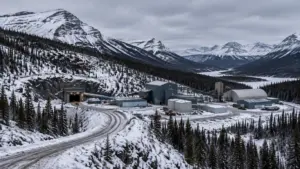
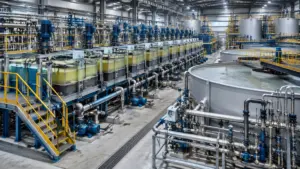
Global critical mineral supply chains have entered a high-stakes realignment, driven by escalating geopolitical friction, aggressive state-led industrial policies, and mounting vulnerabilities in downstream manufacturing. According to the International Energy Agency’s (IEA) comprehensive assessment, up to $6.5 trillion in economic output outside China remains directly at risk due to concentrated processing nodes and tightening export controls.

For mining operators, capital allocators, and industrial manufacturers, the era of relying solely on cost-optimized, single-source supply chains has drawn to a close. Governments across the G7 and allied nations are rewriting regulatory frameworks, committing tens of billions of dollars to alternative processing corridors, and exploring high-risk technological frontiers: ranging from subterranean mineral processing in Namibia to deep-sea mud extraction off the coast of Japan: to insulate vital energy transition pathways.
The IEA 2026 Assessment: Unprecedented Market Concentration
The IEA’s latest market intelligence underscores a stark operational reality: across six major energy transition minerals: copper, lithium, nickel, cobalt, graphite, and rare earth elements: the average market share of the top three producing nations remains anchored near 90 percent. While exploration spending has experienced bouts of volatility, the true bottleneck lies in refining and processing capacity.
China continues to dominate refining across 19 of the 20 strategic minerals tracked by the agency. Indonesia has cemented its control over nickel processing growth, yet when combined with Chinese industrial corridors, these two nations account for more than three-quarters of global refined supply expansion over past cycles.
| Mineral / Sector | Primary Refining Concentration (Top Producer Share) | Key Vulnerability Factor |
|-------------------|-----------------------------------------------------|--------------------------|
| Rare Earth Elements | >85% (China) | Heavy REE export controls |
| Battery Graphite | >75% (China) | Downstream trade restrictions |
| Nickel | >65% (Indonesia / China) | Processing feedstock dependency |
| Lithium | >60% (China / Global Hubs) | Price volatility and supply gaps |
This extreme spatial concentration transforms ordinary commercial transactions into geopolitical leverage points. As the IEA notes, the vulnerability is no longer merely about whether physical volumes can be extracted from the earth, but whether industrial economies can secure refined inputs without sudden supply shocks or crippling tariff barriers.

China’s Export Controls and the Limits of Decoupling
The urgency behind global diversification efforts intensified following a series of strategic export restrictions on critical components. Controls introduced on heavy rare earth elements and battery-grade graphite have demonstrated how quickly localized export licensing can disrupt international automotive, defense, and high-technology manufacturing lines.


Despite political rhetoric surrounding total economic decoupling, macroeconomic data indicates that a complete and rapid severing of supply ties with China is practically impossible over the medium term. Building independent refining capacity requires multi-year permitting windows, specialized engineering expertise, and massive capital expenditure. Consequently, the prevailing strategy among Western industrial powers is not total decoupling, but structured risk mitigation: moving from single-point dependency to diversified, multi-node supply architectures.
Allied Countermeasures: US Capital, Swedish Security, and Regional Hubs
To counteract these vulnerabilities, Western governments and allied mining firms are deploying unprecedented financial and legal firepower to establish parallel supply networks.
United States and European Capital Deployment
The United States government is actively funneling over $10 billion into domestic and allied critical mineral supply chain investments through Title III of the Defense Production Act and export-import financing facilities. These funds target domestic processing facilities, recycling technology, and secure extraction projects across North America and allied jurisdictions.
In Europe, Sweden has taken a definitive legislative step by formally declaring domestic mining operations to be a matter of national security. This designation cuts through traditional bureaucratic red tape, fast-tracking environmental reviews and permitting processes for critical mineral projects: particularly iron ore, rare earths, and battery metals: across the Nordic region.
Lynas and the South Korean Partnership
Industrial consolidation and bilateral agreements are also reshaping commercial realities. Rare earth producer Lynas Rare Earths finalized a strategic $29 million supply and processing arrangement with South Korean industrial partners, securing dedicated offtake streams for permanent magnet manufacturing outside traditional Chinese channels.
Namibia’s Processing Ambitions
In southern Africa, Namibia is positioning itself as a primary African hub for downstream value addition. Rather than exporting raw rare earth and lithium ores unprocessed, Namibian state entities and international mining developers are constructing regional separation and refining facilities. This policy ensures that host nations capture a higher percentage of the economic value chain while providing alternative export routes to European and North American markets.
The Deep-Sea Frontier: Japan’s Minamitori Mud Breakthrough
Faced with severe supply vulnerabilities, resource-scarce nations are looking far beyond traditional terrestrial mining. Japan has reported significant progress in evaluating deep-sea mineral deposits within its Exclusive Economic Zone (EEZ), specifically surrounding Minamitori Island.

Recent scientific and geological surveys confirm that deep-sea mud deposits near Minamitori contain concentrations where heavy and medium rare earth elements (REEs) make up roughly 54 percent of the total rare earth content. These muds are exceptionally rich in dysprosium, terbium, and yttrium: critical inputs for high-performance electric vehicle motors and defense electronics.
While commercial-scale extraction faces steep technical, environmental, and financial hurdles: including deep-water retrieval logistics and stringent marine environmental safeguards: Japan’s state-backed exploration initiatives signal that seabed resources are being treated as a serious long-term strategic hedge against terrestrial supply monopolies.
Strategic Implications for Operators and Investors
For industry decision-makers navigating the 2026 economic landscape, the implications of these shifts are clear:
- Valuation Premiums for Secure Assets: Assets located within stable, allied jurisdictions (such as North America, Scandinavia, and established African mining corridors) command valuation premiums due to their lower geopolitical risk profile.
- Integration of Downstream Processing: Mining houses can no longer rely on shipping unrefined concentrates. Integrating domestic or allied refining steps is now essential for securing project financing.
- Regulatory Agility: Navigating fast-tracked national security permits in jurisdictions like Sweden while complying with stringent ESG frameworks requires specialized operational foresight.
The global critical minerals market is undergoing a structural transformation from pure cost-efficiency to sovereign resilience. Enterprises that adapt to this multi-node reality will capture the long-term rewards of the energy transition.
Social Media Snippet
LinkedIn / X Shareable Post:
The IEA warns that $6.5T in economic output outside China remains vulnerable to critical mineral export controls. With Sweden declaring mining a national security interest, Japan advancing deep-sea REE extraction, and $10B in US supply chain investments rolling out, how is your organization hedging against supply concentration? Read our deep-dive analysis on the 2026 critical minerals landscape: https://skillings.net/ #Mining #CriticalMinerals #SupplyChain #EnergyTransition #Geopolitics #MiningNews