By Salini Krishnan

The global copper market is approaching a critical inflection point. While the transition to renewable energy has long been cited as the primary engine for future demand, a new, more aggressive consumer has emerged: the AI-driven data center. As we look toward 2026, the convergence of aging mine supply and a vertical surge in grid infrastructure requirements is creating a perfect storm.
Industry analysts are now projecting a 600,000-ton refined copper shortfall by 2026. This is not a speculative "what-if" scenario; it is a structural deficit baked into the current project pipeline and the escalating demands of the digital economy. While electric vehicles (EVs) and solar arrays remain vital, it is the AI grid demand that has become the ultimate wildcard, fundamentally shifting the "Scarcity Premium" for copper producers worldwide.
The 600,000-Ton Math: Where the Supply Gap Opens
The headline figure of a 600,000-ton shortfall represents more than just a statistical outlier. It reflects the widening delta between primary mine production and the capacity of global smelters to deliver refined cathode.
Several factors are converging to create this gap:
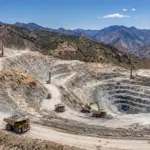
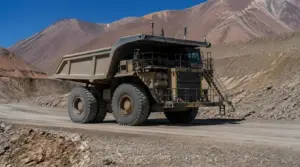
- Ore Grade Degradation: Established Tier-1 assets in Chile and Peru are battling declining grades, requiring more energy and water to produce the same volume of concentrate.
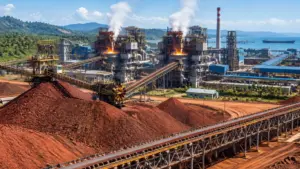
- Smelter Bottlenecks: While mine output struggles to grow, the global smelting complex is facing its own constraints, with high treatment and refining charges (TCRCs) signaling a shortage of high-quality concentrate.
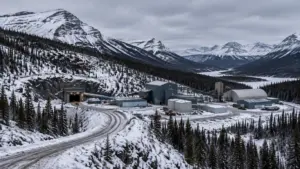
- Project Delays: Major new projects are taking longer to permit and build, often exceeding the 10-to-15-year development window once considered standard.
This deficit is arriving exactly as the global power grid requires its most significant overhaul in a century.


The AI Wildcard: 3x Copper Intensity
The most significant shift in the 2026 outlook is the copper intensity of AI-optimized data centers. Standard data centers have always been copper-intensive, using the metal for power distribution, grounding, and cooling. However, hyperscale AI facilities: designed to house power-hungry GPUs like the H100 and B200: require a different order of magnitude.

Recent technical audits suggest that AI grid upgrades and data center internal wiring are consuming up to 3x more copper than previous industrial expansions. This increase is driven by two primary factors:
1. Power Density and Grid Connection
A typical AI data center can demand upwards of 50 to 100 megawatts (MW) of power, with "gigawatt-scale" campuses now on the drawing board. Connecting these facilities to the high-voltage grid requires massive amounts of copper in the form of busbars, transformers, and high-capacity cabling. Unlike a traditional warehouse or office building, an AI hub is effectively a high-density industrial furnace that happens to process data.
2. The Shift to Liquid Cooling
Traditional air cooling is no longer sufficient for high-density AI racks. The industry is moving toward direct-to-chip liquid cooling and immersion systems. These systems rely on extensive networks of copper cold plates and heat exchangers due to copper's superior thermal conductivity. This transition alone has added thousands of tons to the projected demand for precision-engineered copper components.

The "Scarcity Premium" Hitting Copper Stocks
Investors are beginning to price in this structural deficit. We are seeing a "Scarcity Premium" applied to producers with pure-play copper exposure and clear growth trajectories. Companies that can deliver incremental tons into the 2026-2027 window are being re-rated by the market.
For instance, Capstone Copper has reported record results, benefiting from strong production growth and the upward trajectory of copper prices. This trend is likely to accelerate as the market realizes that new supply cannot be "turned on" quickly. The valuation of critical minerals assets is no longer just about the energy transition; it is about the physical infrastructure of the internet itself.
The Scarcity Premium is particularly visible in the P/NAV (Price to Net Asset Value) ratios of copper developers. Assets that are fully permitted and moving toward construction are trading at a significant premium compared to historical averages, as they represent the only viable "bridge" to cover the 600,000-ton shortfall.
Why Recycling Can't Bridge the Gap
A common counter-argument is that high prices will stimulate a surge in copper recycling, effectively closing the deficit. However, technical and logistical constraints suggest that secondary smelting cannot solve the 2026 crisis.
Scrap Quality and Complexity
Modern electronics and grid components are increasingly complex. Separating copper from high-tech alloys and composite materials is an energy-intensive process. While "clean" scrap (No. 1 copper wire) is easily recycled, the bulk of the available scrap pool is lower grade and requires extensive refining.
Smelter Capacity Limits
Secondary smelting: the process of turning scrap back into high-grade cathode: is limited by existing capacity. Most global smelters are designed to process concentrate (from mines), not scrap. Reconfiguring these facilities for a scrap-heavy diet requires significant capital expenditure and downtime, which many operators are unwilling to undertake while the market is tight.
Furthermore, the volume of copper currently locked in existing infrastructure is not yet ready for the "circular economy." Most of the copper installed during the industrial booms of the early 2000s is still in use, and the replacement cycle for grid-scale transformers is often 30 to 40 years.

The 2026 Outlook: Base, Bull, and Bear Cases
As we navigate the road to 2026, we can model three distinct scenarios for the copper market based on the interplay of AI demand and mine supply.
| Scenario | 2026 Deficit Projection | Price Impact | Key Driver |
|---|---|---|---|
| Base Case | 450,000 – 600,000 tons | $5.50 – $6.50/lb | Steady AI growth, modest mine delays. |
| Bull Case | >800,000 tons | >$7.50/lb | Gigawatt-scale AI hubs, major supply disruptions. |
| Bear Case | <200,000 tons | $4.00 – $4.50/lb | AI hype cools, global recession slows grid spend. |
The "Base Case" remains the most likely, supported by the physical reality of grid modernization and the relentless rollout of NVIDIA-based hardware. For the mining industry, this represents a period of sustained high margins, but also immense pressure to deliver.
Strategic Implications for Operators and Investors
The 2026 copper deficit is not just a price signal; it is an operational challenge. For mining companies, the focus must be on maximizing throughput at existing assets and accelerating brownfield expansions. The days of "easy copper" are over, and the industry must now find ways to extract value from more complex, lower-grade deposits.
For investors, the message is clear: look for the "copper-AI nexus." Companies that are integrated into the high-tech supply chain or those providing the specialized grid infrastructure will be the primary beneficiaries of the scarcity premium.
As the world continues to digitize and decarbonize simultaneously, copper has moved from being a simple industrial metal to a strategic asset. The 600,000-ton shortfall is the first major test of this new reality. In 2026, we will see which players were prepared for the wildcard.

About Skillings Mining Intelligence
Skillings Mining Intelligence has been the trusted voice of the global mining industry since 1912. We provide daily news, expert analysis, and market intelligence to help professionals navigate the complexities of the commodity markets. For more deep-dives into the metals driving the future, visit our mining review section.