Key Takeaways
- U.S. pushes deep-sea mining Cook Islands partnership amid China’s Pacific expansion.
- Cook Islands–China pact in February sparked geopolitical tension with New Zealand.
- Trump’s order bypassed UNCLOS to expedite U.S. seabed mining projects.
- Environmental risks remain unclear; scientists urge moratorium.
- The Metals Company confirms mineral reserves in Clarion Clipperton Zone.
The United States has launched talks with the Cook Islands to map its seabed — a strategic move that places the Pacific microstate at the center of an intensifying global contest over deep-sea mining.

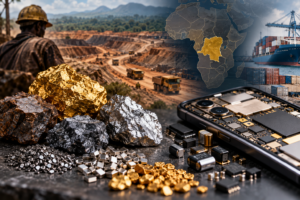
The U.S. State Department announced this week it would support seabed mapping within the Cook Islands’ Exclusive Economic Zone (EEZ), one of the most mineral-rich zones in the Pacific. The deal elevates the U.S. role in the region’s growing competition over polymetallic nodules — a key source of cobalt, nickel, and rare earths critical to clean tech supply chains.
Just months earlier, the Cook Islands signed a five-year strategic partnership with China that included deep-sea mining development. The February agreement rattled New Zealand and widened geopolitical cracks across the Pacific.
Key Players in Cook Islands Seabed Mining
| Country | Company | Project Name | Status | Mineral Focus |
|---|---|---|---|---|
| China | Multiple SOEs | N/A | MoU signed | Cobalt, Nickel |
| U.S. | The Metals Company | NORI-D | Probable reserves declared | Polymetallic Nodules |
| Canada | The Metals Company | NORI-D | Active exploration | Nickel, Copper |
China’s Move Fuels Deep-Sea Mining Cook Islands Surge
“The U.S. isn’t just funding marine science — it’s marking strategic territory,” said Maria Robertson, a Pacific affairs researcher at the University of Auckland. “Deep-sea mining Cook Islands agreements are now the currency of regional influence.”
The Cook Islands’ pivot toward China in February led to diplomatic fallout with Wellington. New Zealand suspended aid after Prime Minister Mark Brown bypassed traditional consultation protocols, violating a bilateral agreement to coordinate foreign policy and security.
More Read

This week, New Zealand’s Ministry of Foreign Affairs responded cautiously to the U.S. initiative, noting it “respects the rights and responsibilities of states to manage their mineral resources.”

Trump Order Accelerates U.S. Seabed Mining Push
The U.S. push into the Pacific seabed is backed by executive action. In April, President Donald Trump signed an order to expedite seabed mining licensing — a decision critics say undermines international maritime law.
“The U.S. is abandoning multilateralism on the seabed,” said Scot Anderson, a legal adviser at Womble Bond Dickinson. “This sets a dangerous precedent for other powers eyeing the same territory.”
More Read
Within days, The Metals Company — a Canadian-registered firm with U.S. operations — filed the first U.S. application under a 1980 law. The firm this week published probable mineral reserves for its NORI-D project in the Clarion Clipperton Zone, one of the world’s most promising deep-sea mining areas.
Environmental Costs of Deep-Sea Mining Cook Islands Strategy
Proponents claim deep-sea mining carries a smaller environmental footprint than terrestrial alternatives. Critics remain unconvinced.
“The deep ocean remains poorly studied and potentially fragile,” said Dr. Annika Feldstein of the Global Marine Institute. “Unregulated deep-sea mining could disrupt entire ecosystems before we even understand them.”
Calls for a moratorium are growing louder. The International Seabed Authority, which governs mining in international waters, has delayed formal approvals for commercial activity, citing a lack of environmental research.
Despite the warnings, the Cook Islands continues to review exploration licenses from companies backed by China, Canada, and now, the U.S.
Seabed as Strategic Leverage
As global demand for critical minerals climbs, deep-sea mining Cook Islands projects have become proxies for great-power competition. Whether the Cook Islands can extract economic value without losing diplomatic independence remains uncertain.
“This is no longer just about geology,” said Robertson. “It’s about who gets to write the rules beneath the waves.”