The clock finally stopped ticking. For years, the International Seabed Authority (ISA) has operated in a vacuum of “eventually,” treated by most of the mining industry as a slow-motion bureaucratic exercise that would never actually yield a permit. That luxury of time evaporated in March 2026.

While the headline coming out of the ISA Council session held March 9-20 was “continued stalemate,” that reading misses the strategic reality on the ground. A stalemate in 2026 isn’t the same as a stalemate in 2022. The pressure has reached a point of structural failure. Between the legal triggers of the “two-year rule,” the aggressive unilateral moves by the United States, and the desperate need for battery metals that terrestrial mining cannot currently meet, the ISA no longer has the option to do nothing.
2026 is the year the deadlock breaks: not because of a sudden burst of diplomatic harmony, but because the alternative is a total collapse of international maritime governance.
The March Stalemate: A Feature, Not a Bug
The most recent session in Kingston concluded without a finalized Mining Code. That’s the official line. A coalition of 40 nations is now backing a moratorium or precautionary pause on deep-sea mining. To the casual observer, this looks like a failure. To the industry insider, it looks like a desperate attempt to hold back a rising tide.
The ISA Council did adopt a decision calling on the Legal and Technical Commission (LTC) to continue its inquiry, with a full report expected in July 2026. But here is where it gets uncomfortable for the environmental lobby: the delay isn’t actually stopping the momentum. It’s condensing it.
More Read

The deadlock in March was a calculated pause before the July 2026 session, which marks the expiration of exploration contracts for major players like Nauru Ocean Resources Inc. (NORI), a subsidiary of The Metals Company (TMC). When those contracts hit their renewal or transition points, the ISA must act. The “two-year rule” triggered by Nauru back in 2021 was supposed to force a code by 2023. We are now three years past that deadline. The legal architecture is screaming.


The July Cliff and the NORI Factor
The upcoming July 2026 session is the real inflection point. This isn’t just another meeting; it is a legal ultimatum. The Metals Company has already faced compliance inquiries over threats to pursue unilateral mining outside the ISA framework. While critics call this posturing, the technical reality is that the machinery is ready. The ships are built. The collectors have been tested.
More Read

The ISA is currently trapped between two irreconcilable forces. On one side, you have the 40-nation moratorium coalition. On the other, you have a set of legal obligations to “developing states” like Nauru that the UN-backed body cannot simply ignore without delegitimizing its own charter.
If the ISA fails to provide a regulatory pathway in July, we are looking at a fragmentation of international waters. If the ISA won’t permit, states will look for ways to permit themselves. We’ve already seen the blueprint for this.
The Go-It-Alone Strategy: Enter the United States
Perhaps the most disruptive event of early 2026 wasn’t even in Kingston. In January 2026, the United States finalized a streamlined deep-sea mining permitting rule. This move, which critics argue bypasses international protocols, effectively signals that the U.S. is tired of waiting for the ISA to find its spine.
The strategic calculus here isn’t subtle. The U.S. is not a party to the United Nations Convention on the Law of the Sea (UNCLOS), though it generally follows its principles. By creating its own domestic framework for deep-sea extraction in international waters (under the Deep Seabed Hard Mineral Resources Act), Washington is hammering out a “Plan B” that could throttle the ISA’s relevance.
This creates a brutal choice for the ISA. They can either finalize the Mining Code and maintain control over environmental standards and royalty distributions, or they can watch the world’s largest economy: and its allies: carve out their own rules. The “deadlock” will break because the ISA cannot afford to become a relic.
https://cdn.marblism.com/hwuB-4BMyC5.webp
Government policy and defense funding are increasingly overlapping with critical mineral security, as seen in the recent U.S. permitting shifts.
Supply Chain Gravity: You Can’t Regulate Geology
The reason deep-sea mining has become an unavoidable topic in 2026 is simple: terrestrial mining is hitting a wall. While we’ve seen major developments like Norway’s rare earth jackpot at the Fen Project, the scale of the “energy nexus” demand is staggering.
The Clarion-Clipperton Zone (CCZ) contains more nickel, manganese, and cobalt than all terrestrial deposits combined. In a world where Washington and Santiago are signing pacts to secure global copper and lithium, ignoring a massive, high-grade deposit on the seafloor is no longer a viable policy for any nation serious about electrification.
The numbers are grim for the anti-mining lobby. To reach net-zero targets by 2050, we need a 500% increase in the production of certain minerals. Terrestrial mines are taking longer to permit: often 15 to 20 years: and facing increased geopolitical risks. Look at the Mexican mining risk outlook for 2026; domestic policy shifts are making traditional land-based jurisdictions more volatile.
Deep-sea mining, by contrast, offers a massive resource in a region where there are no local communities to displace and no forests to clear. The environmental trade-off is the disturbance of the abyssal plain: a high price, sure, but one that more nations are becoming willing to pay to avoid the human and environmental costs of terrestrial expansion.
https://cdn.marblism.com/6QOOiP2_mKT.webp
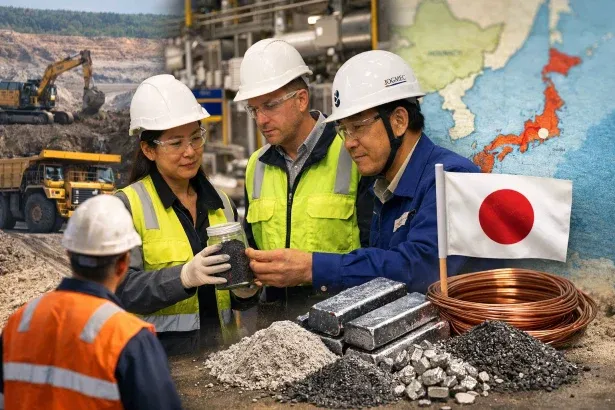
Strategic interests in mineral supply chains are driving nations like Japan to look toward the seabed as a stabilizing force for industrial production.
The Commercial Reality: No More “Pilot” Programs
We have moved past the era of “feasibility studies” and “environmental impact assessments” that lead nowhere. The technology is no longer the bottleneck. In 2026, the industry is looking at industrial-scale collection.
The Metals Company and its peers have proven they can bring polymetallic nodules to the surface. The mineral processing technology has evolved too. We aren’t just looking at crude extraction; modern modular processing units are being designed to handle these nodules with significantly lower carbon footprints than traditional smelting.
And here’s what makes this particularly nasty for the ISA: the investment is already there. Billions have been sunk into R&D and specialized vessels. Institutional investors aren’t interested in a “continued inquiry.” They are looking for a return. If the ISA doesn’t break the deadlock in July, the litigation that follows will likely bankrupt the organization’s political capital.
The Most Likely Outcome for July 2026
What does “breaking the deadlock” actually look like? It won’t be a perfect, universally loved Mining Code. It will likely be a “conditional approval” framework.
Expect the ISA to:
- Adopt a “Provisional” Mining Code: This allows for limited commercial extraction under hyper-strict monitoring.
- Grandfather NORI: Granting a specific path for the most advanced projects to prevent a total legal collapse.
- Enhanced Royalty Sharing: Increasing the “benefit for mankind” payments to appease developing nations that don’t have their own mining fleets.
This isn’t a victory for either side. It’s a compromise born of exhaustion and the realization that the world won’t wait.
https://cdn.marblism.com/u6VkLX_7Yli.webp
The future of mineral processing relies on modular, efficient designs that can integrate with the unique chemistry of seafloor nodules.
The End of the Deadlock (By Force)
2026 marks the inflection point where the ISA’s delay tactics stopped working. The organization’s mandate is to organize and control activities in the Area. If it refuses to organize, it loses control.
The March session was the last gasp of the old guard. The July session is the beginning of the new reality. Whether you support deep-sea mining or fear its ecological consequences, the era of regulatory paralysis is over. The supply chain demands are too high, the legal triggers are too sharp, and the unilateral moves by the U.S. and China have made the “international consensus” model a liability.
The deadlock isn’t being broken by a handshake. It’s being broken by a sledgehammer of necessity. By the end of 2026, the first commercial deep-sea mining permits won’t just be a possibility: they will be a matter of record.
Welcome to the new frontier. It’s dark, it’s deep, and it’s finally open for business.