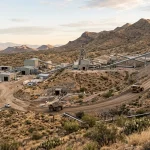
Production at the Ekati Diamond Mine in Canada’s Northwest Territories is scheduled to cease by mid-August 2026, marking a definitive end for the site that birthed the country's diamond industry. The decision follows a failed eight-week search for a viable buyer and the subsequent placement of owner Arctic Canadian Diamond Company Ltd into receivership.

On July 14, 2026, the Supreme Court of British Columbia granted a receivership order, transferring control of the asset to PricewaterhouseCoopers (PwC). The move came after Arctic Canadian Diamond Company, a subsidiary of Burgundy Diamond Mines, sought creditor protection under the Companies’ Creditors Arrangement Act (CCAA) in May. When no qualified bidders emerged to take over the high-cost Arctic operation, the Government of the Northwest Territories (GNWT) moved to ensure an orderly wind-down to protect environmental interests.
The closure of Ekati represents a significant contraction in the global supply of high-quality natural diamonds and leaves the Canadian diamond sector at its lowest operational capacity in decades.
The Wind-Down Timeline and Receivership Transition
The transition from active mining to a state of care and maintenance is expected to take approximately five weeks. During this period, PwC will oversee the final stages of production and the safe suspension of site activities. By mid-August, all primary mining and processing operations are slated to stop.
The workforce at Ekati has already felt the weight of the mine's financial instability. Currently, approximately 340 employees remain on-site, a sharp decline from the roughly 700 personnel employed in early 2024. These workers are now tasked with the technical challenge of shuttering a complex facility in one of the most remote and climatically harsh environments on earth.

Once production is fully suspended, the GNWT is expected to take a more active role in coordinating with the receiver for long-term site security and environmental management. This closure follows closely on the heels of the Diavik Diamond Mine's final production in March 2026, creating a double-impact on the Northwest Territories' private sector economy and government revenues.


Structural Drivers: Prices and Lab-Grown Competition
The financial collapse of Arctic Canadian Diamond Company was not an isolated event but the result of a "perfect storm" of market headwinds that have battered the natural diamond sector throughout 2025 and 2026.

1. Falling Natural Diamond Prices
Rough diamond prices have experienced sustained downward pressure due to cooling demand in major markets, particularly China and the United States. High inventory levels among mid-stream polishers and cutters have prevented a price recovery, making high-cost remote operations like Ekati increasingly difficult to sustain.
2. The Rise of Lab-Grown Stones
Competition from lab-grown diamonds (LGD) has reached a critical tipping point in 2026. LGDs have captured a significant share of the mass-market bridal and fashion segments. With lab-grown stones frequently retailing at a 70% to 90% discount compared to natural equivalents, the value proposition for mid-tier natural stones: the bread and butter of many Canadian mines: has significantly eroded.
3. High Operational Costs in the Arctic
Operating a mine in the sub-arctic requires immense logistics, including the maintenance of winter ice roads and a massive fly-in-fly-out infrastructure. For Ekati, these overheads became insurmountable as the margin between production costs and realized diamond prices narrowed to the point of insolvency.

Reclamation and Environmental Security
One of the primary concerns during any large-scale mine closure is the liability associated with environmental remediation. The GNWT currently holds C$326 million in reclamation security for the Ekati site. This fund, comprised of surety bonds, cash deposits, and trust funds, is intended to cover the costs of returning the site to a stable environmental state.
The reclamation process for a mine of Ekati's scale is a multi-decade commitment. It involves the filling of open pits, the stabilization of tailings facilities, and the removal of processing infrastructure. While the security deposit is substantial, industry analysts and environmental groups will be closely monitoring whether the C$326 million is sufficient to cover the full scope of the work in an inflationary environment.
The transition to reclamation work may offer short-term employment opportunities for some of the remaining staff, as environmental monitoring and site stabilization require specialized local knowledge. However, these roles are temporary and do not replace the long-term economic engine of a producing mine.
Impact on the Canadian Mining Landscape
With Ekati and Diavik both exiting the production phase in 2026, the Canadian diamond landscape has shifted dramatically. Gahcho Kué, operated by De Beers in partnership with Mountain Province Diamonds, now stands as the last major operating diamond mine in the country.
This concentration of production increases the vulnerability of the territorial economy to fluctuations in a single operation. For investors and policymakers, the closure of Ekati underscores the need for streamlined regulatory processes and increased support for new exploration. While Canada has recently launched a digital hub to speed up mining permit reviews, these initiatives may come too late to prevent a significant gap in the NWT’s mineral output.

Outlook and Key Risks for 2026
The closure of Ekati serves as a warning for other high-cost producers in the luxury commodity space. As the industry moves toward the final quarter of 2026, several key risks remain:
- Diamond Price Volatility: If prices for natural diamonds do not stabilize by year-end, the remaining producers may face similar liquidity crunches.
- Receivership Complications: The orderly wind-down by PwC is contingent on the availability of operational cash flow. Any unexpected environmental or logistical hurdles could complicate the GNWT's takeover of the site.
- Secondary Market Saturation: The potential liquidation of Arctic Canadian’s existing diamond inventory could further depress global prices in the short term as the receiver looks to recoup value for creditors.
The end of mining at Ekati is more than just the closure of a site; it is a signal of the changing realities in the global diamond market. For the Northwest Territories, the focus now shifts from extraction to the long, careful process of reclamation and the search for the next generation of mineral wealth.
Shareable Social Media Snippet (LinkedIn/X)
Headline: End of an Era: Ekati Diamond Mine to Shutter Operations.
Post: After more than 25 years of production, Canada’s first diamond mine is set to close. Following a failed search for a buyer, Ekati has entered receivership under PwC. With production ceasing in August 2026, what does this mean for the future of the Canadian diamond industry and the NWT economy?
#MiningNews #DiamondMining #CanadaMining #Ekati #CommodityMarkets #SkillingsMining