By Penny Langford

The formal commissioning of the Jonnagiri gold project in the Kurnool district of Andhra Pradesh marks a definitive shift in India's domestic mineral strategy. For decades, the Indian mining sector has been defined by state-led enterprises and a heavy reliance on imports to satisfy one of the world's largest appetites for bullion. However, as of mid-2026, the emergence of the Jonnagiri project: India's first large-scale private gold mine since independence: suggests a new era of frontier exploration is taking root in the subcontinent.
The project, developed by Geomysore Services India Pvt Ltd, targets a resource that officials estimate could reach 50 tonnes of gold. While this discovery is geographically significant, its true value lies in its role as a strategic proof-of-concept. As India grapples with an annual gold import bill that frequently exceeds $50 billion, the success or failure of the Jonnagiri "Gold Coast" will determine whether private capital can finally unlock the country’s under-explored geological potential.
The Jonnagiri Breakthrough: A Private Sector First
The Jonnagiri gold project spans approximately 598 hectares across the villages of Jonnagiri, Erragudi, and Pagidirayi. Unlike the historical Hutti Gold Mines in Karnataka, which have long been the primary source of domestic production, Jonnagiri represents a modern, capital-intensive approach led by private developers.
The project was commissioned following an investment of over ₹400 crore (approximately $48 million), with the processing plant constructed in a record 13 months. At peak capacity, the facility is designed to produce 1,000 kilograms (one tonne) of refined gold per year. This output, while modest by global standards, effectively doubles India’s current domestic primary gold production.

The significance of this commissioning extends beyond the tonnage. It signals a move toward a more transparent, tender-based mineral allocation system. The Andhra Pradesh government has transitioned away from direct state operations, opting instead to award mining rights to private players through competitive bidding: a move intended to attract the technical expertise required for low-grade ore recovery.


Tapping the Reserves: Resource Estimates and Grade Realities
The "50-tonne discovery" headline often used in regional reports requires nuanced geological context. According to project filings and government statements, the certified gold resources currently stand at approximately 13.1 tonnes. The 50-tonne figure is an exploration target based on the potential of the remaining 1,000 acres of the 1,500-acre allotment that has yet to be fully explored.

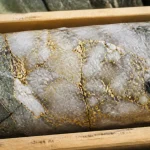
Geologically, the Jonnagiri deposit is characterized by lower-grade mineralization compared to the historical highs of the Kolar Gold Fields. Current recovery rates are estimated at approximately 1 gram of gold per tonne (g/t) of ore. By comparison, many global "tier-one" assets, such as the Cote Gold project in Ontario, operate with higher average grades or significantly larger scale to maintain economic viability.
For the Jonnagiri operators, the threshold for economic recovery is approximately 0.8 g/t. Any dip below this grade, or a sustained rise in operational costs, could challenge the mine’s 15-year projected lifespan. This sensitivity to grade makes the adoption of advanced processing technologies and efficient fleet management essential.
The Import Independence Strategy: Scale vs. Reality
India’s gold consumption is a central pillar of its national economy and cultural fabric. However, this demand creates a persistent macroeconomic challenge. In the 2025-26 fiscal year, gold imports surged to approximately 720 tonnes, valued at over $71 billion. This dependency places significant pressure on the country's foreign exchange reserves and trade balance.
The following table contextualizes the Jonnagiri output against the broader national supply-demand gap:
Table 1: India Gold Supply Dynamics (2021–2026 Forecast)
| Year | Domestic Mine Production (Tonnes) | Gold Imports (Tonnes, Est.) | Import Value (USD Billion) |
|---|---|---|---|
| 2021 | 1.2 | 710 | 40.0 |
| 2022 | 1.4 | 750 | 45.0 |
| 2023 | 1.5 | 740 | 45.5 |
| 2024 | 1.6 | 780 | 51.8 |
| 2025 | 1.8 | 720 | 72.0 |
| 2026 (F) | 2.5* | 700–750 | 70.0+ |
Note: 2026 forecast includes initial commercial output from Jonnagiri. Data sources: DGCI&S, World Gold Council, Ministry of Mines.
As the data illustrates, even at full capacity, the one tonne produced annually at Jonnagiri covers less than 0.2% of India’s annual demand. To reach the industry-stated goal of producing 50 to 100 tonnes of gold per year within the next decade, India would need 50 to 100 projects of similar scale to Jonnagiri.
While the immediate impact on imports is negligible, the project aligns with a broader trend of central banks and sovereign states seeking to bolster their internal reserves. As discussed in our analysis of Central Bank gold reserves in 2026, the drive for domestic "hard" assets is a global phenomenon, and India is no exception.

Andhra Pradesh as a Strategic Mining Hub
The success at Jonnagiri has emboldened the Andhra Pradesh government to identify and auction additional prospects. The state is positioning itself as a primary "Gold Coast" by fast-tracking the exploration of several key areas:
- Ramagiri: Historically a gold-producing region, Ramagiri is currently seeing renewed interest for its deep-seated vein deposits.
- Chigurukunta-Bisnatam: Located near the border of Tamil Nadu and Karnataka, this block is being promoted for its potential to host high-grade ore clusters.
- Javvakula: An early-stage exploration block that forms part of the state’s long-term mineral pipeline.
The development of these sites is not without hurdles. The region’s arid landscape requires significant water management infrastructure, and the capital-intensive nature of gold mining requires a stable regulatory environment to maintain investor confidence. Furthermore, as seen in the silver price forecast for 2026, price volatility in precious metals can dramatically shift the "uneconomical" threshold for junior and mid-tier miners.
2026 Outlook: Risks and Opportunities
The trajectory of gold mining in Andhra Pradesh remains a "base case" of slow, steady growth rather than a "bull case" of rapid transformation. The 2026 outlook is defined by several critical factors:
- Geological Uncertainty: While the 50-tonne target is ambitious, proving those reserves through JORC-compliant reporting is the next major hurdle for the Jonnagiri team.
- Regulatory Speed: The 13-month construction period for the processing plant is a positive indicator, but future projects must navigate environmental clearances and land acquisition, which remain the primary bottlenecks in Indian mining.
- Technological Integration: To survive on 1 g/t ore, operators must integrate autonomous haulage, advanced telemetry, and high-efficiency leaching circuits.

The Jonnagiri project serves as a crucial bellwether. If Geomysore can demonstrate consistent profitability and environmental compliance, it will pave the way for major international mining houses to reconsider India’s gold sector. For now, Andhra Pradesh is not yet a global gold coast, but it has officially become the testing ground for India’s mineral independence.
For operators and investors, the lesson of Jonnagiri is one of persistence. The transition from discovery to commercial production in a frontier market requires a blend of local navigating expertise and global technical standards. As we see in other sectors like uranium demand for SMRs and the copper-AI nexus, the security of supply is becoming the dominant theme of the 2026 commodity landscape.
Shareable Social Media Snippet (LinkedIn/X)
Frontier Mining: Is Andhra Pradesh India's New Gold Coast? ??
Andhra Pradesh has officially launched the Jonnagiri project; India's first large-scale private gold mine. With an estimated 50-tonne resource, the project marks a strategic pivot toward domestic production and private investment.
But can one tonne per year dent a $71 billion import bill? We take a deep dive into the geology, the 1 g/t recovery challenge, and why this project is the ultimate proof-of-concept for the Indian mining sector in 2026.
Read the full analysis here: [Insert Link]
#Mining #Gold #India #AndhraPradesh #Commodities #FrontierMining #EconomicGrowth #ResourceSecurity