By Penny Langford
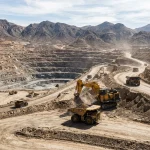
The global race for critical minerals has shifted its focus to the North Atlantic, where the Tanbreez project in Southern Greenland is emerging as a cornerstone of Western supply chain security. As of May 2026, the project has transitioned from a long-stalled prospect to a rapidly advancing industrial site under the consolidated ownership of Critical Metals Corp. (CRML).
This development comes at a time when the critical minerals sector is under immense pressure to diversify away from Chinese production, particularly for heavy rare earth elements (HREEs) like dysprosium and terbium. These minerals are indispensable for the high-performance permanent magnets used in electric vehicle (EV) motors, wind turbines, and defense technologies. For Critical Metals Corp, the Tanbreez project represents not just a mine, but a strategic pivot point in the global energy transition.
The $835 Million Bet: Ownership and Consolidation
The trajectory of Tanbreez changed significantly in April 2026. Following approval from the Greenland Government, Critical Metals Corp. secured the final 50.5% interest in Tanbreez Mining Greenland A/S, bringing its total ownership to 92.5%. This move was quickly followed by an $835 million all-stock proposal to acquire European Lithium, which holds the remaining 7.5% stake.

This consolidation reflects a "bet big" strategy by Critical Metals Corp leadership. By simplifying the ownership structure, the company has removed the bureaucratic and joint-venture hurdles that often slow down large-scale Arctic developments. The market valuation of the deal underscores the high stakes; a preliminary economic assessment previously valued the asset at approximately $3 billion, a figure many analysts believe is conservative given the current geopolitical premium on non-Chinese rare earth sources.


Geology: The Eudialyte Advantage
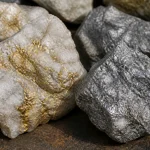
The Tanbreez deposit is hosted within the Ilimaussaq intrusive complex, a geological formation renowned for its unique mineralogy. Unlike many rare earth deposits that rely on monazite or bastnäsite, Tanbreez is centered on eudialyte.

The resource is massive, with estimates pointing toward 28.2 million metric tons of rare earth oxides. What sets Tanbreez apart is the ratio of heavy rare earths. Approximately 27% of the total rare earth oxide (TREO) content consists of HREEs. In the world of rare earth mining, this is an outlier; most global production is dominated by light rare earths (LREEs), leading to a persistent shortage of the heavier elements required for temperature-resistant magnets.
Furthermore, eudialyte-based deposits offer a processing advantage. They are typically lower in radioactive elements. While other Greenlandic projects have faced stiff opposition due to uranium and thorium content, Tanbreez has managed to navigate the regulatory landscape by demonstrating significantly lower levels of these contaminants.
Navigating the 100ppm Uranium Ban
Greenland's mining policy has been a minefield for investors over the last decade. The 2021 reinstatement of a ban on mineral deposits with uranium concentrations exceeding 100 parts per million (ppm) effectively halted the Kvanefjeld project, which sat atop one of the world's largest uranium resources.
Tanbreez, however, has emerged as the primary beneficiary of this strict policy. Because the deposit’s uranium levels fall comfortably below the 100ppm threshold, it has received the necessary exploitation licenses that its neighbors have been denied. In a region where environmental concerns and political sovereignty are paramount, being the "cleaner" alternative has provided Critical Metals Corp with the social license required to move toward production.
This policy environment has made Tanbreez one of only two sites in Greenland with active exploitation licenses, a status that has drawn the attention of Western governments. The U.S. Export-Import Bank (EXIM) has already issued a letter of interest for a $120 million loan, signaling that Washington views the project as a vital component of its mineral security strategy.

Infrastructure: Logistics in the North Atlantic
One of the primary critiques of Arctic mining is the lack of infrastructure. However, Tanbreez possesses several logistical advantages that differentiate it from more remote projects in Northern Canada or Russia.
The site is located on a deep-water fjord that remains ice-free year-round, allowing for direct shipping access to the North Atlantic. This is critical for maintaining a consistent supply chain to refineries in Europe and North America. Additionally, a new international airport located just 12 kilometers from the site has drastically reduced the cost and complexity of transporting personnel and specialized equipment.
The company is currently utilizing these logistical links to execute its $30 million acceleration program. This includes the delivery of modular processing units and the commencement of a 6,000-meter drilling campaign designed to expand the current resource from 45 million tonnes to a target of 130 million tonnes.
2026 Milestones: Pilot Plants and Bulk Samples
As of May 3, 2026, the project is entering its most critical technical phase. Pilot plant operations are scheduled to commence this month, providing the first real-world data on the scalability of the eudialyte leaching process.
Following the pilot plant launch, a 150-tonne bulk sample program is slated for June 2026. This phase is essential for securing the final 25% of offtake agreements. Currently, 75% of the planned output is already locked in through agreements with U.S. and European partners. The success of the bulk sample will likely determine the terms for the remaining production capacity and could trigger further investment from sovereign wealth funds.
The timeline for first ore production remains targeted for late 2028 or early 2029, with concentrate exports beginning in Q3 2029. While this may seem distant, the long lead times in the mining industry mean that the work being done in 2026 is the foundation for the next decade of supply.

Market Impact and the Energy Nexus
The development of Tanbreez cannot be viewed in isolation from the broader commodities market. Just as the uranium forecast 2026 shows a tightening market driven by AI energy demands, the rare earth market is facing a similar structural deficit.
The "energy nexus": the intersection of power generation, storage, and transmission: requires a massive influx of permanent magnets. Without the heavy rare earths from projects like Tanbreez, the efficiency of the next generation of wind turbines and EV motors will be capped. This is similar to the challenges seen in the copper market, where a copper deficit 2026 is already impacting the global manufacturing sector.
Risks and Operational Hurdles
Despite the favorable tailwinds, the Tanbreez project is not without risk. Operating in the Arctic presents unique environmental challenges, including extreme weather events and the need for rigorous ESG (Environmental, Social, and Governance) monitoring. The Greenlandic government remains sensitive to the impact of mining on local communities and traditional industries like fishing.
Furthermore, the metallurgical process for eudialyte, while understood, has not yet been proven at full commercial scale. The 2026 pilot plant results will be the ultimate arbiter of the project's technical viability. If the recovery rates meet projections, Tanbreez could fundamentally alter the cost curve for HREE production.

The 2026-2030 Outlook
As we move through the remainder of 2026, the focus for Critical Metals Corp will be on execution. The transition from exploration to development is the "valley of death" for many junior miners, but the combination of sovereign backing, strategic location, and a massive, low-uranium resource puts Tanbreez in a rare category of derisked assets.
For industry observers and policymakers, Tanbreez is the litmus test for whether the West can successfully build an independent rare earth supply chain. If the project meets its production targets for 2029, it will provide the heavy rare earth "insurance" that the energy transition desperately needs.
Social Media Snippet (LinkedIn/X):
Critical Metals Corp (CRML) has officially moved into the driver's seat at the Tanbreez project in Greenland. With 92.5% ownership and a $30M acceleration program underway, this heavy rare earth giant is targeting first production by 2028. Is this the end of the Western HREE deficit? #RareEarths #MiningNews #Greenland #EnergyTransition #CriticalMinerals #CriticalMetalsCorp