Hecla Mining just committed $55 million to exploration in 2026. That's not incremental growth. That's a near-doubling of last year's $27.7 million budget: the largest exploration commitment in the company's 135-year history.

The market noticed. Shares jumped 9% to $22.65 on the announcement. But the real story isn't the stock pop. It's what this spending signals about the reserve replacement challenge facing every precious metals producer in North America.
The Reserve Replacement Math
At the end of 2025, Hecla held 231 million ounces of silver reserves and 2 million ounces of gold. The company produced 17 million ounces of silver that year.
Do the math: that's a 13.6-year reserve life for silver at current production rates.
Sounds comfortable. But reserves don't sit still. They deplete with every ounce mined. And here's the uncomfortable reality: finding new ounces costs more every year. Permitting takes longer. Grades are declining across most districts. Discovery rates are flat to down across the sector.
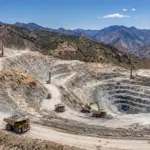
Hecla's response is to front-load capital into the drill bit now, while metal prices support aggressive spending. The $55 million exploration budget sits within a total 2026 capital envelope of $255–279 million, representing roughly 20% of total capex.

That allocation matters. It's a clear signal that reserve replacement isn't getting deferred. It's getting prioritized.

Four Targets, Different Risk Profiles
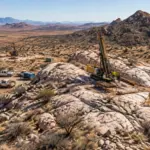
The $55 million isn't spread evenly. It's strategically weighted across four regions with distinctly different risk-return profiles:
Greens Creek (Alaska) remains Hecla's flagship asset and the largest silver mine in the United States. Drilling here focuses on converting Inferred resources to Measured and Indicated categories: the lowest-risk bucket of exploration dollars. The goal is extending mineralization near existing infrastructure and resource boundaries.
Translation: brownfield drilling with short payback cycles. This is reserve replacement with a capital preservation mindset.
Keno Hill (Yukon Territory) follows a similar playbook: drill around known mineralization, expand resource boundaries, upgrade confidence levels. The property has produced intermittently since 1913, which means the geological model is well understood even if individual veins remain difficult to predict.
Lucky Friday (Idaho) produced a record 5.3 million ounces of silver in 2025 after decades of operational challenges. With over 80 years of production history, the mine is now being re-evaluated for expansion potential at depth and laterally. That's code for: can we squeeze another decade out of this asset before infrastructure capital becomes prohibitive?
But the highest-risk, highest-potential allocation goes to Nevada.
Nevada: The High-Grade Discovery Bet
Hecla's Nevada budget has nearly tripled compared to 2025. That's not maintenance drilling. That's discovery-stage capital.
The company is targeting three projects: Midas, Hollister, and Aurora. Midas alone represents what Hecla CEO Phil Baker called "compelling high-grade discovery targets" around a historic mine that produced 27 million ounces of silver and 2.2 million ounces of gold before closure.
The Midas district is textbook brownfield exploration: you've got historical production, geological continuity, and modern geophysics to reinterpret old drill data. But you're still hunting for new deposits in structurally complex terrain where mineralization can pinch out fast.
That's the paradox of Nevada exploration: it's technically brownfield (you know metal is there), but economically it behaves like greenfield (you don't know if you can define an economic deposit at today's costs).
Hecla is betting it can. The nearly 3x budget increase suggests the company has seen something in recent drilling that justifies accelerated spending. Most likely: high-grade intercepts or structural controls that suggest repeatable mineralization.

What 2026 Production Looks Like
While exploration spending surges, near-term production is actually moderating. Hecla projects 2026 consolidated silver production of 15.1–16.5 million ounces: down from 17 million ounces in 2025.
The culprit: lower milled grades at Greens Creek. The mine is mining through a planned lower-grade zone, which is normal for any long-life underground operation. But it highlights the timing challenge Hecla faces: production is declining while the company drills to replace reserves.
Gold production is projected at 134,000–146,000 ounces, relatively flat year-over-year.
Those production numbers explain why the market cares about the exploration budget. Investors aren't buying Hecla for 2026 output. They're buying the 2028-2032 reserve base that today's drilling will define.
The Broader Industry Signal
Hecla's $55 million commitment sits in a broader context. Across the sector, exploration budgets are rising: but unevenly. Majors like Newmont and Barrick are maintaining or slightly increasing spending. Mid-tiers are more constrained by balance sheets.
What makes Hecla's move notable is the ratio: nearly doubling exploration spend while keeping total capex growth modest. That's a resource allocation decision that says reserves matter more than short-term production growth.
It's also a bet on silver. Hecla remains one of the few North American pure-play silver producers of scale. With silver prices hovering near $32/oz: more than double the 2020 lows: the economic case for aggressive drilling has strengthened considerably.
But drilling success isn't guaranteed. The industry's global reserve replacement rate has been negative for most of the past decade. Discoveries are getting smaller. Grades are trending down. Permitting timelines stretch longer every cycle.

The 2026 Reserve Test
By the end of 2026, we'll know if Hecla's $55 million bought reserve growth or just slowed reserve decline. That's the test.
If Nevada delivers high-grade discoveries that convert to reserves, the budget increase looks prescient. If brownfield drilling at Greens Creek and Lucky Friday only replaces what was mined, the company maintains status quo: which isn't nothing, but isn't growth.
And if drilling comes up empty or uneconomic? Then Hecla faces a harder choice in 2027: keep spending and hope for better results, or dial back and accept a shrinking reserve base.
The market's 9% share price bump suggests investors are betting on scenario one. But sentiment moves faster than drill rigs.
What matters now is execution. Hecla has allocated the capital. The drill programs are funded. The technical teams have their targets.
The rock will have the final word.
Data current as of February 14, 2026. Silver and gold prices subject to daily fluctuation. Reserve and production figures sourced from Hecla Mining Company's 2026 guidance and year-end 2025 reserve statement. Analysis by Skillings Mining Review.