By Penny Langford

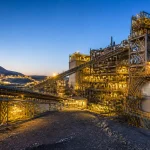
The global narrative around critical minerals has shifted. For the past decade, the primary concern for miners, investors, and policymakers was "digging enough ore out of the ground." However, the International Energy Agency’s (IEA) Global Critical Minerals Outlook 2026 has delivered a stark warning: the greatest threat to the energy transition and industrial stability is no longer the mine site, but the refinery.
The report identifies midstream processing: the essential stage where raw ore is transformed into high-purity chemicals, metals, and alloys: as the definitive chokepoint of the 2026 economic landscape. While mining exploration has seen a surge in investment, the capacity to process that material remains dangerously concentrated, creating what the IEA describes as "immediate economic threats" to downstream industries valued at over $6.5 trillion.
The Midstream Concentration Problem
Midstream bottlenecks are not a theoretical future risk; they are active operational constraints. According to the IEA data, the geographic mismatch between where minerals are extracted and where they are refined has reached a breaking point. For instance, while the Democratic Republic of Congo (DRC) produces approximately 76% of the world’s cobalt, it refines almost none of it. Conversely, China refines over 75% of global cobalt supplies.
This pattern repeats across the spectrum of energy-transition metals. China currently controls between 60% and 90% of the refining capacity for lithium, cobalt, and rare earth elements (REE). Perhaps more concerning for the 2026 outlook is that this concentration is increasing in certain sectors. Excluding rare earths, the top refining country’s share of global processing rose from 70% in 2023 to 72% in 2025, despite billions of dollars in Western subsidies aimed at diversification.



"The leverage in the supply chain has moved from the shovel to the reactor," the report notes. This shift is particularly evident in the lithium market outlook, where the ability to produce battery-grade lithium hydroxide: a far more complex process than simple carbonate production: is held by only a handful of global firms.
Economic Security and the $6.5 Trillion Risk
The IEA’s assessment quantifies the economic vulnerability of the current midstream structure. A single point of failure in the processing of battery-grade graphite, for example, could jeopardize over $300 billion in annual electric vehicle (EV) production.

The proliferation of export controls in late 2025 and early 2026 has further complicated the landscape. Restrictions on gallium, germanium, and specialized processing equipment have served as a wake-up call for industrial nations. The report estimates that if midstream diversification does not accelerate, the resulting supply gaps could impact $6.5 trillion in global downstream industrial output by 2030.
Table: Processing Concentration of High-Risk Minerals (2026 Estimates)
| Mineral | Top Refiner | Refiner Market Share | Economic Risk Category |
|---|---|---|---|
| Battery Graphite | China | 90%+ | Critical / Single Point of Failure |
| Heavy Rare Earths | China | 85-90% | High / Technical Barrier |
| Lithium Hydroxide | China / Chile | 75% | High / Quality Sensitive |
| Cobalt | China | 75% | Moderate / Logistics Bound |
| Gallium/Germanium | China | 80%+ | Critical / Semi-conductor Link |
Strategic Stockpiling: The "Cheap Insurance" Policy
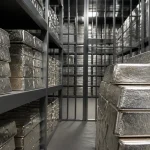
One of the most actionable recommendations in the 2026 report is the call for aggressive strategic stockpiling. The IEA argues that for countries outside the dominant processing hubs, stockpiling the 11 highest-risk minerals would cost less than $900 million per year.

"In the context of a $6.5 trillion risk, $900 million is cheap insurance," the report states. These stockpiles are not intended to replace market mechanisms but to serve as a buffer against short-term shocks, such as the recent copper supply deficits or sudden regulatory shifts in major producer nations like Indonesia.
Strategic stockpiling in 2026 is moving beyond just raw materials. The IEA suggests that "value-added" stockpiles: such as magnet-ready rare earth alloys or high-purity nickel briquettes: are more effective than raw ore, as the primary bottlenecks exist in the conversion process rather than the geology. This mirrors the shifts seen in the nickel market, where policy tightening is forcing a move toward higher-value domestic processing.
The Capacity Gap: Mining vs. Refining Lead Times
A structural challenge highlighted by the IEA is the disparity in project lead times. While a new mine can take an average of 16 years from discovery to first production, refining facilities can often be built in half that time. However, the technical expertise and capital requirements for "ex-China" refining are significantly higher.
Capital costs for refining projects in North America and Europe are currently 20% to 150% higher than in established processing hubs. This cost gap, combined with complex permitting environments, has led to a structural imbalance: capital is flowing into upstream extraction, but the midstream remains underfunded.
"We are building mines that may have nowhere to send their ore," warns the IEA. This is particularly relevant for projects in the rare earth sector, where mining capacity is expected to double by 2035, but magnet manufacturing capacity: the final midstream step: needs to grow six-fold to meet demand.

Policy Shifts: Moving Toward Audit-Ready Resilience
The 2026 report also touches on the role of ESG and compliance in midstream security. As the industry moves from voluntary reporting to audit-ready compliance, the ability to track a mineral through the midstream becomes a competitive advantage.
Western automakers and technology firms are increasingly willing to pay a premium for "clean" and "secure" midstream processing that avoids the environmental and geopolitical risks associated with concentrated traditional hubs. This trend is supporting the development of new processing technologies, including AI-ready chemical conversion and automated mineral sorting, which aim to offset higher labor and energy costs in diversified jurisdictions.
The Path Forward for Operators and Investors
The IEA concludes that the "race for midstream industrial capacity" will define the winners of the next decade in the mining and metals sector. For operators, this means moving toward integrated models where processing is co-located with extraction to reduce logistical risks. For investors, the focus is shifting toward companies that control the "metallization" and "chemical conversion" steps of the chain.

The 2026 report serves as a final warning that the "geology-first" approach to mineral security is obsolete. Without a rapid, subsidized, and technologically advanced expansion of midstream processing, the global economy remains vulnerable to the decisions of a very small number of players. Strategic stockpiling provides the necessary breathing room, but the ultimate solution lies in the hard work of building a new, diversified industrial base for the minerals that power the modern world.
Shareable Social Media Snippet
The IEA's 2026 Mineral Risk Report confirms the bottleneck has moved: refining is now the primary economic threat. With $6.5 trillion in industrial output at risk, the report calls for $900M in "cheap insurance" via strategic stockpiling. Is your supply chain audit-ready? #CriticalMinerals #MiningNews #IEA2026 #SupplyChainSecurity