Lithium brine ponds and processing infrastructure in the high Andes.

By Mo Shine
Calgary-based Lithium Chile is challenging a Canadian national-security review of its planned US$175 million sale of an Argentine lithium project to China Union Holdings, arguing that Ottawa has no jurisdiction over a transaction involving a foreign subsidiary and assets located outside Canada.
The dispute places a proposed sale of the Arizaro lithium project in Salta Province, Argentina, at the centre of Canada’s expanding scrutiny of Chinese investment in critical minerals. It also raises questions for Canadian mining companies that develop projects overseas and later seek foreign buyers.
Lithium Chile and China Union remain committed to completing the transaction while negotiating with the Canadian government, according to reporting by The Globe and Mail and The Northern Miner.
Ottawa examines the Argentum transaction
Lithium Chile agreed to sell its Argentine subsidiary, Argentum Lithium S.A., to Shenzhen-based China Union Holdings for US$175 million. Argentum indirectly holds Lithium Chile’s interest in an Argentine company developing the Arizaro project, a brine-based lithium asset in northwestern Argentina.

The transaction was announced in December and has already received strong shareholder backing. According to reporting cited by Mining.com Australia, approximately 96% of votes cast supported the sale.
The Canadian Industry Ministry subsequently notified the parties that the transaction would be examined under the national-security provisions of the Investment Canada Act. The legislation allows Ottawa to review foreign investments of any size where officials believe national security could be affected.
The review does not automatically mean the transaction will be blocked. However, the government can impose conditions or prohibit a deal if it concludes that the investment could be injurious to national security.
A ministry spokesperson told The Globe and Mail that Canada welcomes foreign investment that benefits the economy, but transactions that raise security concerns are subject to scrutiny. Confidentiality provisions prevent the government from commenting in detail on the specific case.
The Northern Miner reported that the notice indicated officials had reasonable grounds to believe the transaction could raise national-security concerns and that a more detailed review could follow.

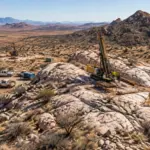
Field personnel inspect lithium brine sampling equipment at a high-altitude exploration site.
Lithium Chile disputes Ottawa’s jurisdiction
Lithium Chile Chief Executive Steve Cochrane has argued that the Canadian government’s review falls outside the scope of the legislation.
The company’s position is based on Argentum’s corporate structure and location. Argentum is an Argentine corporation, owns no Canadian assets, has no Canadian employees and has no place of business in Canada, Cochrane said.
Lithium Chile maintains that the sale of a foreign subsidiary holding foreign assets should not be captured by Canada’s national-security review regime merely because the parent company is listed in Canada.
In a statement reported by The Globe and Mail, Cochrane said the review creates uncertainty for shareholders and transaction counterparties and undermines confidence in the predictability of Canadian capital markets.
The company has also argued that it disclosed the transaction, notified the federal government and explained its position on jurisdiction before the review began.
The parties are now negotiating with Ottawa while preserving their legal position. Lithium Chile and China Union must also complete approvals in Argentina and China, including Chinese outbound-investment approval required to transfer the purchase funds.
The deal’s deadlines have reportedly been extended several times to allow the parties more time to obtain regulatory clearance.
Why the Argentine project matters to Canada
The case illustrates how the definition of a strategic asset is changing.
Arizaro is not located in Canada, and the transaction would not transfer a Canadian mine or processing plant. But lithium is a designated critical mineral, and the project would form part of the global supply chain for batteries, electric vehicles and energy-storage systems.
Ottawa has become more cautious about Chinese involvement in Canadian critical-minerals companies since 2022, when the federal government ordered Chengze Lithium International to divest its 19% stake in Lithium Chile.
The earlier action was part of a broader review of Chinese investment in junior mining companies. At the time, former Industry Minister François-Philippe Champagne said Canada would act when investments threatened national security or critical-minerals supply chains “both at home and abroad.”
That language is relevant to the current dispute. The government’s position suggests that the strategic importance of a mineral and the identity of the buyer may matter even when the underlying project is in another country.
Canada has previously blocked and approved Chinese mining transactions under different circumstances.
In 2020, Ottawa rejected Shandong Gold Mining’s proposed takeover of TMAC Resources, citing security concerns related to TMAC’s Hope Bay gold operation in the Canadian Arctic. In contrast, the federal government approved Zijin Mining’s acquisition of Neo Lithium in 2022, despite Neo Lithium’s flagship project being located in Argentina.
The contrasting decisions show that geography remains important, but it is not the only factor. Ownership structure, the location of infrastructure, the buyer’s links to the Chinese state and the strategic characteristics of the asset can all influence the review.
Transaction structure could become a wider test
Lawyers not involved in the transaction told The Globe and Mail that the structure of the Lithium Chile deal may have attracted additional attention.
Lithium Chile kept the Argentine project in a separate subsidiary, Argentum, rather than holding the asset directly through the Canadian parent. That structure is common in international mining, where companies establish local entities to hold permits, land rights and operating agreements.
The review could nevertheless prompt government officials to examine whether corporate structures are being used to avoid Canadian scrutiny of strategic assets.
For Canadian-listed mining companies, the issue is significant. Junior miners often rely on international acquisitions to fund exploration and development. They may acquire a project in one jurisdiction, raise capital in another and ultimately sell to a strategic buyer from a third country.
If Ottawa’s review authority extends broadly to those transactions, companies may need to assess national-security exposure earlier in the project cycle. Buyers may also demand more regulatory protections, longer closing periods or termination rights if Canadian approval is uncertain.
That could affect transaction values and the ability of smaller companies to monetize overseas assets.

Pipes, pumps and processing infrastructure at a lithium brine operation.
Market context: lithium remains strategically important
The dispute comes as the lithium price forecast 2026 remains divided between expectations of continued oversupply and forecasts of a tightening market.
Battery-grade lithium carbonate prices have recovered from their previous lows, but the market remains sensitive to Chinese production, electric-vehicle sales, energy-storage deployment and the timing of new projects.
A market outlook published by Skillings in its lithium price forecast 2026 analysis outlines a wide range of possible outcomes. Prices could remain under pressure if new supply ramps up quickly, while delays, production cuts or stronger storage demand could move the market toward a deficit.
That uncertainty increases the strategic value of advanced brine projects. Even when an asset is years from production, control over future lithium supply can carry importance for battery manufacturers, governments and industrial buyers.
The case also connects directly to the broader critical minerals supply chain 2026 outlook, in which governments are seeking to reduce exposure to concentrated processing and refining capacity.
China remains a major force in lithium conversion and battery manufacturing. A Chinese buyer acquiring an Argentine brine project could therefore provide China Union with additional upstream supply, while giving Lithium Chile the capital needed to advance its remaining Chilean properties.
What happens next
The immediate question is whether Ottawa will order a full national-security review or allow the transaction to proceed after discussions with the parties.
The companies must also secure Chinese outbound-investment approval and complete the remaining Argentine and Canadian processes. The longer the review takes, the greater the risk that financing assumptions, lithium prices or shareholder expectations change.
Lithium Chile intends to use proceeds from the sale to advance its portfolio of 11 Chilean properties. The company has said those projects have reserves capable of supporting lithium production for 20 years or more.
For China Union, the transaction would provide access to a significant Argentine lithium development opportunity. For Ottawa, it is a test of how far national-security oversight should reach when a Canadian-listed company sells an overseas critical-minerals asset to a Chinese buyer.
The outcome will be watched well beyond Lithium Chile. It could influence how Canadian regulators assess foreign-asset transactions, how mining companies structure international subsidiaries and how investors value projects exposed to geopolitical review.
The central issue is no longer only whether the Arizaro sale creates a supply-chain concern. It is whether Canada’s critical-minerals policy extends to strategic assets that are outside the country but controlled, financed or sold by Canadian-listed companies.

Lithium evaporation ponds form part of the region’s industrial supply chain.