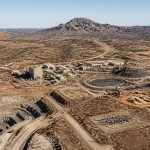
Brazil’s Lithium Valley is attracting consolidation as producers seek to combine neighbouring hard-rock assets and infrastructure.

By Mo Shine
Lithium Ionic Corp. has agreed to sell its Salinas group of lithium properties in Minas Gerais, Brazil, to PLS Brasil Mineração for US$37.5 million in cash, transferring control of the Baixa Grande lithium resource to a larger hard-rock producer while retaining a royalty on future spodumene sales.
The transaction brings the Salinas properties under the same ownership as PLS’s adjacent Colina Project and gives Lithium Ionic non-dilutive funding to advance its flagship Bandeira Lithium Project, also located in Brazil’s Lithium Valley.
The agreement covers 10 mineral claims and associated assets held through Lithium Ionic subsidiaries Salit Mineração and Neolit Minerals Participações. The purchase price consists of US$30 million payable at closing and a further US$7.5 million payable on the earlier of a positive final investment decision for Colina or Dec. 31, 2029, according to Lithium Ionic’s announcement.

Completion remains subject to customary closing conditions. The company expects the transaction to close within 10 business days of signing.

Deal shifts control of Baixa Grande to neighbouring project owner
The central asset in the sale is Baixa Grande, a spodumene-bearing lithium resource within the Salinas property group.
PLS Brasil Mineração is a wholly owned subsidiary of PLS Group Limited, the Australian lithium producer whose Pilgangoora operation in Western Australia is among the world’s largest hard-rock lithium mines. PLS entered the Brazilian district in 2025 through its acquisition of Latin Resources, the former owner of Colina.

Baixa Grande sits directly beside Colina. That location gives PLS the ability to assess the two assets as part of a single district strategy rather than developing them under separate ownership structures.
Lithium Ionic said Baixa Grande is expected to be evaluated for potential integration with Colina. In practical terms, consolidation could allow PLS to examine shared infrastructure, mine planning, processing and logistics, although the companies have not announced a final development plan for the combined area.
For PLS, the acquisition adds geological and development optionality around an existing Brazilian project. For Lithium Ionic, it converts an exploration and development asset into immediate cash while preserving exposure to any future production.

Spodumene-bearing pegmatite is the primary hard-rock feedstock targeted by lithium developers in Minas Gerais.
Lithium Ionic keeps 2% royalty exposure
Under a separate royalty agreement, Lithium Ionic will retain a 2% royalty on future spodumene sales from the Salinas mineral rights.
The royalty will be calculated on free-on-board sales proceeds, after certain allowable deductions. It does not give Lithium Ionic control over mine development or processing decisions, but it provides a continuing financial interest if Baixa Grande advances into production.
That structure is significant because the deferred portion of the purchase price and the royalty both tie part of the transaction’s value to future project progress. Lithium Ionic receives most of the consideration upfront, while PLS retains time to assess Colina and Baixa Grande before committing additional capital.
The arrangement also transfers execution responsibility to a company with an established hard-rock lithium operating base. The royalty, meanwhile, allows Lithium Ionic to maintain exposure to the asset without funding exploration, permitting, construction or operating costs.
A royalty is not a guarantee of future revenue. Payments would depend on the development of the property, the production and sale of spodumene, commercial terms and lithium market conditions.
Sale supports Bandeira development strategy
Lithium Ionic said the transaction proceeds will strengthen its balance sheet and support early works, procurement and construction-readiness activities at Bandeira.
The sale marks a sharper focus for the company. Rather than allocating capital across multiple lithium properties in the same district, Lithium Ionic plans to concentrate its resources on Bandeira, which it describes as its wholly owned flagship project and its route toward a construction decision.
The company entered the Salinas district in March 2023 and said it advanced Baixa Grande from initial drilling to a mineral resource in less than two years. Its technical work on the project was summarized in an independent technical report dated December 2024.
The transaction therefore represents a monetization of exploration and resource-definition work before Lithium Ionic takes on the full capital burden of mine construction. It also gives the company a way to fund Bandeira without issuing new shares, according to the company.
Lithium Ionic Chief Executive Blake Hylands said the sale crystallizes value from Salinas while leaving shareholders with future royalty exposure under PLS ownership.
The company’s stated objective is to become a near-term producer of spodumene concentrate in Brazil. Whether the sale accelerates that path will depend on how quickly proceeds are deployed, the timing of Bandeira’s construction decision and the project’s permitting, engineering and financing requirements.
Brazil’s Lithium Valley becomes a consolidation target
The deal adds to a broader pattern of companies seeking control of contiguous or nearby mineral assets in established mining districts.
Brazil’s Lithium Valley, centred in Minas Gerais, has attracted international attention because of its hard-rock spodumene resources, existing mining expertise and access to export infrastructure. The region is also becoming more strategically important as battery-material producers look to diversify supply beyond Australia and China.
For producers, neighbouring assets can be more valuable than isolated claims because district-scale ownership may support common roads, power, water, processing and technical teams. It can also reduce the risk that mine plans are constrained by property boundaries.
The PLS transaction is therefore less a simple property purchase than a consolidation of geological and operating optionality around Colina. The buyer has not committed to a combined development, but the adjacency creates a clear rationale for further technical and economic evaluation.
The transaction also illustrates a different form of lithium M&A from the large corporate mergers that have dominated parts of the mining sector. Instead of buying an entire producer, PLS is acquiring a defined group of properties that may complement an existing development portfolio.
Skillings has tracked the wider trend in mining M&A and consolidation, including the growing focus on infrastructure synergies, reserve replacement and district-scale control.
Lithium price assumptions remain central
The value of the Salinas transaction will ultimately be judged against the asset’s development potential and the lithium price environment.
A commonly used medium-term planning range for battery-grade lithium carbonate in industry forecasts has been approximately US$18,000 to US$25,000 per tonne. That range is not a current spot-price quotation or a guaranteed market outcome. It is better understood as a valuation sensitivity range used by analysts and companies assessing project economics after the sharp lithium price cycle of the early 2020s.
The royalty applies to spodumene sales rather than directly to lithium carbonate. However, the two products remain economically linked through lithium content, concentrate quality, conversion costs, contract structures and the supply-demand balance across the battery-materials chain.
| Transaction and market indicator | Detail |
|---|---|
| Total purchase price | US$37.5 million |
| Payment at closing | US$30 million |
| Deferred consideration | US$7.5 million |
| Deferred payment trigger | Positive Colina FID or Dec. 31, 2029 |
| Retained royalty | 2% of future spodumene sales |
| Illustrative lithium carbonate planning range | US$18,000–25,000 per tonne |
| Properties included | 10 mineral claims and associated assets |
At the lower end of that price range, project economics would place greater emphasis on grade, recoveries, strip ratios, operating costs, infrastructure and capital intensity. At the upper end, developers could have more room to absorb construction inflation and fund expansion, although high prices can also encourage new supply and increase competition for equipment and labour.
For PLS, the purchase provides exposure to additional Brazilian hard-rock resources without requiring an immediate commitment to develop Baixa Grande. For Lithium Ionic, the cash payment reduces near-term financing pressure while the royalty preserves a long-duration interest in a project that may benefit from district integration.
What to watch next
The immediate milestones are closing of the transaction, receipt of the US$30 million upfront payment and the allocation of proceeds to Bandeira’s early works and construction-readiness programme.
For PLS, investors and operators will be watching whether the company publishes a technical assessment of Baixa Grande and Colina as an integrated district. Key questions will include the potential scale of a combined operation, processing routes, infrastructure requirements and the timing of a final investment decision.
For Lithium Ionic, the focus shifts to Bandeira’s permitting, engineering, procurement and construction timetable. The company will also need to demonstrate that the Salinas proceeds are sufficient to advance the project without materially delaying a construction decision or requiring additional capital.
The deal does not remove the risks associated with Brazilian mine development, commodity-price volatility or project execution. It does, however, provide a clear example of how lithium companies are using asset sales, neighbouring-project consolidation and royalty structures to reposition themselves during a market that remains strategically important but financially uncertain.
Sources: Lithium Ionic transaction announcement; Mining Technology coverage via Yahoo Finance; CNN Brasil report.