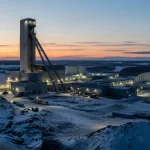
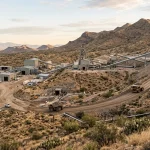
Aerial view of large-scale lithium brine evaporation ponds showcasing the industrial infrastructure required for global supply.

By Charles Pitts
The lithium market is entering a pivotal transition phase. After the pricing volatility of 2023 and 2024, the sector is beginning to price in a structural shift projected for 2026. While short-term surpluses persist, the long-term fundamentals: driven by the energy transition and a maturing EV supply chain: point toward a narrowing of the supply-demand gap. For institutional investors and mining operators, 2026 represents a “reset” year where project execution and district consolidation will define the next generation of market leaders.
Rio Tinto’s recent $6.7 billion acquisition of Arcadium Lithium has served as a definitive signal to the market. When a major diversified miner deploys significant capital at the bottom of a commodity cycle, it establishes a valuation floor and validates the long-term necessity of Tier-1 assets. As we look toward the 2026 horizon, the focus is shifting from speculative exploration to operational de-risking and strategic M&A.
Lithium price forecast 2026: Drivers and Divergence
The lithium price forecast 2026 remains a subject of intense debate among major financial institutions, reflecting the complexity of the current market rebalancing. Forecasts for battery-grade lithium carbonate range from a base case of US$13,000–US$18,000/t to bull cases exceeding US$25,000/t if supply bottlenecks in South America and Africa persist.
More Read

The divergence in 2026 outlooks centers on the timing of the market’s flip from surplus to deficit. S&P Global projects a narrowing surplus of approximately 109,000 tonnes of Lithium Carbonate Equivalent (LCE), while Morgan Stanley anticipates a deficit of 80,000 tonnes LCE as early as mid-2026. This tightening is fueled by a projected 13.5% increase in demand, notably from the stationary energy storage system (ESS) sector, which is expected to account for nearly 18% of the total market by the end of 2026.

| Analyst Firm | 2026 Price Forecast (Li2CO3 / t) | Market Stance |
|---|---|---|
| Goldman Sachs | US$13,250 | Cautious (Surplus) |
| S&P Global | US$16,700 – US$20,000 | Neutral (Narrowing) |
| Morgan Stanley | US$18,000+ | Bullish (Deficit) |
| UBS | US$15,500 | Neutral (Tightening) |
Data sourced from recent institutional reports; figures represent averages for battery-grade chemicals.
The Rio Tinto Factor: A New Valuation Floor
Rio Tinto’s entry into the lithium space via Arcadium has fundamentally altered the landscape for junior miners and mid-tier producers. By acquiring a diversified portfolio across Australia, Argentina, and Canada, Rio Tinto has signaled that “scale is the new security.”
More Read

This move puts pressure on other diversified majors: such as BHP and Vale: to secure their own critical mineral pipelines. For investors, the Rio Tinto deal provides a template for project valuation P/NAV mining metrics. Advanced juniors are no longer just valued on their current cash flow, but on their potential as bolt-on acquisitions for majors looking to bypass the 10-year lead time of greenfield development.

Hard-rock lithium processing infrastructure in North America represents a critical link in the domestic battery supply chain.
Mining stocks to watch 2026: 5 Strategic Positions
As the market consolidates, five companies stand out for their project quality, jurisdictional safety, and strategic relevance to the 2026 supply gap. These are not merely explorers but entities positioned within the “Consolidation Zone.”
1. Rio Tinto (NYSE: RIO)
Following the Arcadium acquisition, Rio Tinto is the primary vehicle for investors seeking exposure to lithium within a diversified, high-liquidity framework. Rio’s focus will be on the aggressive build-out of the Sal de la Vida project in Argentina and the Nemaska Lithium JV in Quebec. Their ability to self-fund capex without dilution makes them the “safe harbor” of the lithium sector in 2026.
2. Lithium Americas Corp. (NYSE: LAC)
The operator of the Thacker Pass project in Nevada remains the cornerstone of U.S. lithium independence. With significant backing from General Motors and a conditional loan from the U.S. Department of Energy, LAC is effectively a “state-sponsored” champion. As construction progresses toward 2026, the company’s valuation will likely transition from a developer discount to a producer premium.
3. Sigma Lithium (NASDAQ: SGML)
Sigma has proven that Brazil can deliver high-grade, “Green Lithium” at scale. Operating in the Minas Gerais region, Sigma is a prime M&A target. Any major looking for immediate spodumene production with strong ESG credentials will have Sigma at the top of their list. Their Phase 2 and 3 expansions are timed perfectly for the projected 2026 market tightening.
4. Patriot Battery Metals (TSX: PMET)
Located in Quebec’s James Bay district, Patriot controls the Corvette property, one of the largest hard-rock lithium discoveries in recent years. Backed by Albemarle, Patriot is the focal point of Canadian district consolidation. For investors, PMET represents the highest-quality “takeover bait” in the hard-rock space, with a resource scale that matches Tier-1 global assets.
5. Lithium Americas (Argentina) (NYSE: LAAC)
Focusing exclusively on the Argentine brine assets formerly held by the consolidated LAC entity, LAAC provides pure-play exposure to the Lithium Triangle. With the Caucharí-Olaroz project ramping up, LAAC is positioned to benefit from the low-cost brine production model. Their strategic partnership with Ganfeng Lithium ensures both technical expertise and a locked-in path to market.
Valuation Framework: The P/NAV Arbitrage
In the current environment, mining stocks to watch 2026 are frequently trading at significant discounts to their Net Asset Value (NAV).
The project valuation P/NAV mining metric is the most reliable indicator of potential upside. Historically, during a price slump, advanced developers trade between 0.3x and 0.5x P/NAV. As the 2026 supply gap approaches and sentiment shifts, these multiples typically re-rate toward 0.8x or 1.0x.
Investors should focus on “un-risked” NAV, which accounts for fully permitted projects with secured offtake agreements. The risk-adjusted return profile for Canadian and U.S. assets remains higher due to the Inflation Reduction Act (IRA) incentives, which provide a “margin of safety” that South American or African assets may lack in a low-price environment.
%20pilot%20modules%20and%20industrial%20infrastructure.%20Documentary-style%2C%20realistic%2C%20showing%20the%20scale%20of%20the%20remote%20Salar%20environment.%20High-resolution.&aspectRatio=16%3A9&referenceImagesUrls=%5B%22https%3A%2F%2Fcdn.marblism.com%2FG1mY05Qhyx5.webp%22%5D)
Direct Lithium Extraction (DLE) technology deployment in the Lithium Triangle is a key technical catalyst for the 2026 supply ramp-up.
Regional Hubs: The Battle for Midstream Control
The 2026 landscape will be defined by the rivalry between the “Brine Heavyweights” of the Lithium Triangle and the “Spodumene Pioneers” of Canada.
In Argentina, the focus is on commercializing Direct Lithium Extraction (DLE). If DLE can successfully scale, it will lower the environmental footprint and potentially compress the production cycle from years to weeks. Conversely, Canada’s advantage lies in its proximity to the burgeoning North American “Battery Belt.” The integration of Quebec’s mines with Ontario’s processing hubs is a priority for the federal government, making Canadian juniors particularly resilient to global price swings.
Conclusion: The Era of Execution
The lithium market is no longer a “land grab” for speculative explorers. As we approach 2026, the market will reward companies that can demonstrate a clear path to production, operational efficiency, and strategic partnerships. Rio Tinto’s entry has validated the sector, but the real gains will be found in the junior and mid-tier players that bridge the gap between resource discovery and commercial delivery.
For the disciplined investor, the 2026 supply gap is not just a forecast: it is an operational reality that is currently being built in the salt flats of Argentina and the forests of Quebec.