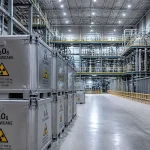
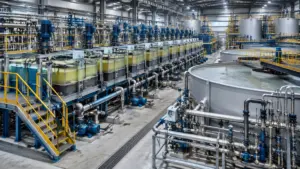
A massive grid-scale battery storage facility operating adjacent to an active lithium mining project, representing the integration of extraction and energy storage.

By Salini Krishnan
For the past three years, the narrative surrounding lithium has been dominated by one thing: the "EV winter." Headlines focused on slowing electric vehicle adoption and a supposed lithium glut that sent prices into a tailspin in late 2024. But as we move through the second quarter of 2026, it’s becoming clear that the market was looking at the wrong speedometer.
While passenger EVs are still a massive piece of the puzzle, the real story of 2026 is the explosive growth of Energy Storage Systems (ESS): the giant batteries that balance our power grids and keep AI-driven data centers humming.
If 2023 was the year of the surplus and 2025 was the year of stabilization, 2026 is shaping up to be the year where grid-scale storage becomes the dominant driver of the next lithium supercycle. For investors, the "lithium glut" of yesteryear has turned into a strategic illusion.

The ESS Boom: Why Grid Storage is the New EV
In 2025, lithium demand for storage applications didn't just grow: it surged by a staggering 71%. As of May 2026, that momentum hasn't slowed down. Current projections for the full year 2026 suggest another 55% jump in ESS-driven demand.

Why is this happening now? It’s a combination of falling battery costs and a desperate need for grid stability. As more renewable energy from wind and solar comes online, utilities need massive amounts of storage to handle the intermittency. But there’s a new player in town that is devouring capacity faster than anyone expected: data centers.

Aerial view of large-scale lithium brine evaporation ponds, a key source of supply for the growing global battery market.
The rise of generative AI has fundamentally changed the energy math. Data centers are no longer just warehouses for servers; they are power-hungry hubs that require 24/7 reliability. In 2024, the data center lithium-ion battery market was valued at roughly $5.2 billion. By the end of 2026, we are seeing shipments rise at an 80% clip as operators move away from lead-acid backups toward lithium-ion systems that can handle the high-density power loads of AI chips.
The LFP Pivot: The Chemistry of Choice
If you're tracking the lithium price forecast 2026, you have to track the rise of Lithium Iron Phosphate (LFP) batteries. A few years ago, LFP was seen as the "budget" option: cheaper, but with lower energy density than the Nickel-Cobalt-Manganese (NCM) batteries used in high-end Teslas.
Today, LFP is the undisputed king of grid-scale storage. It’s safer, has a longer cycle life, and, most importantly, it’s significantly cheaper to produce at scale. The shift toward LFP has fundamentally altered the demand profile for lithium carbonate. While the high-end EV market still craves lithium hydroxide for NCM chemistries, the stationary storage market is a carbonate-hungry beast.

A modern LFP battery assembly line showcasing the precision and automation required for next-generation energy storage.
This transition is why we’re seeing a divergence in the market. Even as some analysts point to a "surplus" in total lithium units, the availability of battery-grade carbonate for the LFP supply chain remains tight.
Quebec: The Low-Carbon LFP Supplier of Choice
As the world looks to diversify away from Chinese-controlled supply chains (which still handle over 75% of global lithium refining), Quebec has emerged as a strategic powerhouse. The province isn't just about geology anymore; it's about the "green" premium.
Quebec’s access to cheap, abundant hydroelectric power allows it to produce lithium with one of the lowest carbon footprints in the world. For major tech companies building data centers, the "Scope 3" emissions of their batteries matter. This is where Quebec wins.
Projects like North American Lithium (NAL) and the development work by Sayona and Nemaska Lithium are no longer just exploration stories. They are the bedrock of a North American "LFP Corridor." We’ve also seen significant moves in the midstream, such as the First Phosphate project in Saguenay–Lac-Saint-Jean, which is positioning itself to provide the essential phosphorus needed for LFP cathode active materials.
By integrating mining with local refining and chemical production, Quebec is essentially offering a "one-stop-shop" for the energy transition. For more on how North American jurisdictions are fighting for mineral independence, see our recent analysis on US nuclear fuel supply.

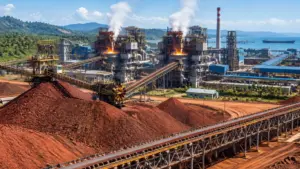
A state-of-the-art spodumene processing facility in Quebec, strategically located near clean hydroelectric power sources.
Lithium Price Forecast 2026: Drivers, Risks, and Scenarios
As of May 6, 2026, lithium prices are hovering between $24,000 and $25,500 per metric ton. This is a significant recovery from the 2024 lows, driven by the narrowing surplus and the massive pull from the ESS sector.
Here is how we see the rest of the year playing out:
The Base Case: $22,000 – $26,000 / ton
In this scenario, the market remains in a state of "fragile balance." S&P Global predicts a narrowing surplus of roughly 109,000 mt LCE (down from 141,000 mt in 2025). High demand from grid storage offsets the more moderate growth in the consumer EV sector. This price range is the "Goldilocks zone": high enough to keep major projects like those in Quebec and Australia profitable, but not so high that it triggers a massive wave of demand destruction.
The Bull Case: $28,000 – $32,000 / ton
The bull case is driven by supply disruptions. We’ve already seen operational hiccups at major sites in Africa and some Chinese lepidolite mines being shuttered due to environmental costs. If these disruptions continue, or if the "AI-driven" power demand for data centers exceeds the 80% growth forecast, we could see a deficit as large as 80,000 mt (as suggested by Morgan Stanley). In this scenario, prices will spike as battery makers scramble for spot material.
The Bear Case: $15,000 – $18,000 / ton
The bear case rests on a macro-economic slowdown. If global interest rates remain high and utility-scale projects are delayed due to financing costs, the ESS boom could stumble. Furthermore, if supply from new projects in Argentina and Zimbabwe comes online faster than anticipated, the market could face another year of oversupply.
Operational Realities: Moving Dirt in 2026
While the spreadsheets look at prices, the operators on the ground are looking at costs. The 2026 market is much more disciplined than the 2022 market. We are seeing a move toward large-scale, automated operations that can survive at $15,000/ton even if the market dips.

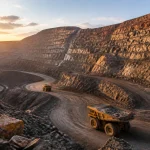
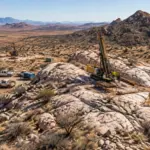
Active open-pit mining operations at sunrise, highlighting the scale of equipment and logistics required to meet 2026 demand targets.
Companies are no longer just "mining lithium"; they are managing complex chemical logistics. From the record-breaking copper production seen in other sectors to the push for critical minerals, the industry is focused on efficiency and vertical integration.
Conclusion: The Year of the Grid
The takeaway for 2026 is clear: don't let the headlines about EV sales fool you. The lithium market has matured. It is no longer a one-trick pony dependent solely on the consumer's willingness to buy a new car.
The decarbonization of the global power grid and the massive infrastructure needs of the AI revolution have provided a much sturdier floor for demand. Whether it’s through LFP batteries in a Texas utility farm or Quebec-sourced spodumene powering a data center in Virginia, lithium remains the indispensable metal of the 21st century.
Investors should watch the ESS adoption rates and the progress of North American midstream projects closely. The narrative has shifted from "range anxiety" to "grid reliability," and that is a much bigger game.
Stay ahead of the markets. For daily insights into the mining industry’s most critical sectors, from rare earths to gold milestones, subscribe to Skillings Mining Intelligence.