By Penny Langford

The Democratic Republic of Congo (DRC) has officially entered the global lithium export market, as Zijin Mining Group began shipping lithium concentrate from its Manono project to China in June 2026. This milestone marks the first time the mineral-rich nation has exported lithium at a commercial scale, signaling a significant expansion of the DRC's role in the global energy transition beyond its traditional dominance in cobalt and copper.
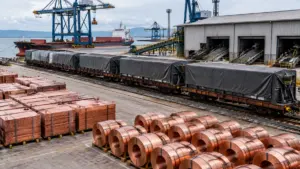
Initial shipments, which reportedly consist of several thousand metric tons of spodumene concentrate, are being trucked from the remote Manono site in the Tanganyika province to the port of Kalemie. From there, the material is transported across Lake Tanganyika and through Tanzania to reach international shipping routes destined for Chinese refineries. The start of exports follows the successful commissioning of the Manono processing plant in May 2026, which began production ahead of earlier industry expectations.
Manono project: Technical specifications and 2026 outlook
The Manono project, specifically the northeastern portion of the world-class deposit, is being developed under a joint venture structure. Zijin Mining holds a 54.9% controlling stake, with the DRC’s state-owned miner Cominière retaining 35.1% and the Congolese government holding a 10% carried interest.
The project’s Phase 1 design is built for an ore processing capacity of approximately 5 million metric tons per year. At full ramp-up, the facility is expected to produce roughly 1 million tons of spodumene concentrate annually. For the remainder of 2026, Zijin has set a production target of approximately 30,000 metric tons of Lithium Carbonate Equivalent (LCE).
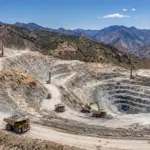


Operations at the site are scaling rapidly. The Dense Media Separation (DMS) units were commissioned in stages between March and June, while the grinding and flotation circuits are scheduled to come online by the end of September. Zijin also intends to integrate a downstream smelter and additional processing facilities by December 2026, which will allow the project to produce higher-value intermediates like lithium sulfate, potentially mitigating future regulatory risks associated with the export of raw ore.
Market impact: Lithium price forecast and supply balance
The arrival of Congolese lithium comes at a critical juncture for global markets. After a period of price volatility, the lithium price forecast 2026 suggests a market moving toward a structural deficit. Most analysts project battery-grade lithium carbonate prices to average between $12,000 and $17,000 per metric ton in 2026, though some "bull case" scenarios see prices overshooting $23,000 if demand from the energy storage system (ESS) sector continues to outperform.
| Metric | 2026 Base Case | 2026 Bull Case | 2028 Forecast (Full Capacity) |
|---|---|---|---|
| Manono LCE Output (tons) | 30,000 | 45,000 | 130,000 |
| Global Market Status | Narrowing Surplus | Small Deficit | Structural Shortage |
| Average Lithium Price ($/t) | $12,000 – $14,000 | $23,000+ | $18,000 – $25,000 |
The DRC’s entry provides a new source of hard-rock supply that is highly attractive to Chinese refiners, who currently dominate over 60% of global lithium processing. By securing the Manono exports, Chinese battery manufacturers are further insulating their supply chains from the geopolitical tensions seen in other regions.
Geopolitical context: China’s deepening footprint in critical minerals
The commencement of exports from Manono solidifies China’s strategic grip on the DRC’s critical minerals sector. While the DRC has long been the world’s primary source of cobalt, the addition of lithium to its export portfolio increases its leverage in the global battery ecosystem.

The project’s location is also significant due to its neighbors. KoBold Metals, the high-tech exploration firm backed by Bill Gates and Jeff Bezos, holds an adjoining license in the Manono region. The proximity of Western-backed exploration to a Chinese-operated production hub highlights the intensifying competition for Central African resources. As Western nations scramble to diversify their supply chains, Zijin’s successful export launch demonstrates the speed at which Chinese firms can move from permitting to production in challenging jurisdictions.
Risk profile: Ownership disputes and regulatory landscape
Despite the operational success, the Manono project remains shrouded in legal complexity. The project area was originally part of a larger permit held by AVZ Minerals, an Australian explorer. The DRC government revoked AVZ’s rights and reallocated the northeastern portion to the Zijin-led joint venture, leading to a multi-year legal battle.
In early 2026, AVZ Minerals secured a favorable award from the International Chamber of Commerce (ICC) regarding breach of contract by Cominière, but the ruling did not reinstate its mining license. A separate, higher-stakes arbitration at the International Centre for Settlement of Investment Disputes (ICSID) remains unresolved. Investors and operators continue to monitor these proceedings, as any final ruling could theoretically impact the long-term tenure of the project, though Zijin has maintained that its operations are fully compliant with current DRC law.
Future outlook: Ramping to 130,000 tons LCE
Looking ahead, Zijin’s strategy involves a multi-year ramp-up. By 2028, the company aims to reach full design capacity, which would contribute roughly 5% of total global mined lithium supply. This scale would place Manono among the largest hard-rock lithium mines in the world, comparable to top-tier Australian operations.

The DRC government is also expected to use the Manono success as a blueprint for its domestic mineral strategy. With Zimbabwe having already banned the export of raw lithium ore to encourage local refining, there is speculation that Kinshasa may eventually implement similar "value-add" requirements. Zijin’s plan to build a local lithium sulfate plant suggests the company is preparing for such a shift, ensuring that Manono remains a cornerstone of its global lithium portfolio regardless of regulatory changes.
For the global mining industry, the June 2026 exports represent more than just a new tonnage on the market; they represent the formal integration of the DRC into the lithium-ion future. As the project scales, the Manono-to-China pipeline will be a key indicator of the stability and growth of the "critical minerals" nexus in Central Africa.
Social Media Snippet (LinkedIn/X)
Headline: DRC Enters the Lithium Age
Zijin Mining has officially launched the DRC’s first commercial lithium exports from the Manono project. With 30,000 tons LCE targeted for 2026 and a 5M tpy ore capacity, this marks a massive shift in the global battery supply chain. While ownership disputes persist, the first shipments reaching China solidify the DRC's role as a multi-mineral powerhouse for the energy transition. #MiningNews #Lithium #CriticalMinerals #Zijin #DRC #EnergyTransition