By Penny Langford

The year 2026 marks a decisive pivot in global mining operations as the industry moves beyond pilot programs into the full-scale deployment of autonomous electric haulage. In tier-1 jurisdictions like Australia and Canada, the convergence of battery-electric technology and autonomous systems is no longer a futuristic goal but a commercial necessity. Operators are now reporting that mine electrification benefits in 2026 are delivering up to a 50% reduction in lifetime haulage costs while simultaneously addressing aggressive decarbonization mandates.
As the industry grapples with the energy transition, the focus has shifted heavily toward the haulage fleet: the single largest source of Scope 1 emissions at most surface mines. With heavy-duty battery-electric trucks finally entering stable commercial production, the financial and environmental arguments for abandoning diesel have become irrefutable.
The Economic Engine: 2026 Cost Savings
The primary driver behind the rapid adoption of autonomous haulage is the massive reduction in total cost of ownership (TCO). Autonomous haul trucks cost savings are realized across four main pillars: energy, maintenance, labor, and utilization.
In 2026, electricity is proving to be a far more stable and cost-effective energy source than diesel. Data from the Electric Mines Consortium indicates that replacing diesel with electricity can save over $5.5 million in energy costs alone over the 15-year life of a 150-tonne haul truck. Even when factoring in the higher initial capital expenditure (CAPEX) for electric units and charging infrastructure, most tier-1 operators are seeing a payback period of under three years.


Five staff members monitor live equipment status and productivity charts in a modern mining control room.

Maintenance represents the second major win. Electric drivetrains have significantly fewer moving parts than their internal combustion counterparts. The absence of engine oil, complex transmissions, and traditional braking systems (thanks to regenerative braking) has reduced mechanical wear by approximately 30%. When combined with autonomy: which ensures trucks are operated within precise manufacturer specifications 100% of the time: maintenance savings are exceeding $340,000 per truck over its operational life.
Slashing Carbon in Tier-1 Jurisdictions
Australia and Canada have emerged as the primary testing grounds for these technologies due to their high labor costs and strict environmental regulations. In Western Australia’s Pilbara region, 240-tonne battery-electric haul trucks are now standard features in new mine designs.

For a typical large-scale surface mine, the carbon reduction is staggering. A single retrofitted electric haul truck can avoid approximately 245 tonnes of CO2 emissions annually. Across a fleet of 50 trucks, this equates to more than 12,000 tonnes of CO2 removed from the atmosphere every year. This transition is critical as companies strive to meet the 2030 interim targets set in their ESG frameworks.
The strategy for lithium refining in Australia and the broader critical minerals push have further incentivized this shift. Mines that produce the materials for the energy transition are increasingly expected to do so using the very technologies they enable.
Operational Superiority: The Autonomy Advantage
While electrification handles the fuel and maintenance side, autonomy is the force multiplier for productivity. Autonomous systems eliminate the "human factor" variables that lead to inefficiency. There are no shift changes, no meal breaks, and no variations in driving style that lead to uneven tire wear or fuel consumption.

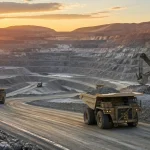
Multiple haul trucks transport ore at sunrise, highlighting the scale of modern electric-ready mine sites.
In 2026, autonomous electric haulers are delivering a 25% lower operating cost compared to conventional manned diesel fleets. Furthermore, resource utilization is up by roughly 23% in many Australian sites. This means more ore is recovered from the same pit design because autonomous trucks can operate in tighter spaces and on steeper grades that might be deemed higher risk for human operators.
Data Analysis: Diesel vs. Autonomous Electric (2026 Benchmarks)
To understand the scale of the shift, Skillings Mining Intelligence has compiled the following performance comparison based on current 2026 operational data from tier-1 open-pit sites.
| Metric (Per 150t Truck) | Conventional Diesel | Autonomous Electric (2026) | % Change |
|---|---|---|---|
| Annual Diesel Consumption | ~400,000 Liters | 0 Liters | -100% |
| Annual CO2 Emissions | ~1,000 Tonnes | ~0 Tonnes (Scope 1) | -100% |
| Maintenance Intervals | 500 Hours | 1,500+ Hours | +200% |
| Utilization Rate | 82% | 94% | +14.6% |
| Operating Cost (Hourly) | $285 | $195 | -31.5% |
Source: Skillings Mining Intelligence internal data and Industry Benchmarks.
Technology Frontiers: Charging and Infrastructure
The biggest hurdle in 2026 remains the "refueling" infrastructure. While diesel trucks can be refilled in minutes, large-scale battery trucks require high-megawatt charging solutions. Two main schools of thought have emerged:
- Trolley Assist 2.0: Utilizing overhead catenary lines on the steep haul ramps. This allows trucks to power their wheel motors directly from the grid while simultaneously charging their on-board batteries during the most energy-intensive part of the cycle.
- Battery Swapping: Popular in smaller or more geographically complex sites, where a depleted battery can be swapped for a fully charged one in less than 10 minutes, mimicking the diesel refueling cadence.

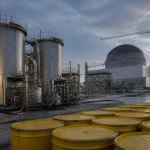
Modern mining infrastructure supports the complex logistical needs of an electrified and autonomous fleet.
Canada has taken a particular interest in these technologies as they work to decarbonize the oil sands and large-scale copper-gold projects in British Columbia. The cold-weather performance of lithium-ion batteries: a major concern five years ago: has been largely mitigated through advanced thermal management systems and the integration of solid-state battery technology in niche applications.
The 2026 Outlook
The "Electric Frontier" is no longer a speculative venture. It is the baseline for any new mining project seeking financing in today's market. Financial institutions are increasingly linking capital availability to carbon intensity, making the autonomous electric route the path of least resistance for both project approval and operational longevity.
For investors, the focus is now on the equipment manufacturers and software providers who own the "operating system" of the mine. As we look toward the 2030 horizon, the lessons learned in the current 2026 rollout will dictate the next decade of resource extraction efficiency.
The transition is challenging, requiring a total rethink of mine planning and power distribution, but the rewards: a 44% reduction in net present cost (NPC) for fully electrified mines: are too significant to ignore.
Social Media Snippet (LinkedIn/X):
Mining is hitting the "Electric Frontier" in 2026. ⚡️ Autonomous electric haulage is no longer a pilot: it's a profit driver. New data shows a 50% reduction in lifetime haulage costs and a 25% drop in hourly OpEx compared to diesel. From the Pilbara to BC, the industry is proving that decarbonization and bottom-line growth go hand-in-hand. Read the full analysis of how tier-1 operators are slashing carbon and costs. #MiningTech #Electrification #AutonomousMining #MiningNews2026 #ESG