By Penny Langford

In the global mining sector, the year 2026 marks a decisive pivot. The era of "pilot projects" and "innovation trials" has officially ended, replaced by a hard-nosed push for operational efficiency through the convergence of electrification and autonomy. For major operators, this transition is no longer a matter of green optics: it is a calculated response to the rising costs of diesel, labor scarcity, and the technical demands of deep-level extraction.
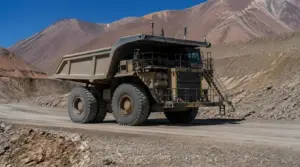
Mine electrification is fundamentally reshaping the cost curve of modern resource extraction. By decoupling haulage from the volatility of the diesel market and integrating autonomous haulage systems (AHS), companies are realizing autonomous haul trucks cost savings that were once theoretical. From the iron ore pits of Western Australia to the copper belts of the Andes, the data from early 2026 indicates that the combination of battery-electric platforms and driverless logic is delivering unit-cost reductions that are finally moving the needle for investors and operators alike.
The Economics of Autonomy: Where the Millions are Saved
The shift toward autonomous hauling is driven by three primary levers: utilization, fuel optimization, and labor reallocation. In a conventional manual operation, a haul truck’s productivity is often tethered to human constraints: shift changes, lunch breaks, and operator fatigue. In 2026, autonomous fleets are operating at roughly 15–20% higher utilization rates than their manned counterparts.
1. Utilization and Labor Reallocation
By removing the in-cab operator, mines eliminate the 30–60 minutes of daily downtime typically lost to shift handovers and breaks. In high-wage jurisdictions like Canada and Australia, labor accounts for nearly 40% of haulage operating expenses (opex). AHS deployments in 2026 are successfully displacing 2–3 full-time equivalent (FTE) roles per truck, allowing those workers to be transitioned into higher-value control room and maintenance roles.
2. Fuel and Maintenance Optimization
Autonomous systems do not suffer from "heavy-foot" syndrome. Predictive algorithms manage throttle and braking with a precision that human operators cannot replicate. In diesel-mechanical fleets, this translates to a 5–15% reduction in fuel consumption. More importantly, the consistency of autonomous driving extends tire life by up to 20%, a critical factor when a single ultra-class tire can cost upwards of $50,000.


Mine Electrification Benefits 2026: The Energy Nexus
While autonomy addresses the how of moving ore, electrification addresses the what: specifically, what powers the movement. In 2026, mine electrification benefits have become more tangible as charging infrastructure and battery energy density reach a commercial tipping point.
The transition from diesel-mechanical to battery-electric or trolley-assist systems is producing some of the most significant ROI figures in recent industry history.
- Energy Cost Arbitrage: Electricity, particularly when sourced from on-site renewables or low-carbon grids, is consistently cheaper per kilowatt-hour than diesel. For remote sites previously dependent on trucked-in fuel, the switch to electrified infrastructure can cut energy costs per tonne by 20–40%.
- Maintenance Simplification: An electric motor has significantly fewer moving parts than a high-horsepower diesel engine. Operators in 2026 are reporting 25% lower maintenance costs for electric haulers, driven by fewer oil changes, no exhaust after-treatment systems, and the elimination of complex transmissions.
- Ventilation Savings in Underground Mining: For underground operators, electrification is a "cheat code" for profitability. Battery-electric vehicles (BEVs) produce zero diesel particulate matter (DPM) and significantly less heat. This reduces the energy required for ventilation and refrigeration systems: often the largest power consumers in deep-level mines: by 30% or more.
For a deeper dive into how these technologies are being benchmarked, see our analysis on Autonomous Haulage Productivity Benchmarks for 2026.
The Synergy: Autonomy Meets the Battery
The true "million-dollar" savings occur at the intersection of these two technologies. Autonomous logic is the perfect partner for battery-electric platforms. Electric trucks require careful energy management to maximize range and battery health. Autonomous systems can optimize "regen" (regenerative braking) on downhill hauls, capturing energy that would otherwise be lost as heat and feeding it back into the battery.
In 2026, we are seeing the rise of "dynamic charging" environments where autonomous trucks coordinate their own charging cycles without human intervention. This ensures that the fleet is always balanced: some trucks hauling, some charging, and some discharging: to avoid peak-load surcharges from the power grid.

2026 Cost Reduction Snapshot: Conventional vs. Autonomous/Electric
| Metric | Manual Diesel (Baseline) | Autonomous Electric (2026) | Change |
|---|---|---|---|
| Haulage Cost per Tonne | $2.40 | $1.75 | -27% |
| Utilization (Hrs/Day) | 18.5 | 21.8 | +18% |
| Maintenance Cost / Hr | $145 | $110 | -24% |
| Energy Cost / Tonne | $0.85 | $0.48 | -43% |
| Tire Life (Hours) | 4,500 | 5,400 | +20% |
Data sourced from Skillings Mining Intelligence 2026 projections and industry benchmarks.
Strategic Risks and the Road to 2030
Despite the clear financial upside, the road to full electrification is not without potholes. The primary hurdle in 2026 remains the high upfront capital expenditure (CAPEX). A battery-electric haul truck can cost 30–50% more than its diesel equivalent, and the required grid upgrades or charging infrastructure can run into the tens of millions of dollars.
Payback periods for these investments typically range from 3 to 7 years. Consequently, this technology is currently favoring Tier-1 assets with long mine lives. Smaller, short-life operations are finding it harder to justify the initial outlay, leading to a widening productivity gap between the "digital majors" and mid-tier producers.
Furthermore, the "AI-Energy Nexus" is placing new strains on mine power systems. As we discussed in our report on AI and Big Tech's Uranium Power Play, the competition for reliable, low-carbon power is intensifying globally. Miners are now competing with data centers for the same renewable energy capacity, forcing many companies to become power producers in their own right.

Conclusion: The New Standard
As we look toward the second half of 2026, the question is no longer whether to electrify or automate, but how to do both simultaneously. The autonomous haul trucks cost savings being realized today are providing the cash flow necessary to fund the next wave of decarbonization.
For decision-makers, the mandate is clear: the operational baseline has shifted. In a world of volatile commodity prices and tightening ESG regulations, the ability to move ore at a 25% lower unit cost is the ultimate competitive advantage. Those who remain tethered to the diesel-manual model of the past may find themselves priced out of the market by 2030.
Market Snapshot: Technology Adoption Trends 2026
- Surface Mining: 65% of new ultra-class truck orders in 2026 are "autonomous-ready," with 20% being full battery-electric or trolley-capable.
- Underground Mining: 80% of new loader (LHD) deployments in deep-level gold and copper mines are now battery-electric.
- Infrastructure: Investment in on-site renewable energy (solar/wind/storage) by mining companies has increased by 40% year-over-year.
Social Media Snippet (LinkedIn/X):
Mining's "Double Play" is here. ⚡️? In 2026, the convergence of #MineElectrification and #AutonomousHauling is cutting haulage costs by up to 27%. From energy cost arbitrage to 20% gains in tire life, the ROI on the "Digital Mine" is no longer theoretical; it's the new industry standard. Read our deep-dive into how the world's biggest pits are saving millions. #MiningTech #EnergyTransition #SkillingsMining