By Penny Langford

For decades, Environmental, Social, and Governance (ESG) reporting in the mining sector was often criticized as a "Wild West" of voluntary disclosures, selective metrics, and glossy sustainability brochures. However, by mid-2026, that landscape has fundamentally shifted. The era of "box-ticking" is over, replaced by a rigorous, standardized, and financial-grade reporting regime that demands the same level of accuracy as a balance sheet.
For mining executives and investors, this transition represents more than a regulatory hurdle. Those who have moved beyond mere compliance are now leveraging ESG data as a strategic tool to secure cheaper capital, streamline permitting, and build resilient long-term portfolios. As the industry navigates the energy transition, the ability to demonstrate a credible, data-backed ESG profile has become a primary competitive differentiator.
The Great Harmonization: ISSB and the End of Fragmentation
In 2026, the most significant trend in mining ESG reporting is the consolidation of global standards. The fragmented "alphabet soup" of reporting frameworks: SASB, TCFD, GRI, and others: has largely coalesced around two primary pillars: the International Sustainability Standards Board (ISSB) and the European Sustainability Reporting Standards (ESRS).
The ISSB’s IFRS S1 (General Requirements) and IFRS S2 (Climate-related Disclosures) now serve as the global anchor for investor-focused reporting. For mining companies, this means that climate risks, carbon intensity, and transition plans are no longer "supplementary" information; they are integrated into the core financial filing.

Regulators in major mining jurisdictions, from Australia and Canada to Brazil, have increasingly aligned their domestic requirements with the ISSB baseline. This harmonization has significantly reduced the reporting burden for multi-jurisdictional operators while simultaneously raising the bar for transparency. Investors can now compare the carbon footprint of a copper mine in Chile directly with a nickel operation in Indonesia using the same rigorous metrics.

The Shift to "Nature-Positive" and TNFD Alignment
While carbon emissions dominated the conversation in the early 2020s, the reporting focus in 2026 has expanded to include nature and biodiversity. The Taskforce on Nature-related Financial Disclosures (TNFD) has moved from a voluntary framework to a cornerstone of mining ESG strategy.
Mining, by its very nature, is a land-intensive industry with significant impacts on water systems and local ecosystems. The new reporting trends emphasize "location-specific" disclosures. Investors are no longer satisfied with company-wide water recycling averages; they want to see site-level data on water stress, tailings management, and biodiversity net gain.
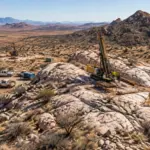

As highlighted in our Lithium Power Map analysis, the pressure to secure "nature-positive" outcomes is particularly acute in the critical minerals sector. Mining companies are now expected to disclose not just their impacts, but their dependencies on nature: such as the reliance on local watersheds for processing or the ecosystem services provided by surrounding forests that mitigate flood risks.
Implementing "Financial-Grade" ESG Controls
To meet the demands of the ISSB and the EU’s Corporate Sustainability Reporting Directive (CSRD), mining companies are overhauling their internal data systems. ESG data is now being treated with the same level of scrutiny as financial data, often requiring "SOX-style" internal controls and third-party assurance.
This shift has accelerated the digitalization of the mine site. Real-time monitoring of energy consumption, emissions, and water quality is being integrated into enterprise resource planning (ERP) systems. Digital twins of mining operations now include ESG layers, allowing management to model the impact of operational changes on their sustainability targets in real-time.

"We are seeing a move toward 'assurance-ready' reporting from day one," notes a senior ESG analyst. "If a mining company claims it will reach net-zero by 2040, they now need to show the exact capital allocation pathway, the specific technology milestones, and have that plan audited by a third party." This level of detail is essential for maintaining credibility in a market increasingly wary of "greenwashing" litigation.
The Strategic Advantage: Why ESG Reporting Matters in 2026
Moving beyond compliance offers three distinct strategic advantages for mining companies in the current market:
1. Lowering the Cost of Capital
Institutional investors, particularly those managing large pension funds and ESG-mandated portfolios, are applying stricter filters. Companies with high-quality, transparent ESG reporting are accessing "green" and "sustainability-linked" financing with significantly lower interest rates. Conversely, companies with opaque or poor ESG profiles are finding the pool of available capital shrinking, leading to higher borrowing costs and lower valuations.
2. Securing the Social License to Operate (SLO)
In 2026, local communities and indigenous groups have more access to data than ever before. Proactive ESG reporting that uses double materiality: reporting on how the mine affects the community, not just how the community affects the mine’s bottom line: is essential for building trust. Transparent data on local employment, local procurement, and water usage can prevent the costly delays and protests that have historically plagued large-scale projects, such as the Vicuna District developments.
3. Operational Resilience and Risk Mitigation
ESG reporting is ultimately a risk management exercise. By rigorously assessing climate and nature risks, mining companies can identify vulnerabilities in their supply chains and operations early. Whether it is adapting a mine plan to account for future water scarcity or investing in renewable energy to hedge against rising carbon taxes, ESG-driven strategy leads to a more resilient operation.
Comparing Global Reporting Frameworks for Miners (2026 Status)
To stay competitive, operators must navigate the overlapping requirements of different jurisdictions. The following table outlines the primary focus areas for the top three frameworks impacting the mining sector today.
| Framework | Primary Audience | Materiality Lens | Key Mining Focus | 2026 Status |
|---|---|---|---|---|
| ISSB (IFRS S1/S2) | Investors / Lenders | Financial Materiality | Climate risk, carbon intensity, transition capex | Global Baseline; Adopted by 40+ nations. |
| ESRS (EU / CSRD) | Multi-Stakeholder | Double Materiality | Biodiversity, human rights, community impact | Mandatory for EU-exposed companies. |
| TNFD (Nature) | Investors / Regulators | Dependencies & Impacts | Water stress, land use, ecosystem services | Integrated into ISSB & ESRS guidance. |
2026 Outlook: The Integrated Future
As we look toward 2027, the line between "Sustainability Reports" and "Annual Financial Reports" will continue to blur until it disappears entirely. The most successful mining companies are those that have stopped viewing ESG as a PR exercise and started treating it as a core business function.
"The winners in the next decade of mining won't just have the best ore bodies," says an industry consultant. "They will have the best data, the cleanest operations, and the most transparent relationships with their stakeholders."
For daily updates on how ESG trends are impacting mining valuations and M&A activity, subscribe to the Daily Skillings Mining Intelligence newsletter.
Shareable Social Media Snippet (LinkedIn/X)
Post Title: Mining ESG Reporting: From Compliance to Strategy in 2026
Snippet: Is your ESG reporting a burden or a competitive edge? By mid-2026, the shift to mandatory, financial-grade disclosure under ISSB and ESRS is redefining how mining companies secure capital and social license. In our latest deep dive, we explore how the rise of nature-related disclosures (TNFD) and digital reporting controls are turning "box-ticking" into a strategic advantage for global operators. #MiningESG #Sustainability #CriticalMinerals #ISSB #MiningNews