By Charles Pitts

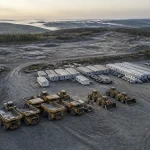
The global diamond industry is witnessing a strategic pivot in supply management as Alrosa, the world’s largest producer of rough diamonds by volume, announced a tactical three-month suspension of mining and transport operations at its Severalmaz subsidiary. Starting July 1, 2026, the temporary freeze at the M.V. Lomonosov deposit in Russia’s Arkhangelsk region marks a significant moment in the 2026 diamond market cycle, signaling a shift toward aggressive margin protection and inventory discipline.
While mining activity will pause, processing plants at the site are slated to remain operational, fed by existing ore stockpiles. This nuanced approach allows the company to reduce immediate operational expenditure without completely severing the supply of saleable rough diamonds. For investors and operators monitoring the latest mining news, this move represents a sophisticated masterclass in operational resilience amidst a volatile macroeconomic environment.
The Strategic Logic: Margin Over Volume
The decision to idle Severalmaz for the third quarter of 2026 is not an isolated event but rather the cornerstone of a broader corporate strategy focused on financial stability. In 2025, Alrosa reported a net profit of 36.2 billion rubles, yet faced a negative free cash flow (FCF) of 11.2 billion rubles. This disconnect: where profitability remains on paper but cash outflows exceed inflows: has forced the producer to implement stringent cost-cutting measures.
By suspending mining at Severalmaz, which accounts for approximately 10% of Russia’s total diamond production, Alrosa is effectively “turning off the tap” at a capital-intensive stage of the value chain. Mining and haulage are the primary drivers of direct operating costs; by contrast, processing existing stockpiles is a lower-cost way to maintain a presence in the market.
More Read

This “margin-first” philosophy is becoming a standard in the industry. As explored in our recent analysis of valuation gaps in royalty companies, the market increasingly rewards companies that prioritize capital discipline and cash flow over sheer production volume. Alrosa’s tactical freeze is a direct response to these market pressures, aiming to save billions in rubles while preventing further inventory bloat during a period of soft global demand.


Timeline and Operational Logistics
The suspension is currently scheduled to last for three months, concluding at the end of September 2026. This period is strategically chosen to overlap with the summer mining season, where logistical costs in the Arkhangelsk region: though less severe than the deep winter: still require significant energy and labor inputs.
More Read

Key Milestones in the Severalmaz Freeze:
- July 1, 2026: Formal suspension of pit operations and ore haulage.
- July–September 2026: Continued operation of processing plants using 2025 and H1 2026 stockpiles.
- August 2026: Mid-point review of market demand and rough diamond price floors.
- October 1, 2026: Proposed resumption of full-scale mining, contingent on market conditions.
The Lomonosov deposit is a massive industrial complex, and the ability to selectively pause “the front end” (mining) while running “the back end” (processing) demonstrates a high level of operational flexibility. This allows Alrosa to manage its workforce more effectively: avoiding the long-term talent loss associated with permanent closures while reducing current wage and fuel liabilities.
Mining ESG Reporting Trends: A New Narrative for Resilience
One of the most notable aspects of this announcement is how it aligns with emerging mining ESG reporting trends. Historically, a production halt might have been framed purely as a sign of financial distress. In 2026, however, companies are increasingly framing these decisions through the lens of “Operational and Financial Resilience”: a key pillar of the Governance (G) and Environment (E) components of ESG.
By reducing unnecessary mining during low-demand periods, Alrosa can report a lower immediate carbon footprint and reduced land disturbance for the fiscal year. Furthermore, the focus on “disciplined sales flows” is a governance signal to the market that the company will not dump supply at any price, thereby protecting the long-term value of the natural resource.
Investors are now looking for these specific markers in corporate disclosures. As highlighted in our report on battery electric truck ROI, the integration of decarbonization and operational efficiency is no longer optional; it is the benchmark for modern mining success. Alrosa’s decision to optimize its production footprint at Severalmaz reflects this transition toward data-driven, ESG-aligned management.

Market Impact: Creating a Price Floor
The diamond market has been under pressure from multiple fronts, including the rise of lab-grown alternatives and a cooling luxury market in key regions. By removing a portion of primary production from the global supply chain, Alrosa is attempting to establish a “price floor” for rough diamonds.
While the immediate impact on global prices may be modest due to the existence of stockpiles, the psychological impact on the trade is significant. It signals to sightholders and retailers that the world’s largest producer is willing to walk away from the pit to maintain price integrity. This move echoes similar supply-side interventions seen in the copper market, where project delays and suspensions have historically acted as a catalyst for price recovery.
Risks to the Outlook
- Extended Duration: If the suspension lasts beyond the initial three months, it could signal deeper financial strain or a more severe market downturn than currently anticipated.
- Sanctions and Traceability: Ongoing geopolitical pressures continue to complicate the flow of Russian diamonds to Western markets. Even with a production cut, the “tainted” nature of the stones in some jurisdictions may limit the effectiveness of supply discipline.
- Substitution: Any prolonged absence of natural rough diamonds from major deposits could accelerate the shift toward lab-grown diamonds or secondary market trading.
Managing the Social Dimension
The “Social” (S) in ESG remains a critical challenge for remote operations like Severalmaz. The suspension involves wage cuts for non-mining staff and potential disruption for local contractors in Arkhangelsk. Alrosa has previously implemented 10% salary reductions for employees not directly involved in extraction, a move that highlights the delicate balance between corporate survival and community stability.
Successfully navigating this three-month window will require transparent communication with the regional government and the workforce. The industry is watching closely to see if this “tactical freeze” can be executed without eroding the social license to operate: a risk that is becoming increasingly central to geopolitical gold and resource navigation.

Conclusion: A Precedent for 2026 and Beyond
Alrosa’s tactical suspension at Severalmaz is more than just a reaction to a weak market; it is a proactive exercise in supply management. By decoupling mining from processing, the company is protecting its balance sheet while maintaining its market position.
For the wider mining sector, the Severalmaz case study offers three key takeaways:
- Flexibility is the new AISC: The ability to pivot operational intensity without full site closures is essential for managing the volatile cycles of 2026.
- ESG is the framework for risk: Mining ESG reporting trends are no longer just about compliance; they are the language used to justify strategic operational shifts to a skeptical investment community.
- Inventory is a weapon: Managing the flow of rough diamonds through stockpiles rather than fresh extraction allows producers to act as “swing producers,” similar to OPEC’s role in the oil markets.
As we move toward the final quarter of 2026, the success of this “Diamond Freeze” will be measured by its ability to stabilize rough prices and restore Alrosa’s free cash flow. For now, it stands as a sophisticated, if high-stakes, gambit in the ongoing struggle for diamond market equilibrium.