By Mo Shine

The global nickel market is undergoing a structural realignment as regulatory milestones in North America intersect with aggressive supply management in Southeast Asia. On July 31, 2026, Ottawa delivered a definitive boost to Western critical mineral ambitions by issuing a positive federal Decision Statement for Canada Nickel Company’s massive Crawford project in northern Ontario. Representing the first major mining project greenlit under Canada’s amended Impact Assessment Act, Crawford anchors a new generation of low-carbon Western supply just as restrictive permitting and quota constraints in Indonesia begin to rebalance global surplus dynamics.
For operators, investors, and policymakers navigating the energy transition, August 2026 marks a critical inflection point. While prolonged low price environments throughout 2024 and 2025 forced painful asset rationalizations: including the temporary idling of BHP’s Nickel West operations: recent regulatory tightening in Jakarta and strategic project approvals in Canada are reshaping market fundamentals.
The Crawford Milestone: Scale, Timeline, and Strategic Significance
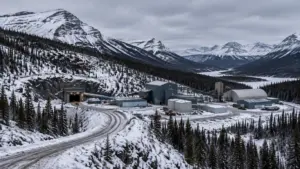
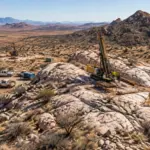
Located approximately 42 kilometers north of Timmins, Ontario, the Crawford Nickel Project represents a watershed moment for Canadian resource development. Ottawa’s federal Decision Statement clears the primary environmental hurdle for what is slated to become one of the largest nickel mines in the Western world.
The project parameters underscore its colossal industrial scale:
- Extraction Capacity: Nearly 90 million tonnes of ore per year (Mtpa).
- Mine Life: An anticipated operational lifespan of 40 to 41 years.
- Economic Impact: Projected to contribute roughly $70 billion to Canada’s Gross Domestic Product over its lifetime.
- Capital Expenditure: Estimated at $5 billion in total capital investment.
- Employment: 4,000 to 5,000 jobs during peak construction, stabilizing at approximately 1,300 direct operational roles.


With the federal impact assessment concluded: acknowledging localized trade-offs regarding fish habitat and water quality while ruling the adverse effects justified by national interest: Canada Nickel is advancing detailed engineering and project financing. Provincial authorities in Ontario have integrated the project into the "One Project, One Process" framework, designed to streamline permitting timelines. Current guidance targets a formal construction decision in 2027, with first ore moving through the processing plant by the end of 2029.
Beyond sheer volume, Crawford’s economic viability hinges on its ultra-low carbon positioning. Utilizing serpentinite host rock that naturally absorbs carbon dioxide during processing, the operation aims to produce commercial-grade nickel with a net-zero carbon footprint, a key differentiator for automakers and battery manufacturers bound by strict Scope 3 emissions targets.
Indonesian Quota Cuts and Global Supply Realities
While North American projects establish long-term security of supply, immediate price discovery in the global nickel market remains heavily dictated by developments in Indonesia. Over the past three years, rapid expansion of Indonesian nickel pig iron (NPI) and high-pressure acid leach (HPAL) capacity flooded international markets, driving prices down and exerting extreme pressure on high-cost Western producers.
However, stricter enforcement of mining quotas through Indonesia’s RKAB (Work Plan and Budget) approval process has begun to bite. Government-mandated limits on ore extraction permits have created sporadic supply bottlenecks for domestic smelters, forcing unexpected feedstock shortfalls. Analysts note that these permitting constraints are the primary catalyst behind the recent recovery in LME and SHFE nickel prices, easing the oversupply narrative that dominated previous quarters.
| Metric / Indicator | Current Status (August 2026) | Market Implication |
|---|---|---|
| Crawford Project Status | Federal Decision Statement issued July 31, 2026 | Secures long-term Western critical mineral supply pipeline |
| Indonesian Quota Regime | Strict RKAB permitting enforcement | Tightens short-term global ore availability, supporting prices |
| LME Inventory Trends | Gradual stabilization from multi-year highs | Reflects absorption of surplus class-I material |
| Western Asset Adjustments | Selective idling and restructuring (Nickel West, Sudbury) | Eliminates high-cost uncompetitive ounces |
For a broader perspective on resource project approvals and regulatory frameworks, see our coverage on Skillings Mining Intelligence.
Western Supply Realignment: BHP Nickel West and Glencore's Sudbury
The macroeconomic pressures of recent years have not been absorbed without structural scars across traditional mining jurisdictions. In Western Australia, BHP’s decision to idle its Nickel West operations highlighted the stark economic reality facing high-cost, aging sulphide assets competing against low-cost Indonesian laterite processing.
Similarly, in North America, operators such as Glencore in Sudbury and Vale in the Thompson Nickel Belt have focused on margin protection, brownfield optimization, and grade-selective mining rather than aggressive volume expansion. These adjustments have created a two-tier market: a low-cost, high-volume laterite sector anchored by Indonesia and China, and a high-ESG, secure-jurisdiction sulphide sector championed by projects like Crawford.

Operating discipline across Western miners has ensured that capital allocation remains strictly disciplined. Rather than rushing into unhedged expansions, management teams are prioritizing balance sheet resilience, automation, and ore-sorting technologies to lower unit operating costs.
Demand Dynamics: EV Batteries vs. Stainless Steel
Demand fundamentals for nickel remain bifurcated between traditional metallurgical applications and the fast-growing energy transition sector.
Stainless steel production continues to represent the baseline consumer of global nickel units, accounting for roughly 65% to 70% of total consumption. Demand from traditional industrial and architectural markets in Asia and Europe has stabilized following post-pandemic contractions, providing a reliable demand floor.
Simultaneously, the electric vehicle (EV) battery sector continues its secular growth path, albeit with evolving technological nuances. While lower-cost lithium iron phosphate (LFP) chemistries maintain strong market share in standard-range passenger vehicles, long-range transport, commercial fleets, and premium models continue to rely heavily on high-nickel cathode chemistries (such as NCM811 and NCA). These chemistries require certified Class 1 nickel, reinforcing the strategic necessity of sulphide deposits like Crawford and Sudbury that can be refined directly into battery-grade feedstock without energy-intensive intermediate conversion steps.
Operational Excellence and Autonomous Fleet Integration
As new projects like Crawford move from design tables to execution, technological integration remains paramount. Modern mining operations increasingly rely on real-time data integration, autonomous haulage systems (AHS), and automated drill jumbos to offset rising labor costs and maximize throughput efficiency.

Control rooms equipped with multi-screen telemetry allow operators to monitor fleet efficiency, ore grade distribution, and equipment health across sprawling open-pit benches. By coupling advanced telemetry with automated material transport, operators can maintain precise grade control, ensuring that processing plants operate at optimal recovery rates.
Market Outlook: Navigating 2026 and Beyond
The approval of the Crawford project combined with Indonesia's evolving quota discipline establishes a more balanced framework for the nickel sector in the second half of 2026.
Key takeaways for industry decision-makers include:
- Supply Divergence: Western automotive and industrial supply chains are gaining long-term visibility through domestic approvals, reducing geopolitical vulnerability.
- Regulatory Influence: Indonesian permitting policies will remain the primary short-term price dial, dictating marginal cost structures for NPI and HPAL producers.
- ESG Premium: As carbon border adjustments and Scope 3 reporting requirements tighten across North America and Europe, low-carbon sulphide nickel will command preferential positioning regardless of raw LME spot volatility.
As the industry looks toward the 2029 production target for Crawford and evaluates ongoing structural shifts in Jakarta, disciplined capital deployment and rigorous operational execution will separate successful mining enterprises from high-cost laggards.