By Penny Langford

North American Lithium (NAL) has long been the centerpiece of Canada’s ambitions to dominate the upstream battery supply chain. However, the recent C$145 million investment by the Canada Growth Fund (CGF) into Elevra Lithium (formerly Sayona Mining) represents more than just a capital injection; it is a calculated strategic pivot that consolidates Quebec's position as the primary hard-rock lithium engine for North America.
This financing package, structured as convertible notes, effectively de-risks the multi-stage expansion of NAL and signals a shift in the corporate gravity of the operation. By bringing in federal sovereign-backed capital, the project moves away from its historical reliance on private offtake partners and equity markets, aligning itself directly with the Canadian government’s industrial policy to build a self-sufficient, midstream-ready lithium corridor.
The CGF Catalyst: Sovereign Capital Meets Critical Minerals
The Canada Growth Fund is a C$15 billion federal vehicle designed to catalyze private investment in the country’s clean-energy transition. Its entry into the North American Lithium story is a significant endorsement of the asset's scalability and its role in the broader energy transition.
The C$145 million deal is structured in two parts: an upfront tranche of C$65 million and a conditional tranche of C$80 million, anticipated around 2027. Unlike traditional bank debt or dilutive equity raises, these convertible notes offer Elevra "patient capital." For the Canadian government, the objective is not merely financial return but the insurance that Quebec-mined lithium feeds into the nascent battery manufacturing hubs in Ontario and the United States.
This investment arrives at a critical juncture for the lithium market. Following a period of extreme price volatility, the industry is shifting toward "cycle-resilient" production. By lowering unit operating costs through scale, NAL aims to remain profitable even during spodumene price troughs, a necessity for maintaining a stable supply for automotive giants.


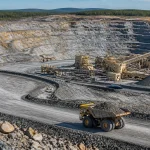
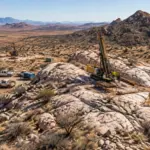
Active extraction zones at a large-scale hard-rock operation, similar to the terraced benches seen at North American Lithium's Quebec facilities.
Scaling NAL: From Single Mine to Quebec Hub
The primary use of the CGF proceeds is to fully fund Stages 1 through 3 of the NAL expansion. The metrics of this expansion are transformative for the operation located in the Abitibi-Témiscamingue region:
- Production Capacity: A projected 74% increase in output compared to current levels.
- Operating Efficiency: A forecast 21% reduction in unit operating costs.
- Economic Impact: A post-tax NPV uplift estimated at approximately US$718 million.
However, the expansion is only one piece of the puzzle. Elevra is moving toward an integrated "Quebec Hub" model. This strategy involves centralizing processing at NAL for material from satellite projects like Authier and accelerating the Moblan project toward a Final Investment Decision (FID).
| Metric | Current Status (Q3 FY26) | Post-Expansion Goal |
|---|---|---|
| Quarterly Production | ~47 kt Concentrate | ~80+ kt Concentrate |
| Unit Cost (C$/t) | High-Cost Base | -21% Reduction |
| Strategic Partner | Piedmont Lithium (JV) | CGF (Sovereign) + Piedmont |
| Revenue (Quarterly) | ~US$81M | Pro-forma Increase |
Data Source: Skillings Mining Intelligence & Elevra Investor Filings.
By consolidating these assets under a single operational umbrella, the company reduces redundant infrastructure costs and creates a more robust balance sheet: factors that Skillings has previously noted as essential for mid-tier miners targeting 100k production milestones.
The Downstream Connection: Feeding the Battery Belt
The strategic pivot for Quebec lithium is inextricably linked to the massive downstream investments in Ontario and the US Midwest. The "Lithium Valley" in Quebec is no longer an isolated extraction site; it is the starting point of a 1,500-mile industrial conveyor belt.
- The Ontario Connection: Large-scale cell manufacturing facilities, such as the Volkswagen (PowerCo) plant in St. Thomas and the Stellantis-LG Energy Solution (NextStar) plant in Windsor, require massive quantities of battery-grade lithium. For these plants to meet "Made in Canada" or local-content requirements, a secure domestic supply of spodumene concentrate is non-negotiable.
- The US Inflation Reduction Act (IRA): For EVs to qualify for full tax credits in the United States, a significant percentage of the critical minerals used in their batteries must be sourced from the US or a Free Trade Agreement partner like Canada. North American Lithium is one of the few operating hard-rock mines capable of meeting this demand at scale.

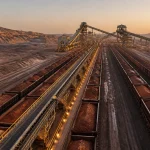
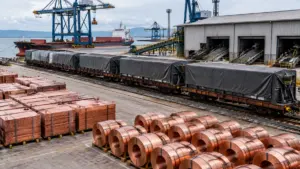
Logistics and real-time monitoring are central to synchronizing upstream mining with downstream battery production demands.
Decoupling and Consolidation: The Role of Piedmont Lithium
Historically, North American Lithium has been viewed primarily through the lens of its joint venture between Elevra (formerly Sayona) and Piedmont Lithium. Piedmont’s offtake agreement was the bedrock of the project’s early viability.
However, the CGF investment signals a "decoupling" of sorts. While Piedmont remains a vital minority JV partner and offtaker, Elevra is no longer as dependent on external offtake-linked financing. The inclusion of Canadian sovereign capital tilts the strategic center of gravity toward Canadian interests. This may influence future decisions regarding where NAL’s spodumene is processed: specifically, whether it continues to be shipped to existing refineries or if the CGF will push for a more integrated midstream chemical facility within Quebec's borders.
2026 Outlook: Resilience in a Maturing Market
As we move through 2026, the lithium sector is maturing. The days of speculative fever have been replaced by a focus on operational execution and ROI. The NAL expansion is a bellwether for this new era.
The risks, of course, remain. Technical hurdles in scaling processing plants, potential delays in the conditional CGF tranche, and the persistent threat of spodumene price volatility could challenge the timeline. Furthermore, the integration of autonomous haulage and other technological advancements will be required to meet the aggressive cost-reduction targets set by the expansion plan.
Nevertheless, the C$145 million pivot ensures that North American Lithium is no longer just a mining project; it is a critical piece of national infrastructure. For investors and operators, the message is clear: Quebec is not just digging holes; it is building the foundation of the North American automotive future.

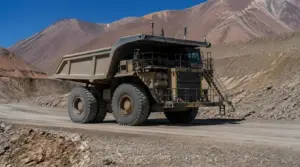
Modern fleet management and ultra-class haulage are essential for the 74% capacity increase planned for North American Lithium.
Summary for Stakeholders
The expansion of NAL under the Canada Growth Fund's umbrella marks the end of the "exploration and hope" phase and the beginning of "industrialized scale." For the Quebec government, this is the realization of its Mineral Strategy. For the federal government, it is a defensive move against global supply chain fragility. And for the mining industry, it is a blueprint for how public-private partnerships can bridge the "valley of death" in project financing for critical minerals.