By Penny Langford

JIMBLEBAR, Western Australia : In a milestone for the decarbonization of the global iron ore industry, BHP and Rio Tinto have formally launched a collaborative trial of battery-electric haul trucks at the Jimblebar mine in Western Australia’s Pilbara region. The project, conducted in partnership with Caterpillar and regional dealer WesTrac, marks one of the most significant real-world applications of zero-emissions technology in heavy industry to date.
The trial involves two Cat 793 XE "Early Learner" battery-electric trucks. Standing over six meters tall and designed to operate in the 240-tonne class, these vehicles are part of a global fleet of only seven such machines currently in testing. The move signals a pivot from theoretical pilot studies to rigorous operational stress testing, as the world’s largest miners race to eliminate diesel emissions from their core operations by 2050.
A Rare Alliance in the Pilbara
The collaboration between BHP and Rio Tinto: traditionally fierce rivals in the iron ore market: underscores the technical and financial magnitude of the energy transition. By sharing data from the Jimblebar trial, both companies aim to accelerate the development of charging standards and infrastructure that can support hundreds of trucks across the Pilbara’s sprawling pit networks.
"This is not just about the trucks; it’s about the entire ecosystem," said a spokesperson for the project during a site visit this week. "We are testing how these machines interact with the grid, how they handle the extreme heat of the Pilbara, and how we can integrate them into a 24/7 production cycle without losing the efficiency that diesel provides."
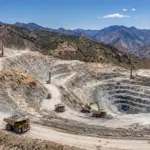
The Jimblebar mine, located roughly 40 kilometers east of Newman, was selected for its existing advanced infrastructure and status as a fully autonomous operation. The integration of battery-electric power into an autonomous fleet adds a layer of complexity that engineers believe is essential for the "mine of the future."


Technical Specifications and Early Results
The Cat 793 XE is the culmination of years of development at Caterpillar’s Tucson Proving Ground in Arizona. Since arriving at Jimblebar in late 2025, the two units have already logged over 100 operating hours and completed more than 200 test laps.
Unlike traditional diesel-electric trucks, which use a diesel engine to power an electric drivetrain, the 793 XE relies entirely on an onboard battery system. The trial is focused on two primary charging methodologies:
- High-Powered Static Charging: Rapidly refueling the battery while the truck is stationary at a dedicated charging hub.
- Dynamic Energy Transfer: A "trolley assist" style system that allows the truck to charge while in motion, particularly during high-energy uphill hauls where diesel consumption is typically at its peak.
The shift to electric power is expected to significantly reduce maintenance costs over the long term. Electric motors have fewer moving parts than internal combustion engines, and the regenerative braking systems: common in consumer EVs but scaled here to 500-ton vehicles: can recover substantial energy during downhill hauls to the crusher.
The Decarbonization Calculus
Haulage accounts for approximately 40% to 50% of direct (Scope 1) operational emissions at large-scale open-pit mines. For BHP and Rio Tinto, transitioning the Pilbara fleet to battery-electric is the single largest lever available to meet their net-zero targets.
However, the scale of the challenge remains immense. A single haul truck can require several megawatts of power to charge effectively. Scaling this to a fleet of 50 or 100 trucks at a single site requires a massive expansion of renewable energy generation: primarily solar and wind in the Pilbara: and sophisticated battery energy storage systems (BESS) to stabilize the local mine grid.
This trial mirrors similar efforts globally, such as Zijin Mining’s electric fleet deployment in Xinjiang, though the Pilbara trial is unique in its multi-corporate collaborative approach.

Market Snapshot: The 2026 Energy Transition
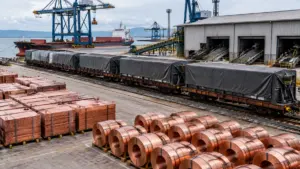
The transition to electric mining fleets is also driving demand for critical minerals. Each ultra-class electric truck contains several kilometers of copper wiring and high-capacity lithium-ion or sodium-ion battery packs. This demand pivot is a core driver behind the projected path to $15,000 copper, as mining companies become both the providers and the consumers of the green transition’s raw materials.
| Metric | Pilot Phase (Current) | Commercial Goal (2030) |
|---|---|---|
| Active Trucks at Jimblebar | 2 | 50+ |
| Charging Method | Static & Dynamic Trial | Integrated Dynamic |
| Diesel Displacement | ~15% per truck | 100% per truck |
| Data Sharing | High (BHP/Rio/Cat) | Industry Standard |
| Projected Copper Demand/Unit | 5.5 tonnes | 4.8 tonnes (Optimized) |
Infrastructure and "Range Anxiety" for 240 Tonnes
One of the most critical aspects of the Jimblebar trial is testing the "energy management" software. In a diesel-led mine, refueling is a five-minute process every 12 to 24 hours. For a battery-electric fleet, the charging schedule must be precisely woven into the production schedule.
"If three trucks arrive at a charger at the same time, you risk a bottleneck that stalls the whole pit," explains a lead site engineer. "We are using AI-driven fleet management to predict state-of-charge and direct trucks to chargers at the optimal time, ensuring that the 'heartbeat' of the mine remains steady."
Western Australia Premier Roger Cook, who visited the site on June 23, 2026, emphasized that the state government is viewing this trial as a blueprint for the broader regional economy. "The Pilbara is the engine room of the Australian economy. By leading in mining decarbonization, we are ensuring that our iron ore remains the preferred choice for green steel producers globally."
Looking Ahead: 2026 and Beyond
The next phase of the trial, scheduled for late 2026, will focus on the full deployment of the in-motion charging system. If successful, this technology will likely be rolled out across other major hubs, including Rio Tinto’s Gudai-Darri and BHP’s South Flank operations.
Investors are watching closely. The success of these trials will dictate the capital expenditure (CapEx) profiles of the top 50 mining companies for the next decade. While the upfront cost of an electric haul truck remains higher than its diesel counterpart, the promise of lower operating costs and a "green premium" for decarbonized ore is a powerful incentive.
The Jimblebar trial is more than a technology test; it is a proof of concept for the survival of large-scale mining in a carbon-constrained world.

Shareable Social Media Snippet (LinkedIn/X)
Pilbara Pivot: BHP and Rio Tinto have officially launched their joint trial of @CaterpillarInc 793 XE battery-electric haul trucks at the Jimblebar mine. This rare collaboration between industry giants marks a massive step toward zero-emission iron ore. With 100+ hours already logged, the focus is now on high-powered dynamic charging. Is this the end of the diesel era in the Pilbara? #MiningNews #Decarbonization #BHP #RioTinto #Caterpillar #EnergyTransition