The global mining industry is undergoing a structural shift in how physical work is managed, moving from decentralized, site-based supervision to a model governed by Remote Operating Centers (ROCs). These facilities, often located thousands of miles from the actual pit, serve as the "nerve centers" for modern extraction. As we approach 2026, the adoption of ROCs has transitioned from a competitive advantage for majors like Rio Tinto and BHP to a survival requirement for mid-tier operators facing a tightening labor market and declining ore grades.

The primary driver behind this shift is twofold: a critical shortage of specialized talent willing to work in remote locations and the rapid maturation of autonomous systems that require centralized oversight. By centralizing expertise, mining companies are effectively decoupling the location of their workforce from the location of their resources.
The Talent Crisis: Why the traditional model is breaking
The mining sector is currently navigating a "perfect storm" of human capital challenges. According to recent industry outlooks, a significant portion of the technical workforce: including control-room operators, dispatchers, and reliability engineers: is reaching retirement age. Simultaneously, the younger "digital-native" workforce increasingly prefers urban environments over the fly-in-fly-out (FIFO) lifestyle.
Remote Operating Centers solve this by allowing a company to house its most specialized talent in major metropolitan hubs. A single maintenance planner in Perth or Denver can now oversee assets across multiple time zones. This model not only aids in recruitment but also in retention, as it offers a more sustainable work-life balance compared to traditional remote site placements.
Furthermore, the complexity of modern mining: which increasingly involves critical minerals and energy transition metals: requires a level of data literacy that is easier to aggregate in a centralized environment. The ROC becomes a hub for cross-functional collaboration where data scientists, geologists, and operators work side-by-side to optimize the value chain in real-time.
Autonomous Haulage: Unlocking cost savings through ROCs
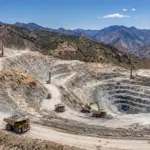
One of the most visible impacts of the ROC model is its integration with autonomous fleets. The synergy between centralized control and self-driving machinery is delivering significant financial returns.


Autonomous haul trucks cost savings
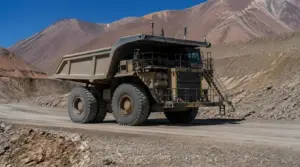
The financial case for autonomous haulage is no longer theoretical. Data from recent deployments, such as Newmont’s Tanami mine, indicates that autonomous haul trucks have lowered underground haulage costs by approximately 18%. These savings are primarily derived from:
- Optimized Utilization: ROC dispatchers use AI-driven software to manage truck queues and routing, reducing idle time and fuel consumption.
- Reduced Wear and Tear: Autonomous systems operate machinery within strict mechanical limits, extending the life of tires and engines: major capital expenditure items for any site.
- Labor Efficiency: A single ROC operator can supervise a fleet of 10 to 15 trucks, a far higher ratio than the traditional one-driver-per-truck model.
By 2026, smart mining spending is projected to exceed $18 billion globally, with a significant portion allocated to the control systems and private 5G networks required to run these autonomous fleets from a centralized ROC. This infrastructure is essential for managing the AI-driven energy nexus that modern mines represent.
Mine Safety Technology 2026: The shift to zero-exposure
Safety remains the paramount concern for mining executives and policymakers. The ROC model fundamentally changes the risk profile of a mine site by removing personnel from high-risk environments.

High-resolution dashboard visualization of 2026-era mine safety technology, integrating wearable sensor data with spatial digital twins.
Reducing human exposure
The deployment of mine safety technology in 2026 focuses on "zero-exposure" strategies. By utilizing tele-remote loaders and autonomous drills, companies have seen a 40% reduction in worker exposure to hazards such as dust, rockfall, and methane gas.
ROCs enhance this by:
- Real-Time Monitoring: Aggregating data from wearable sensors and fatigue-monitoring systems to intervene before an incident occurs.
- Standardized Response: Centralized safety officers can ensure that emergency protocols are followed precisely across multiple sites, removing the variability of site-specific management.
- Digital Twins: Using real-time 3D models of the mine to simulate blasting or drilling scenarios before physical work begins, identifying potential geomechanical risks in advance.
This technological layer is particularly critical in high-tech frontiers like the Macusani Plateau, where complex geology demands constant, high-fidelity monitoring.
Comparative Analysis: Traditional vs. ROC-Led Operations
| Feature | Traditional Site-Based Model | ROC-Led Centralized Model |
|---|---|---|
| Workforce Location | On-site (FIFO/DIDO) | Urban/Regional Hubs |
| Equipment Control | Manual/On-board | Autonomous/Tele-remote |
| Data Integration | Siloed by department | Integrated "Single Source of Truth" |
| Safety Risk | High human exposure in pit/shaft | Low (Personnel removed from active zones) |
| Haulage Efficiency | Subject to operator variability | AI-optimized (15-20% cost reduction) |
| Talent Pool | Limited to those willing to travel | Broad access to urban digital talent |
Strategic Outlook: The 2026 "Nerve Center"
Looking toward the second half of the decade, the ROC will evolve from a monitoring station into a predictive powerhouse. As copper demand for AI data centers continues to climb, the pressure on mines to produce more with less waste rock will intensify.
The ROCs of 2026 will likely be characterized by:
- Private 5G Dominance: Sub-10-millisecond latency will become the standard, allowing for seamless teleoperation of excavators and drills from thousands of miles away.
- Predictive Maintenance: Moving beyond "fix when broken" to "fix before failure" using machine learning models that analyze vibration and heat signatures from thousands of sensors.
- ESG Transparency: Real-time reporting of carbon emissions, water usage, and community impact directly from the ROC to investors and regulators.

Operational Implications for Decision-Makers
For operators and investors, the "Rise of the ROC" is not just a technological upgrade: it is a total rethink of the mining business model. The initial capital expenditure required for high-bandwidth connectivity and centralized facilities is substantial, but the long-term ROI is found in the stability of the workforce and the consistency of production.
As the industry moves deeper: both figuratively into more complex ores and literally into deeper underground shafts: the ability to operate remotely will be the dividing line between profitable ventures and those stalled by labor shortages or safety incidents. Companies that fail to centralize their digital expertise today will find themselves unable to compete in the high-stakes, high-efficiency environment of 2026.
The mining landscape is no longer defined just by the quality of the ore in the ground, but by the quality of the data flowing into the Remote Operating Center.