By Mo Shine | Deep-Dive Analysis

Santana Minerals has delivered another exceptional operational milestone at its flagship Bendigo–Ophir gold project in Central Otago, New Zealand. Infill diamond drilling at the Rise and Shine (RAS) deposit has returned some of the most striking intercept data recorded in the district to date, headlined by drill hole MDD528, which intersected 24.4 meters at 10.9 grams per tonne (g/t) gold from 165.7 meters down-hole.
The latest results reinforce confidence in the geological continuity and grade distribution across the proposed open-pit mining envelope. As Santana advances toward commercial feasibility and navigates New Zealand’s evolving regulatory framework: including submissions under the Fast-track Approvals Act: the project continues to draw intense scrutiny from international resource investors and project developers monitoring high-grade epithermal and orogenic gold systems in Tier-1 jurisdictions.
The Anatomy of MDD528: Bonanza Grades and True Widths
Drill hole MDD528 was executed as part of an intensive infill drilling program designed to tighten drill spacing to approximately 20 meters across the high-grade core of the Rise and Shine deposit. This tight-pattern drilling is critical for upgrading resource categories and optimizing mine planning for early-stage open-pit extraction.
The primary intercept in MDD528 returned 24.4 meters at 10.9 g/t gold from 165.7 meters, with a calculated true width of 20.2 meters. More notably, the hole encountered ultra-high-grade mineralized pulses deeper down the section, including 2.0 meters at 89.5 g/t gold from 197 meters (true width 1.7 meters), accompanied by abundant visible gold. A subsequent interval returned 3.0 meters at 2.5 g/t gold from 207 meters (true width 2.5 meters).



To contextualize these figures within the broader exploration timeline of the Bendigo–Ophir asset, the following comparative performance metrics outline recent infill milestones at RAS:
| Drill Hole ID | Intercept Depth (m) | Interval Length (m) | Gold Grade (g/t Au) | True Width (m) | Key Observations |
|---|---|---|---|---|---|
| MDD528 | 165.7 | 24.4 | 10.9 | 20.2 | High-grade core; 2.0m @ 89.5 g/t with visible gold |
| Infill Average (RAS Core) | Varies (~150-180) | 20.0 – 25.0 | 8.5 – 12.0 | 18.0 – 21.0 | Consistent tabular geometry and high structural fidelity |
| Historical Baseline (2024) | Varies | 15.0 – 30.0 | 2.2 – 5.5 | 14.0 – 25.0 | Forms foundation of the ~2.2Moz total mineral resource |
These high-grade intersections validate company models suggesting that the tabular shear zones hosting the RAS deposit maintain robust internal grade distribution rather than erratic nugget effects. For mine engineers, predictable continuity across 20-meter true widths significantly de-risks the early years of potential open-pit scheduling.
Geological Context and the Bendigo-Ophir Scale
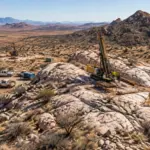
The Rise and Shine deposit represents the cornerstone of Santana Minerals' South Island holdings. Situated within the Otago Schist belt, mineralization at RAS is structurally controlled by low-angle shear zones that host gold-bearing quartz veins and disseminated sulfides.
Geological models released in Santana’s 2024 mineral resource update established an inferred and indicated resource base of approximately 2.2 million ounces of gold at an average grade of 2.2 g/t Au, with the indicated portion accounting for roughly 1.2 million ounces at 2.4 g/t Au. Independent mining analysts have frequently characterized the discovery as the most significant single gold find in New Zealand in over four decades.
[Otago Schist Basement]
       │
       ▼
[Low-Angle Shear Zone (Rise and Shine Shear)]
       │
       ├─► [Hanging Wall: Low-grade halo mineralization]
       │
       ├─► [Tabular Core: MDD528 Intercept (24.4m @ 10.9 g/t Au)]
       │         │
       │         └─► [Bonanza Veinlet Sub-Interval: 2.0m @ 89.5 g/t Au]
       │
       ▼
[Footwall Limit: Unmineralized schist host rock]
The structural profile of the deposit: characterized by a flat-lying to gently dipping geometry near surface: lends itself exceptionally well to low-strip-ratio, large-scale open-pit mining methods. Unlike narrow-vein underground operations that require selective, high-cost extraction techniques, the broad mineralized intercepts at RAS allow for bulk-mining efficiencies combined with high feed grades.
Regulatory Milestones and the New Zealand Fast-Track Act
While technical drilling results continue to exceed expectations, the ultimate timeline to commercial production remains tethered to New Zealand's evolving regulatory landscape. Santana Minerals has been actively pursuing development approvals under the country's Fast-track Approvals Act framework, designed to streamline consenting processes for infrastructure and mining projects deemed to have regional or national economic significance.

The inclusion of Bendigo-Ophir in fast-track consideration pathways has generated considerable debate among regional stakeholders, environmental groups, and mining advocates. Proponents point to the substantial economic uplift, high-paying engineering and operations jobs, and local tax revenues that a 100,000 to 120,000-ounce-per-year gold producer would bring to Central Otago. Conversely, environmental watchdogs continue to press for rigorous ecological safeguards regarding water management, landscape preservation, and indigenous flora protection.
For investors, navigating this regulatory gateway is as critical as drilling assay results. Successful navigation of the Fast-track Act could shave years off traditional Resource Management Act (RMA) consenting timelines, accelerating project execution through 2026 and 2027.
Operational Implications and the Outlook
The delivery of hole MDD528 directly supports the ongoing metallurgical and engineering workstreams feeding into upcoming feasibility assessments. Metallurgical testwork previously completed on RAS ore demonstrated high gold recovery rates via standard gravity and cyanidation circuits, reducing processing complexity.
Furthermore, the scale of the deposit positions Santana Minerals as an attractive candidate for regional consolidation or corporate interest within the Australasian gold mining sector. With gold prices holding firm above historical averages, mid-tier producers actively seeking organic reserve replacement are closely monitoring how junior explorers transition multi-million-ounce deposits into fully financed construction assets.

Key Takeaways for Operators and Investors
- Grade Confidence: Infill hole MDD528 confirms high-grade tabular continuity, reducing geological risk in early production scheduling.
- True Width Advantage: Intercepts averaging over 20 meters true width support bulk open-pit mining economics.
- Regulatory Catalysts: Progress under New Zealand’s Fast-track Act remains the primary determinant of development timelines.
- Resource Expansion: Continued drilling outside the core resource envelope suggests further upside potential across the broader Bendigo-Ophir tenement package.
As Santana integrates these latest assays into its ongoing resource models, the market will look toward forthcoming feasibility updates and formal regulatory determinations to gauge the precise speed at which Central Otago's newest gold discovery moves toward construction.
Social Media Snippet (LinkedIn / X)
Santana Minerals continues to de-risk its Bendigo-Ophir project in New Zealand, with infill drill hole MDD528 returning 24.4m at 10.9 g/t Au (including 2.0m at 89.5 g/t Au with visible gold) at the Rise and Shine deposit. Read our deep-dive analysis on true widths, open-pit scale, and Fast-track Act progress. #Mining #Gold #Exploration #NewZealand #SkillingsMining