By Penny Langford

The global silver market is currently navigating a fundamental transformation, transitioning from its traditional role as gold’s more volatile "precious" cousin into a mission-critical "strategic" metal for the 2026 industrial economy. As silver futures test the critical $75 per ounce threshold, market participants are no longer just looking at inflation hedges or currency debasement. Instead, the focus has shifted toward a structural supply deficit that has quietly liquidated over 760 million ounces of above-ground stocks since 2021.
This breakout is not a speculative fluke. It is the result of a collision between stagnant mine supply and two of the most capital-intensive build-outs in human history: the global transition to high-efficiency solar energy and the rapid expansion of AI-driven data center infrastructure. In the 2026 landscape, silver is becoming the indispensable conductor of the energy transition, and the "strategic deficit" is finally beginning to be priced in.
The AI Variable: Silver as "Premium Copper"
While much has been written about copper demand in AI data centers, silver is the hidden beneficiary of the "compute-and-commodities" convergence. Silver possesses the highest electrical and thermal conductivity of any metal. In the hyper-competitive world of AI, where power efficiency and heat management are the primary bottlenecks to scaling, silver’s physical properties are becoming non-negotiable.


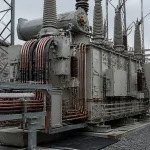
Advanced AI chips and the high-density power distribution units (PDUs) required to feed them are increasingly reliant on silver-based components. From high-quality connectors and switches to specialized cooling systems, silver is the "premium" alternative to copper that can handle higher power loads with less energy loss. J.P. Morgan Global Research has recently noted that silver’s role in these industrial processes is a key driver for its projected 2026 average price of roughly $81/oz.

As data center operators push for more efficient compute-and-commodity integration, the silver loading per rack is expected to rise. Unlike silver used in jewelry or coinage, the silver embedded in high-tech infrastructure is effectively "consumed": it is rarely recycled due to the complexity of the components, further tightening the physical market.
Solar PV: The Structural Floor
The solar photovoltaics (PV) sector remains the largest industrial consumer of silver, but 2026 marks a turning point in how that demand is measured. For years, skeptics argued that "thrifting": the process of manufacturers reducing the amount of silver used in each solar cell: would eventually kill silver demand.

However, the industry’s shift toward N-type cell technologies, such as TOPCon (Tunnel Oxide Passivated Contact) and HJT (Heterojunction), has actually increased silver requirements. These high-efficiency cells can require 30% to 50% more silver than older PERC (Passivated Emitter and Rear Cell) technology to achieve their superior performance.

According to data from the Silver Institute, industrial demand for silver in solar PV has risen from 80 million ounces in 2016 to over 200 million ounces in the current cycle. While thrifting efforts continue, the sheer volume of global solar installations: projected to continue growing through 2026: sets a hard structural floor for silver demand. Even with a projected 19% year-on-year decline in silver "loading" per panel by 2026, the total tonnage required remains near record highs due to the massive scale of new projects.
The Supply-Side Problem: Mining Inelasticity
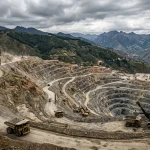
The core of the "strategic deficit" lies in the inability of the mining industry to respond to these higher prices. Unlike many other metals, approximately 70% to 80% of silver is produced as a byproduct of lead, zinc, copper, and gold mining. This means that silver supply is highly inelastic; even if silver prices double, a copper miner will not necessarily increase production unless the copper price also justifies the expansion.

Primary silver mines are rare and increasingly difficult to permit and build. As noted in recent reports on the 2026 resource realignment, the global mining industry is facing a shortage of high-grade silver projects in stable jurisdictions. Since 2021, the market has seen a cumulative drawdown of nearly 762 million ounces from above-ground stocks: roughly equivalent to nine months of global mine output. By mid-2026, many analysts, including those at Citigroup, expect these physical inventories to reach "acute" shortage levels.
2026 Silver Price Forecast: The Analyst Consensus
As we move toward 2H 2026, the central cluster of bank forecasts suggests a sustained high-price environment. While extreme "tail scenarios" of $300/oz capture headlines, the professional consensus focuses on a structural shift into the $75–$90 range.
| Forecaster | 2026 Base Case Forecast (Avg.) | Key Narrative Driver |
|---|---|---|
| Citigroup | ~$110 (2H 2026) | Acute physical supply shortages by year-end. |
| Goldman Sachs | $85 – $100 | Silver as a "strategic metal" of the energy transition. |
| J.P. Morgan | ~$81 | Structural tightness from solar, AI, and electronics. |
| Reuters Survey | ~$79.5 | 30-analyst median consensus on persistent deficit. |
| Bank of America | ~$56 (Base) / $135+ (High) | Inventory drawdowns vs. macro-economic risks. |
Operational Implications for 2026
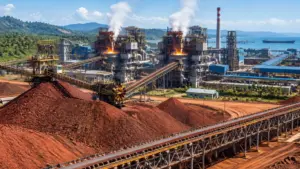
For mining operators and industrial consumers, the $75 silver test is more than a price target; it is a signal for operational change. Mining companies are increasingly focusing on "silver-rich" zones within existing polymetallic deposits to capitalize on the margin expansion. Simultaneously, industrial buyers are being forced to secure long-term supply contracts rather than relying on the spot market, as physical availability becomes a genuine logistical risk.

The management of these assets now requires real-time integration of market data and site logistics. The days of silver being treated as a "byproduct credit" to be sold at any price are over. In the 2026 mining landscape, silver is a primary value driver that demands a sophisticated, strategic approach to extraction and marketing.
Conclusion: The Strategic Realignment
Silver is entering an era where its industrial utility far outweighs its speculative appeal. The combination of six consecutive years of supply deficits, the physical demands of the AI revolution, and the non-negotiable requirements of the green energy transition has created a perfect storm for the metal.
As we look toward 2026, the question is no longer whether silver will break out, but how the global market will adapt to a world where "digital silver" is as critical to the economy as digital copper. For investors and operators alike, the $75 test is the first step toward a new valuation paradigm for the world’s most conductive metal.
Social Media Snippet:
Silver is no longer just gold's volatile cousin. As futures test $75/oz, the metal is entering a structural supply deficit driven by two 2026 megatrends: the AI compute boom and high-efficiency solar PV. With above-ground stocks down 760Moz since 2021, the "strategic metal" narrative is shifting from theory to price-action reality. #Silver #Mining #AI #EnergyTransition #SkillingsMining