By Charles Pitts

The global energy transition has entered a self-reinforcing phase where the minerals required for carbon-free power are being extracted using that very power. At the center of this transition is uranium. As of mid-2026, a “circular demand” loop has emerged: Small Modular Reactors (SMRs) are increasingly being deployed to provide baseload, emissions-free electricity to remote uranium mines, which in turn produce the fuel required to keep those reactors: and the burgeoning AI data center industry: operational.
This feedback loop is fundamentally altering the uranium price forecast 2026 as operators grapple with a structural supply deficit that has persisted despite significant price appreciation over the last 24 months.
The SMR Breakthrough in Remote Mining
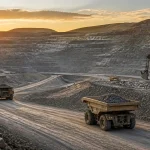
For decades, remote mining operations have relied on expensive, high-carbon diesel power. In the uranium sector, where mines are often located in geologically rich but infrastructure-poor regions like the Athabasca Basin in Canada or the arid plains of Namibia, the logistics of fuel transport are a primary driver of All-In Sustaining Costs (AISC).
SMRs represent a paradigm shift. Unlike traditional large-scale nuclear plants, SMRs are factory-built, transportable, and designed for decentralized applications. In early 2026, several pilot programs have transitioned to full-scale deployment, providing 50MW to 300MW of stable power directly to mine sites.
More Read

This technological leap is not just about reducing carbon footprints; it is about operational survival. With uranium supply forecast 2026 showing continued tightness at major sites like Cigar Lake, the ability to lower operational costs via SMRs is becoming a competitive necessity for the next generation of mines.


Powering the Circular Demand Loop
The concept of “circular demand” in the uranium market refers to the phenomenon where the growth of nuclear power capacity directly facilitates more uranium extraction.
More Read

- Energy Independence for Miners: Large-scale uranium projects require massive amounts of energy for ventilation, hoisting, and milling. By installing on-site SMRs, miners decouple themselves from volatile fossil fuel prices and grid instability.
- Fuel Security: These same mines provide the raw material (U3O8) that is eventually enriched into the HALEU (High-Assay Low-Enriched Uranium) fuel required by many advanced SMR designs.
- Scaling Capacity: As SMRs prove their reliability at mine sites, the confidence to deploy them for other industrial uses: such as powering desalination plants for copper mines or hydrogen production: increases, further driving the SMR uranium demand 2026.
This loop creates a floor for demand that is less sensitive to short-term economic fluctuations than traditional industrial commodities.
Data Centers and the Secondary Demand Spike
While mining provides the operational proof of concept for SMRs, the technology sector is providing the financial firepower. Throughout late 2025 and into 2026, “Big Tech” firms have moved from signing power purchase agreements (PPAs) with existing nuclear plants to directly investing in SMR development.
The rapid expansion of AI training clusters has created a localized power crisis. These data centers require “five-nines” reliability (99.999% uptime) and massive baseload capacity that wind and solar alone cannot provide without prohibitive battery storage costs. We previously explored this in the AI energy nexus, and the trend has only accelerated.
In 2026, several major cloud providers have announced “Behind-the-Meter” SMR projects, where reactors are co-located with data centers. This trend effectively locks up future uranium supply through long-term contracts, leaving less available for the spot market and putting upward pressure on prices.

Uranium Price Forecast 2026: Market Snapshot
The market entered 2026 with spot prices testing the $100/lb threshold. Analysts suggest that while the narrative has shifted toward SMRs, the physical reality is still dominated by the primary supply deficit.
2026 Uranium Market Metrics
| Data Point | Estimated Value (2026) | Trend vs. 2025 |
|---|---|---|
| U3O8 Spot Price | $92.00 – $115.00/lb | Bullish |
| Global Demand | ~192 Million lbs | Up 4.2% |
| Secondary Supply | 12 Million lbs | Decreasing |
| SMR Share of Demand | < 1% (Physical) / ~15% (Contracting) | Rising Sharp |
| Kazatomprom Output | 73.5 Million lbs | Modest Increase |
The uranium price forecast 2026 remains volatile but skewed to the upside. The “Bull Case” of $120/lb is increasingly discussed if Kazatomprom or Cameco encounter further production hurdles or if geopolitical tensions further restrict the flow of Russian enriched material.
Operational Realities: Control and Precision
As mines become more technologically complex, the integration of nuclear power requires a higher level of operational oversight. Modern control rooms now manage not just the extraction of ore, but the micro-grid stability provided by on-site reactors.

This integration is particularly evident in regions like Peru, which has made a strategic pivot to declare uranium a national pillar. The deployment of SMRs in such regions allows for the development of deposits that were previously considered “stranded” due to their distance from the national power grid.
Key Risks and 2026 Outlook
Despite the optimistic narrative surrounding the Uranium Loop, several risks could temper the 2026 outlook:
- HALEU Bottlenecks: Most advanced SMRs require HALEU fuel. Currently, enrichment capacity for this specific fuel grade is concentrated, and delays in domestic U.S. or European enrichment facilities could push back SMR deployment timelines.
- Regulatory Friction: While the technology is ready, the permitting process for nuclear installations at mine sites remains a multi-year hurdle in most jurisdictions.
- Mine Response Time: Uranium mines are not “taps” that can be turned on instantly. The time from a final investment decision (FID) to the first pound of yellowcake is often 7 to 10 years for greenfield projects.
Conclusion
The SMR uranium demand 2026 is less about the physical tonnes consumed today and more about the structural “moat” it is building around future supply. By powering the very mines that produce their fuel, SMRs are creating a resilient, low-carbon industrial ecosystem.
For investors and operators, the 2026 market is no longer just about reactor restarts in Japan or life extensions in Europe. It is about a new, permanent layer of demand from the AI sector and the mining industry itself. As we move through the second half of the year, the focus will remain on whether supply can finally catch up to a narrative that is moving at the speed of light.