Industrial data center facilities adjacent to a nuclear power generation site in early 2026.

By Penny Langford
Uranium prices soared past $101 per pound in January 2026 as Big Tech companies like Amazon, Google, and Meta make a bold leap into the uranium mining sector to power their massive AI data centers. This paradigm shift toward nuclear energy is reshaping the mining market and accelerating demand for reliable, carbon-free power, especially from Kazakhstan’s constrained uranium supply and major producers like Cameco.
The sudden surge in uranium pricing is less about supply hiccups and more about the “AI-Energy Nexus,” where technology giants secure long-term twenty-year power agreements tied to nuclear power assets. Their direct involvement in uranium mining and funding of nuclear infrastructure marks a historic pivot from buying just renewable energy credits to controlling baseload energy supply.
How Big Tech’s Uranium Investment Is Powering AI Data Centers
Amazon, Google, and Meta have led renewable energy investments for a decade, but their AI training clusters demand 24/7 power that intermittent solar and wind cannot reliably provide. This has forced them into the uranium mining sector, urgently seeking stable nuclear energy sources. Hyperscale data centers are now pushing global nuclear capacity plans, pledging to triple it by 2050 with significant capital infusion backing these strategies.

With AI data centers projected to consume nearly 10% of global electricity by 2030, nuclear power—and by extension uranium mining—has become indispensable. Tech firms are not only buyers; they are financing mine restarts and Small Modular Reactor (SMR) development, transforming uranium’s role in the energy and technology landscape.


Assembly of a modular nuclear unit designed to provide dedicated power to industrial and data infrastructure.
Small Modular Reactors (SMRs): The Game-Changer in 2026
SMRs have emerged as the critical link between tech companies and uranium mining. Unlike large nuclear plants, SMRs deploy quickly and require less capital, perfectly matching tech industry timelines. Leaders like Oklo and NuScale Power have become key players, developing reactors co-located with data centers or remote mines.

In March 2026, the U.S. and Japan launched a groundbreaking $40 billion initiative to deploy SMRs across North America, focusing on data-heavy regions such as Tennessee and Alabama. This initiative creates dual benefits for mining: surging uranium demand and energy-efficient solutions for remote mining operations powered by tech-backed SMRs.
Imagine a copper mine in the Andes powered by a dedicated SMR, fueled directly by tech companies needing copper for their hardware supply chains—this vision is becoming reality.
Uranium Market Trends and Pricing From 2024 to 2026
Below is a detailed overview of uranium price and demand trends reflecting this tech-mining integration over the past two years.
| Metric | 2024 (Actual) | 2025 (Estimate) | 2026 (Current YTD) |
|---|---|---|---|
| Uranium Spot Price (Avg) | $82.00/lb | $94.50/lb | $101.41/lb |
| Global Demand (M lbs U3O8) | 185 | 198 | 215 |
| Big Tech Energy Commitments (GW) | 4.5 | 12.0 | 28.5 |
| SMR Projects in Development | 12 | 24 | 48 |
| Inventory Levels (Utility) | 18 months | 14 months | 11 months |
Source: Skillings Mining Intelligence & World Nuclear Association Data.
Mining Industry’s Response Amid Geopolitical Supply Challenges
The growing AI-driven uranium demand contrasts sharply with ongoing supply challenges, especially in Kazakhstan which accounts for about 43% of global uranium production. Persistent logistical and sulfuric acid shortages have constrained Kazatomprom from meeting production targets, shifting supply pressures to North America and Australia.

A modern mineral processing facility operating at full capacity to meet rising demand for nuclear fuel.
In the United States, a uranium renaissance is underway. Mines in Wyoming, Texas, and Utah are accelerating restarts, actively backed by tech sector investment. These moves are crucial to secure critical mineral resources domestically and reduce dependence on unstable foreign supply chains amid the AI revolution’s rapid growth.
How the $40 Billion U.S.-Japan Nuclear Partnership is Shaping Uranium Supply
The March 2026 U.S.-Japan $40 billion collaboration is a vital strategic driver, promoting SMR commercialization and creating a nuclear fuel supply chain that circumvents Russian enrichment services.
This partnership secures nuclear fuel from mining to reactor, supporting stable conditions for technology investments. Uranium is now at the center of national security and technology leadership, transforming it from a mere commodity to a strategic asset.

High-grade uranium ore samples under analysis for enrichment potential.
2026 Uranium Market Outlook: Key Scenarios to Watch
Volatility dominates the uranium market in 2026, but a strong upward bias persists as new projects take shape.
- Base Case: Prices settle between $95 and $105 per pound as production ramps up from the Athabasca Basin and Wyoming. Big Tech’s continued PPAs provide price stability.
- Bull Case: Extended supply shortages from Kazakhstan, combined with fast SMR adoption from major hyperscalers like Amazon, could push uranium prices toward $150 per pound due to scarcity premiums.
- Bear Case: Regulatory delays in SMR licensing or breakthroughs in AI energy efficiency might reduce demand, pushing prices down to the $75–$80 per pound range, though supply deficits remain a long-term factor.
The Lasting Impact of Big Tech’s Uranium Market Involvement
The uranium market is transforming into a cornerstone of the digital economy’s energy infrastructure. Skillings has tracked mining for over a century, and the 2026 “Tech-Metal Shift” marks one of the most profound changes recorded.
Mining is evolving from a raw materials provider to the backbone of advanced data center power solutions. Future uranium bull markets will be defined by demand in hubs like Northern Virginia and Silicon Forest, where tech companies shape the energy and mineral supply chains.

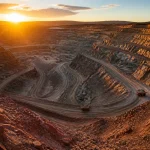
Heavy equipment operating at an open-pit uranium site to meet the 2026 production targets.
// Close all others document.querySelectorAll('.smr-faq-q').forEach(function(b) { b.setAttribute('aria-expanded', 'false'); b.querySelector('.smr-faq-icon').style.transform = 'translateY(-50%) rotate(0deg)'; b.querySelector('.smr-faq-icon').textContent = '+'; b.nextElementSibling.style.maxHeight = '0'; b.nextElementSibling.style.paddingTop = '0'; b.nextElementSibling.style.paddingBottom = '0'; });
// Open this one if it was closed
if (!isOpen) {
btn.setAttribute('aria-expanded', 'true');
icon.style.transform = 'translateY(-50%) rotate(45deg)';
icon.textContent = '+';
answer.style.maxHeight = answer.scrollHeight + 'px';
answer.style.paddingTop = '4px';
answer.style.paddingBottom = '4px';
}
}