Australia’s critical minerals players are again in the geopolitical spotlight. Shares of Resolution Minerals (ASX: RML) and Nova Minerals (ASX: NVA) surged 55% and 16% respectively on Tuesday after both companies confirmed invitations to brief the Australian Ambassador to the United States on their American-based projects ahead of next week’s Albanese–Trump meeting in Washington.

The sharp rally underscores investor optimism around a Trump Administration initiative to acquire small equity stakes in U.S.-based critical minerals projects — a move aimed at strengthening domestic supply chains and reducing China’s near-total dominance in refining and magnet manufacturing.
U.S. Expands Its Critical Minerals Strategy
Washington’s renewed focus on direct investment marks a notable evolution from previous grant-based or loan programs. The Trump White House has already taken a 5% equity stake in Lithium Americas Corp, backing its Thacker Pass lithium project in Nevada — the first time in decades that the U.S. government has participated in private mining equity.
According to senior administration officials, the model could extend to antimony, tungsten, and rare earth projects considered vital to defense and clean energy manufacturing. Sources close to the Department of Defense (DoD) confirm that the administration’s Critical Materials Taskforce is reviewing U.S.-based ventures with foreign partners that can accelerate domestic production.
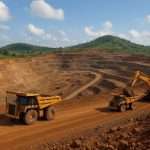
Both Resolution and Nova fall squarely into that framework. Resolution’s Horse Heaven Project in Idaho targets gold, antimony, and tungsten — all listed by the U.S. Geological Survey as critical minerals. Nova’s Estelle Project in Alaska holds substantial antimony potential alongside its gold resources, with plans underway for a downstream refinery at Port Mackenzie.
More Read

Beijing Tightens the Screws
The timing of Washington’s investment push is no coincidence. China — still the world’s dominant rare earths processor — recently expanded export controls to cover more refined rare earth products and magnet technologies, a direct response to escalating Western industrial policy.

That move has sent shockwaves through global supply chains. According to Roskill and Benchmark Mineral Intelligence, China currently accounts for over 85% of global rare earth separation capacity and 92% of magnet production. Any disruption in Chinese exports can reverberate through industries from EV motors to missile guidance systems.
For Australian miners with U.S. ties, this presents both an opportunity and a strategic imperative. As Nova CEO Christopher Gerteisen stated, “With antimony recognized as a critical mineral and our gold resources adding significant value, Nova is well-positioned to contribute to both U.S. and Australian critical minerals strategies.”
More Read
Strategic Briefings Before Albanese–Trump Summit
The scheduled briefings between Resolution, Nova, and the Australian Embassy in Washington precede next week’s state-level talks between Prime Minister Anthony Albanese and President Donald Trump. The bilateral agenda reportedly includes energy security, defense manufacturing, and minerals diplomacy — all intertwined with Canberra’s efforts to bolster investment protections for Australian firms operating in the U.S.
Resolution’s Craig Lindsay, CEO of U.S. operations, described Horse Heaven as “a significant Australian-led project in the United States… reflecting constructive cooperation between Australia and the U.S. on the development of secure, transparent critical mineral supply chains.”
Industry analysts note that if formal partnerships emerge from these meetings, they could reshape how allied nations coordinate strategic mineral development — moving beyond free trade rhetoric into shared ownership and capital participation.
Skillings Analysis
“This marks a pivot from subsidies to ownership — Washington wants skin in the game,” said the Skillings Mining Review editorial team.
“For investors, that means project risk may decrease but scrutiny will rise: U.S. defense-linked equity comes with oversight and performance benchmarks.”
“The next quarter will likely see additional announcements in tungsten, antimony, and magnet-related projects as the U.S. and allies respond to Beijing’s tightening export stance.”
Outlook: Next Quarter Momentum
With the Albanese–Trump summit scheduled for next week and rare earth tensions escalating, attention now turns to which projects receive formal U.S. backing next. Analysts expect Defense Production Act (DPA) funds and equity-based co-investments to flow toward projects demonstrating advanced permitting and downstream integration capacity.
For Australia’s mid-tier miners, this could usher in a new phase of trans-Pacific resource diplomacy — one that blends investment, geopolitics, and the industrial rebirth of the Western rare earths supply chain.