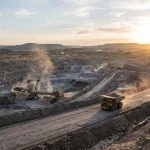
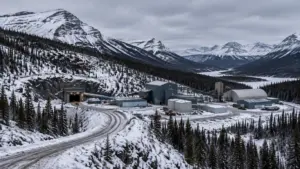
A modern mining complex at twilight, representing the high-tech infrastructure required to meet the world's burgeoning uranium demand.

By Penny Langford
The global uranium market is entering a transformative phase in 2026, driven by a convergence of traditional utility needs and an unprecedented surge in high-tech power demand. For decades, the uranium sector operated on a predictable cycle of long-term utility contracts and stable production. However, the rise of Artificial Intelligence (AI) data centers and the commercial deployment of Small Modular Reactors (SMRs) have fundamentally altered the demand curve, creating a structural supply squeeze that is catching the market off guard.
As we move through 2026, the "AI energy nexus" is no longer a theoretical concept: it is a physical driver of commodity prices. With approximately 70% of global uranium requirements remaining uncontracted post-2027, the scramble for secure, Western-aligned supply has shifted from a low-priority task for procurement officers to a strategic imperative for Big Tech executives and sovereign governments alike.
The AI Energy Nexus: Why Big Tech is Securing Uranium
The energy consumption of generative AI and hyperscale cloud computing has surpassed early projections. By mid-2026, the industry has realized that wind and solar alone cannot provide the 24/7, high-density baseload power required by the world’s most advanced data centers. This realization has led to a historic shift in capital: tech giants are now investing directly in nuclear infrastructure.
We are seeing a trend where data center operators are bypassed traditional grid constraints to sign direct power purchase agreements (PPAs) with nuclear utilities. In some cases, tech companies are even exploring offtake agreements and direct project financing for uranium developers to ensure the long-term viability of their power sources. This mirrors the "automaker model" seen in the lithium market during the early 2020s, where EV manufacturers provided capital to miners to secure battery metals.

For uranium, this means a significant "pull-forward" of demand. Projects in low-risk jurisdictions like Saskatchewan's Athabasca Basin are becoming primary targets for this new class of industrial buyers. The focus is no longer just on the price per pound, but on the certainty of delivery over a 10-to-20-year horizon.

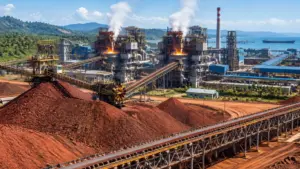
Digital integration and real-time monitoring are essential as mining operations scale to meet the precision requirements of the new nuclear age.
Small Modular Reactors (SMRs): From Blueprint to Basal Load
SMRs represent the next frontier of nuclear energy, and 2026 marks a pivotal year for their commercial rollout. Unlike traditional large-scale reactors that take a decade to build, SMRs are designed for modularity, allowing for faster deployment at industrial sites, military installations, and even for commercial shipping applications.
The U.S. Department of Transportation and various maritime agencies have accelerated the exploration of SMR-powered commercial vessels, creating a new, steady stream of uranium demand. While the initial fuel load for a single SMR is relatively small compared to a 1-gigawatt conventional reactor, the projected fleet size: numbering in the hundreds by the early 2030s: is creating a compounded demand effect that the market is only now beginning to price in.
The uranium required for these reactors often necessitates a higher level of enrichment (HALEU), which adds another layer of complexity to the supply chain. This fuel cycle bottleneck is amplifying the price pressure on raw U3O8, as utilities and SMR developers compete for limited conversion and enrichment capacity.
The Saskatchewan Solution: Wheeler River and the Phoenix ISR
In the face of this squeeze, the spotlight has turned sharply toward Saskatchewan, Canada. The Athabasca Basin remains the world’s premier high-grade uranium district, and 2026 has brought several "firsts" for the region.
Denison Mines’ Wheeler River project, specifically the Phoenix deposit, stands as a cornerstone of the next generation of supply. Having received both federal and provincial approvals: the first large-scale uranium mine approval in Canada in over 20 years: Wheeler River is poised to utilize In-Situ Recovery (ISR) mining.
ISR is a game-changer for the industry. By circulating a solution through the orebody to dissolve the uranium and pumping it to the surface, Denison can achieve significantly lower all-in sustaining costs (AISC) compared to conventional underground mining. For investors, the Phoenix ISR represents a high-margin asset that is arriving at exactly the right time to mitigate the 2026 supply gap.

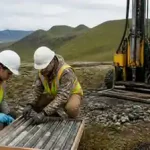
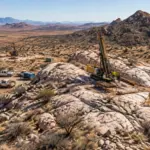
Advanced drilling technology at work, preparing the infrastructure for next-generation extraction methods like ISR.
Other major players, such as NexGen Energy with its Rook I project, are also moving closer to production. NexGen’s Arrow deposit is of such a scale that it could eventually supply a significant portion of global demand, making it a critical asset for Western energy security.
2026 Market Dynamics: The Perfect Storm
Several factors have aligned to create the current "supply squeeze."
- Underinvestment: A decade of low prices led to a lack of exploration and development. New mines cannot be turned on overnight.
- Structural Deficits: Global production has consistently lagged behind reactor requirements, with the gap being filled by dwindling secondary supplies and inventories.
- Operational Disruptions: Unexpected events, such as the reported flooding at certain northern Saskatchewan operations in early 2026, have removed millions of pounds from the market, further tightening available spot supply.
- Geopolitical Realignment: The push to de-risk supply chains away from Russian-sourced fuel has placed a premium on "friendly" pounds from Canada, Australia, and the United States.
S&P Global and other market analysts now project uranium prices could hold steady or rise toward the US$100/lb mark through 2028. This price level is necessary to incentivize the next wave of greenfield projects, but it also creates a significant cost burden for utilities that failed to lock in long-term contracts when prices were lower.
What This Means for Mining Professionals and Investors
For the mining industry, the message is clear: the uranium bull market is no longer just about the energy transition; it is about the digital revolution. The critical minerals strategy adopted by various nations is increasingly focused on nuclear fuel as the ultimate enabler of AI-driven economic growth.
Investors should focus on developers with clear paths to production and low cost-curves. Saskatchewan remains the gold standard for jurisdiction and grade, but the "squeeze" will eventually lift all boats that have viable projects.
The 2026 outlook for uranium is one of extreme tightness. As AI data centers and SMRs move from the periphery to the center of power demand, the race to secure the world's most energy-dense fuel is only just beginning. The companies that can bring pounds to market in this window: like Denison and NexGen: are not just miners; they are the essential utility providers for the 21st-century economy.

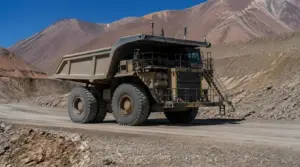
The scale of modern mining reflects the massive logistical effort required to fuel the world's growing nuclear fleet.
Market Snapshot: Uranium Fundamentals 2026
| Metric | 2025 (Actual) | 2026 (Projected) | 2028 (Forecast) |
|---|---|---|---|
| Spot Price (US$/lb) | $82.00 | $94.50 | $98.70 |
| Uncontracted Utility Demand | 45% | 62% | 74% |
| SMR Energy Share (%) | <1% | 2.5% | 6.0% |
| AI Data Center Demand (TWh) | 460 | 680 | 1,100 |
Stay tuned to Skillings Mining Intelligence for daily updates on commodity price movements and lithium price forecasts as we continue to track the energy transition metals. For more in-depth analysis on the sector, explore our Editors' Picks or subscribe to our digital magazine.
Shareable Social Media Snippet (LinkedIn/X)
? The Uranium Squeeze is Here. As AI data centers and Small Modular Reactors (SMRs) demand 24/7 baseload power, the uranium market is facing a massive supply-demand gap in 2026. With 70% of utility demand uncontracted post-2027, all eyes are on Saskatchewan’s high-grade deposits. Is the sector ready for $100/lb?
Read the full analysis by Penny Langford: [Link] #Mining #Uranium #AI #EnergyTransition #SMR #Investing