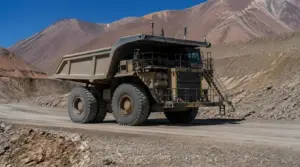
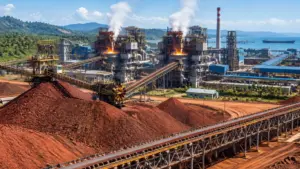
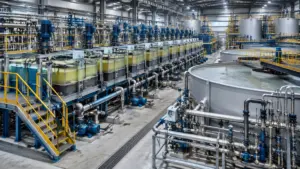
Uranium processing infrastructure in Kazakhstan.

By Mo Shine
The uranium market is sending two different signals in 2026. Spot U₃O₈ prices are trading in the mid-to-high US$80s per pound, close to a six-month high, while long-term contract indicators are holding around US$90–94/lb. The gap is significant because it shows utilities are paying a premium for future supply security even as near-term spot buying remains relatively measured.
That divergence is central to the uranium price forecast 2026. The market is not behaving like a commodity facing an immediate shortage. Instead, utilities, reactor operators and governments are increasingly pricing in tighter conditions later this decade, when reactor life extensions, new builds and AI-related electricity demand begin competing for a constrained fuel supply chain.
Uranium market snapshot
Uranium does not trade through a fully transparent exchange market like copper or gold. Most transactions are negotiated privately through long-term contracts, while spot-price indicators represent a smaller and often more volatile segment.
| Metric or project | 2026 position | Market significance |
|---|---|---|
| Spot U₃O₈ | Mid-to-high US$80s/lb | Near six-month high; supported but not yet in a breakout |
| Long-term contracts | About US$90–94/lb | Premium reflects utility focus on security of supply |
| Term–spot spread | Roughly US$5–8/lb | Signals stronger concern about future availability |
| Kazakhstan H1 production | 13,291 tonnes uranium | Up 9% year on year, adding incremental supply |
| Cameco 2026 production guidance | 19.5–21.5 million lb U₃O₈, Cameco share | Below tier-one capacity, reflecting supply discipline |
| NexGen Rook I | Under construction in Saskatchewan | Large future source, but not a 2026 supply solution |
| Denison Phoenix | Construction advancing in Saskatchewan | Potential late-decade production through ISR |
Cameco’s uranium price data shows how quickly the term market has strengthened. Its month-end series placed the long-term indicator at US$95.50/lb in June and July, although other market references place current term pricing closer to the US$90–94/lb range. The difference reflects the private nature of the market and the methodology used by pricing agencies.

The direction is clearer than the precise benchmark: long-term prices have moved higher while spot prices have remained comparatively contained.
Why spot and term prices are diverging
The term premium is a useful diagnostic for the uranium market. It suggests buyers are more worried about securing material for future reactor requirements than about finding pounds for immediate delivery.
Utilities can often meet near-term needs through existing inventories, legacy contracts, enrichment arrangements and limited spot purchases. Those buffers can keep spot prices from rising sharply even as procurement teams begin signing new multiyear contracts.
Producers, meanwhile, are reluctant to commit scarce supply at prices that do not reflect the cost and risk of developing new mines. Uranium projects typically face long permitting, construction and commissioning timelines. A project approved today may not deliver commercial production for years, meaning a higher term price is needed to support capital investment.
The current spread therefore points to a market that is tight in time rather than uniformly short of material. The pressure is building in the contracting pipeline.
AI demand is changing the nuclear outlook
The uranium market’s demand story is no longer limited to conventional electricity growth. Artificial intelligence is adding a new group of buyers to the nuclear power ecosystem: hyperscale technology companies seeking reliable, round-the-clock electricity for data centres.
Microsoft, Amazon and Meta have all entered nuclear power agreements or procurement processes. Reporting compiled by Mgrid places the combined nuclear capacity covered by major technology companies at more than 10 GW in the United States, including existing reactors, restarts and planned advanced reactors.
The agreements do not create an immediate surge in uranium consumption. A reactor restart or a new small modular reactor can take several years to complete, license and fuel. But the contracts alter the investment and operating case for nuclear facilities.
Microsoft’s agreement with Constellation Energy supports the restart of Three Mile Island Unit 1, an 835 MW reactor targeted for a return to service later this decade. Amazon has agreed to purchase up to 1.9 GW from Talen Energy’s Susquehanna nuclear plant through 2042. Meta has pursued a combination of existing-plant power, reactor life extensions, uprates and new advanced-reactor capacity.
For uranium demand, these arrangements matter in three ways:
-
They keep existing reactors operating longer.
Life extensions preserve fuel demand that might otherwise have disappeared through early closures. -
They support uprates and restarts.
Higher output from existing reactors increases annual fuel requirements, while a restarted plant moves from zero fuel consumption back to regular reload cycles. -
They create a pipeline for new nuclear capacity.
Advanced reactors and small modular reactors add future uranium demand, although some designs will also require different enrichment and fuel forms such as HALEU.
The market is responding before the physical demand arrives. Utilities and fuel buyers understand that securing feedstock, conversion and enrichment capacity takes time. That helps explain why term prices are rising ahead of much of the expected AI-related reactor load.

Uranium fuel-cycle equipment at an industrial facility.
Reactor life extensions provide the near-term demand base
AI-related nuclear agreements are important, but the largest source of uranium demand remains the existing global reactor fleet.
Many reactors are being evaluated for life extensions, power uprates or restarts because nuclear generation provides firm electricity without direct carbon emissions. Energy-security concerns have also encouraged governments to reduce dependence on concentrated fuel-cycle suppliers.
This is important for the 2026 outlook because life extensions can move more quickly than greenfield construction. An operating reactor already has a licensed site, fuel-handling systems, trained staff and established supply contracts. Extending its life still requires regulatory approvals and capital spending, but the process is generally less exposed to construction risk than building a new plant.
Italy’s decision to restore a legal framework for nuclear energy reinforces the broader policy shift. The country’s lower house approved a government bill designed to establish the basis for a return to nuclear power, with a focus on newer reactor technologies. As ANSA reported, the bill is intended to enable implementing decrees and reduce reliance on imported energy.
Italy would not materially change global uranium balances in 2026. Any new reactors would be years away from commercial operation. Its importance is strategic: another industrial economy is rebuilding the regulatory and political architecture needed to support nuclear power.
Supply is rising, but not flooding the market
Kazakhstan remains the largest variable on the supply side. The country produced 13,291 tonnes of uranium in the first half of 2026, up 9% from 12,242 tonnes a year earlier, according to Reuters reporting carried by Mining Weekly.
That increase provides some relief, but it does not automatically create a surplus. Kazatomprom sells most of its uranium under long-term contracts, limiting the amount that reaches the spot market. Production is also affected by sulfuric acid availability, well-field development, logistics and operating conditions.
Cameco is taking an equally important approach from the opposite direction. In its second-quarter results, the company maintained 2026 production guidance of 19.5–21.5 million lb of U₃O₈ on its share. It also said it had more than 28 million lb of average annual deliveries contracted over the next five years, while retaining flexibility to add volumes through market-related pricing.
Cameco’s strategy is to align production and sales with its contract portfolio rather than automatically operate every asset at full capacity. That discipline limits the immediate supply response, particularly when compared with the company’s much larger tier-one licensed capacity.
New Canadian projects offer a longer-term response. NexGen’s Rook I and Denison Mines’ Phoenix are advancing in Saskatchewan, but neither project is expected to materially affect 2026 supply. Construction progress improves future visibility, yet commissioning, ramp-up and licensing remain ahead.

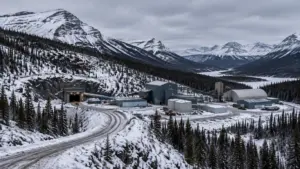
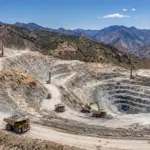
Construction activity at a uranium mine development site in Saskatchewan.
Uranium price forecast 2026: base, bull and bear cases
The most balanced outlook is for a firm but volatile market rather than an uninterrupted price surge.
| Scenario | Spot-price range | Main assumptions |
|---|---|---|
| Bear case | US$65–75/lb | Faster mine restarts, stronger secondary supply and weaker utility contracting |
| Base case | US$85–105/lb; average near US$92/lb | Kazakhstan meets its plan, Cameco remains disciplined and contracting builds gradually |
| Bull case | US$115–150/lb | Major production disruptions, project delays, geopolitical restrictions or accelerated reactor demand |
Base case
The base case keeps spot prices anchored in the high-US$80s to low-US$100s. Kazakhstan contributes more production, but Cameco and other producers remain selective. Utilities continue to sign contracts, supporting term pricing around or above current levels without triggering an immediate spot-market panic.
This scenario is consistent with a market where the deficit is increasingly visible but still managed through inventories, secondary supplies and staggered procurement.
Bull case
The bull case depends on a supply disruption rather than AI demand alone. Kazakhstan could face operational or chemical-input constraints, while Canadian projects could experience construction delays. Restrictions affecting Russian-linked conversion or enrichment services could also force utilities to compete for alternative supply.
In that environment, the term premium could widen further as utilities bid for secure pounds. Spot prices would likely respond more sharply once inventories became uncomfortable.
Bear case
The bear case requires a faster supply response than current project timelines suggest. Idled mines would need to restart smoothly, Kazakhstan would need to sustain higher output, and utilities would need to delay or reduce contracting.
A weaker global economy could also moderate electricity-demand growth, although nuclear fuel demand is less sensitive to short-term industrial cycles than many base metals.
What mining decision-makers should monitor
For operators, investors and policymakers, four indicators deserve close attention:
- The term–spot spread: A widening spread would indicate increasing concern about future fuel availability.
- Utility contracting volumes: New contracts are a more durable demand signal than short-term spot-market activity.
- Cameco’s production and delivery decisions: Any move toward higher output would test the company’s supply-discipline strategy.
- Kazakhstan’s quarterly production and logistics: Higher output can ease the market, but sustained operational constraints would quickly reverse that effect.
The 2026 uranium market is therefore defined by timing. Spot prices remain below the term market, while future nuclear demand continues to gain support from reactor life extensions, new builds and AI power procurement. Rook I and Phoenix may eventually add meaningful Canadian supply, but they cannot solve the near-term contracting challenge.
For now, the most defensible uranium price forecast 2026 is a base case in the high-US$80s to low-US$100s for spot, with long-term contracts remaining above spot. The market’s next decisive move will depend less on the headline AI narrative than on whether new supply arrives before utilities’ future fuel requirements become immediate procurement obligations.
Related Skillings coverage: Uranium price forecast 2026: drivers, risks, base, bull and bear case, critical minerals supply chain 2026, and copper price forecast 2026.