By Penny Langford

The global uranium market in 2026 has entered a phase of structural transformation, driven by a convergence of geopolitical necessity, the rapid scaling of artificial intelligence (AI) infrastructure, and a fundamental shift in nuclear regulatory policy across Europe and Oceania. As utilities confront thinning inventories and a projected U.S. import dependency of 84% by 2027, the focus has shifted from short-term spot volatility to long-term supply security.
The narrative for 2026 is no longer just about the recovery from the post-Fukushima slump; it is about the "double squeeze" of rising baseload requirements for data centers and the commercial debut of Small Modular Reactors (SMRs). With primary production still lagging behind global consumption, the industry is closely watching new domestic projects and international legislative changes to bridge the widening gap.
Uranium price forecast 2026: Drivers and cases
Market analysts and financial institutions have refined their price expectations as the 2026 fiscal year progresses. The consensus reflects a market that has effectively found a new floor, far above historical averages.
Base case: $90–$120/lb
The base-case scenario for 2026 centers on a spot price range of $90 to $120 per pound. This is supported by steady utility contracting and the gradual integration of new supply from projects like UEC’s Burke Hollow in Texas and the maintained production guidance from Cameco’s Cigar Lake. While these projects add much-needed pounds, they are largely absorbed by the expiration of legacy low-cost contracts, forcing utilities to buy at higher current market rates.
Bull case: $130–$150/lb
A bull-case surge toward $150 per pound remains a distinct possibility if supply-side risks materialize. Key triggers include potential logistics disruptions in Central Asia or a faster-than-anticipated Final Investment Decision (FID) on a fleet of SMRs, which would require significant initial core loads. Furthermore, if the industry sees a repeat of the 2024–2025 acid shortages in Kazakhstan, the resulting deficit could trigger "panic buying" among Western utilities.

Bear case: $60–$90/lb
A retracement to the $60–$90/lb range would require a combination of factors: a major global economic slowdown reducing electricity demand, significant delays in reactor life-extension programs, and a smoother-than-expected production ramp-up from secondary suppliers. Currently, most analysts view this as the least likely scenario given the structural supply deficit.
Domestic revival: UEC’s Burke Hollow and the US ISR surge
One of the most significant developments in the 2026 cycle is the commencement of operations at Uranium Energy Corp’s (UEC) Burke Hollow In-Situ Recovery (ISR) mine in South Texas. This marks the first operational ISR uranium mine startup in the United States for the current cycle.
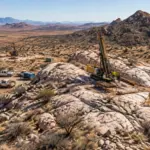
Burke Hollow is projected to contribute approximately 2.5 million lbs/year at full capacity. When combined with other emerging domestic projects, this represents a projected 12% increase in domestic production by 2027. This domestic surge is critical as the U.S. remains heavily reliant on foreign sources, with import dependency projected to reach 84% by 2027.

In Wyoming, the uranium sector is also expanding. State miners are increasingly seeking to expand aquifer drilling to tap into deeper or previously bypassed deposits. These ISR methods are favored for their lower surface footprint and cost-efficiency, which Goldman Sachs estimates could allow 8–12 additional ISR projects to reach operating status by 2028, provided Burke Hollow and other early movers hit their initial production targets.
Global regulatory shifts: Sweden and Australia pivot
Beyond North America, regulatory barriers that once stifled the uranium industry are beginning to fall. These shifts are fundamental to the mining M&A deals and exploration activity projected for the late 2020s.
Sweden: Removing the mining ban
Sweden has enacted landmark amendments to its Nuclear Activities Act, effectively removing uranium mining from the restrictive regulation of nuclear facilities. This move acknowledges uranium as a strategic mineral rather than a radioactive liability. Companies like Aura Energy have welcomed these changes, which pave the way for domestic extraction to support Sweden’s aggressive nuclear expansion plans.
Australia: The India export deal
In Australia, the Minerals Council is intensifying pressure on state governments to lift long-standing uranium mining bans. The primary driver is a potential landmark export deal with India. India has announced plans to expand its clean nuclear energy capacity through 2047, a vision that could drive demand for more than 11,000 tonnes of uranium per year. For Australia, which holds the world’s largest known uranium reserves, lifting these bans is increasingly seen as an economic and geopolitical necessity.

SMR uranium demand 2026: The next wave
Small Modular Reactors (SMRs) are no longer a theoretical demand driver; they are actively reshaping utility procurement strategies. SMRs offer a scalable, carbon-free energy solution for energy-intensive industries, specifically the growing AI and data center sectors.
SMR uranium demand 2026 is characterized by "pre-loading" strategies. Because SMRs require a high-assay low-enriched uranium (HALEU) or specialized fuel forms, the procurement cycle begins years before the first concrete is poured. This creates a "shadow demand" where utilities lock in supply today for reactors coming online in 2028–2030.
The copper price forecast 2026 and the uranium outlook are increasingly linked by this shared driver: the massive electrification required for global AI dominance. As data centers look for 24/7 baseload power, nuclear: and by extension, uranium: is the primary beneficiary.

Market Snapshot: 2026 Uranium Fundamentals
| Metric | 2026 Projection / Status | Impact on Market |
|---|---|---|
| Spot Price Expectation | $85 – $115/lb | Sustained high incentive for new production. |
| US Import Dependency | 84% by 2027 | Drives urgency for domestic ISR projects. |
| India Demand (Target) | >11,000 tonnes/year | Major long-term upward pressure on term pricing. |
| Domestic Supply Growth | +12% (Est. by 2027) | Modest relief from UEC and Wyoming expansions. |
| Cigar Lake (Cameco) | Production Guidance Maintained | Provides stability but no surplus. |
| SMR Status | Early-cycle procurement | Shifts demand curve forward; tightens supply. |
Operational outlook: The 2026 landscape
The restart of several mothballed mines and the maintenance of production at Tier-1 assets like Cigar Lake have provided a baseline of supply, but the market remains fragile. The industry is watching the mining permits reform 2026 efforts in jurisdictions like Canada, which could help bring more high-grade Canadian ore to market more quickly.
For investors and operators, the uranium market outlook 2026 is one of disciplined growth. The "incentive price" required to bring the most difficult projects online is now widely believed to be north of $100/lb. Until that price level is consistently breached in the long-term contract market, the structural deficit is expected to persist.
Conclusion
The 2026 uranium market is characterized by a "new normal" where energy security outweighs price sensitivity. Between the startup of UEC’s Burke Hollow in Texas and the regulatory pivots in Sweden and Australia, the supply side is finally reacting to a decade of underinvestment. However, with India's long-term ambitions and the burgeoning demand from SMRs, the race to secure pounds remains as competitive as ever. The Skillings Mining Intelligence suggests that for the remainder of 2026, the market will remain biased to the upside, as the world relearns the value of reliable, carbon-free baseload power.
Share this update:
The U.S. uranium revival is officially underway as UEC’s Burke Hollow becomes the first ISR startup of the 2026 cycle. With Sweden lifting mining bans and SMR demand accelerating, the nuclear fuel landscape is being redrawn. #Uranium #MiningNews #NuclearEnergy #SMRs #EnergySecurity