By Penny Langford

The global uranium market has transitioned from a period of speculative recovery into a multi-year super-cycle where the primary driver is no longer just sentiment, but operational execution. As of late May 2026, the spot price for U3O8 hovers near $85 per pound, reflecting a structurally tight market defined by a widening supply-demand imbalance. While the narrative of 2023 and 2024 focused on "potential" demand, the uranium market outlook 2026 is now centered on the physical reality of grid stability, the commercialization of advanced reactors, and the massive power requirements of the generative AI revolution.
For operators and investors, the current cycle is characterized by a "flight to execution." The era of cheap, readily available surplus uranium is over. The focus has shifted toward the ability of major producers to meet ramp-up targets and the capacity of Western utilities to de-risk their supply chains away from Russian and Central Asian dependencies. In this environment, the 2026 energy outlook is increasingly dictated by nuclear power’s role as the only scalable, carbon-free source of 24/7 baseload electricity.
The AI-Energy Nexus: A Catalyst for Baseload Demand
The most significant shift in the demand profile over the last 24 months has been the integration of Big Tech into the nuclear ecosystem. Hyperscalers, including Microsoft, Amazon, and Google, have moved beyond traditional renewable energy credits and are now actively pursuing firm, low-carbon power to support their rapidly expanding data center footprints.
Data centers are no longer just consumers of power; they are becoming the anchors of new nuclear development. The AI energy nexus has forced a re-evaluation of grid capacity across the United States and Europe. In 2026, we are seeing the first wave of nuclear-backed Power Purchase Agreements (PPAs) that prioritize reliability over variable cost. This shift is critical because it provides the long-term price signals needed for miners to justify multi-billion-dollar capital expenditures.


Data center infrastructure integrated with high-capacity electrical substations to support AI workloads.

The demand is not merely domestic. Countries like China, India, and Turkey are accelerating their conventional Gen-III reactor builds. According to industry data, global uranium demand is projected to rise by nearly 30% by 2030. For the 2026 window, this translates into a market that remains sensitive to any supply disruption, as utility inventories have been drawn down to decade-low levels.
Supply-Side Realities: The Execution Gap
On the supply side, the "uranium super-cycle" is being tested by the difficulty of bringing new production online. While the uranium price forecast 2026 remains bullish, the actual delivery of yellowcake remains fraught with logistical and permitting hurdles.

Kazatomprom, the world’s largest producer, has faced persistent challenges in 2025 and early 2026 related to the availability of sulfuric acid and supply chain bottlenecks in Kazakhstan. Similarly, Cameco has focused on optimizing its Tier-1 assets, like McArthur River and Cigar Lake, but the industry broadly continues to struggle with an "execution gap": the time between a high-price signal and the arrival of new pounds at the converter.
The bifurcation of the market has also reached a critical stage. Western utilities are increasingly reluctant to sign long-term contracts for material that passes through Russian-controlled enrichment or conversion facilities. This has created a premium for Western-mined and processed uranium, particularly from the Athabasca Basin in Canada and emerging districts in Australia and the United States.
The 2026 P-NAV gap highlights how developers with permitted, near-term production capacity are being valued at significant premiums compared to earlier-stage explorers. In 2026, the market is rewarding the "doers" over the "planners."
SMR Progress: From Blueprints to Concrete
Small Modular Reactors (SMRs) have moved from being a long-term theoretical concept to a tangible part of the 2026 energy strategy. While conventional large-scale reactors remain the backbone of the fleet, SMRs are being deployed as modular solutions for industrial sites and remote data center campuses.
In early 2026, several key milestones were reached, including the NRC's acceptance of commercial microreactor permits. These developments are crucial for the uranium market because SMRs and advanced reactors often require different fuel profiles, including High-Assay Low-Enriched Uranium (HALEU), which adds another layer of complexity and value to the fuel cycle.

Construction of a Small Modular Reactor (SMR) facility highlighting the modularity of modern nuclear infrastructure.
Currently, there are over five major SMR projects globally that have transitioned into the active construction or advanced licensing phase. This progress has de-risked the long-term demand story, ensuring that even as older plants are retired, new, more efficient capacity is coming online to fill the void.
Uranium Market Outlook 2026: Price Forecast and Scenarios
The consensus among market analysts points toward a sustained high-price environment. Based on current macro models from Trading Economics and industry reports from S&P Global, we can define three primary scenarios for the remainder of 2026.
Base Case: $90 – $95 /lb
The market remains in a steady grind higher. Utilities continue to lock in long-term contracts at prices that incentivize brownfield expansions. Supply from Kazakhstan stabilizes but does not exceed prior forecasts. AI demand continues to provide a strong sentiment tailwind.
Bull Case: $110+ /lb
A significant supply disruption: either geopolitical or operational: hits one of the top three producers. Simultaneously, a major hyperscaler announces a direct equity investment in a uranium mine to secure long-term fuel supplies. This leads to a scramble for the limited remaining spot material.
Bear Case: $70 – $75 /lb
A faster-than-expected ramp-up of idled mines in Australia and Namibia, combined with a broader economic slowdown that reduces industrial power demand, leads to a temporary surplus. However, given the multi-decade underinvestment in the sector, this is viewed as a cyclical correction rather than a break in the super-cycle.
Market Snapshot: Uranium Sector Data
| Metric | 2024 Actual | 2025 Estimate | 2026 Forecast |
|---|---|---|---|
| U3O8 Spot Price (Avg) | $88/lb | $82/lb | $92/lb |
| Global Demand (Mlbs) | 185 | 192 | 201 |
| Global Mine Production (Mlbs) | 145 | 158 | 165 |
| Supply Deficit (Mlbs) | (40) | (34) | (36) |
| Secondary Supply Contribution | 22% | 18% | 15% |
Data compiled from S&P Global and Skillings Mining Intelligence internal trackers.
Conclusion: The Era of Execution
As we move through 2026, the "uranium story" is no longer about predicting if a recovery will happen, but about managing the consequences of its arrival. The intersection of carbon neutrality goals, energy security concerns, and the massive power demands of the digital age has placed uranium at the center of the global stage.

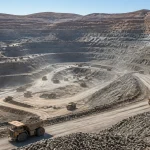
Active extraction operations at a Tier-1 uranium mine site, illustrating the scale required to meet global demand.
For the industry, the challenge for the remainder of the year will be delivery. The transition from speculative interest to operational reality is a difficult one, requiring capital, technical expertise, and favorable regulatory environments. Those companies and jurisdictions that can execute on their production promises will be the ones to define the next phase of this historic super-cycle.
Social Media Snippet (LinkedIn/X)
The Uranium Super-Cycle enters its next phase: Execution. ⚛️
As we hit mid-2026, the narrative has shifted. It’s no longer about "potential" demand: it's about the physical reality of grid stability and the AI-energy nexus. With spot prices targeting the $90+ range and Big Tech signing massive nuclear PPAs, the focus is now on the miners who can actually deliver.
Key Takeaways:
? Baseload Crisis: AI and data centers are pulling nuclear back to the center of energy policy.
? The Execution Gap: Supply remains tight as major producers face logistical bottlenecks.
? SMR Momentum: Projects are moving from blueprints to concrete foundations.
Read our full analysis on the 2026 Uranium Market Outlook: [Link]
#Uranium #Mining #NuclearEnergy #EnergyTransition #SMR #Investing #SkillingsMining