By Charles Pitts
The uranium spot price has officially breached the $150 per pound threshold, marking a historic breakout that has fundamentally shifted the nuclear fuel cycle from a “just-in-time” procurement model to one of strategic national security. As of April 28, 2026, the convergence of aggressive stockpiling by Western nations, the full implementation of Russian import restrictions, and an unprecedented demand surge from AI-driven data centers has created a structural deficit that market analysts believe could persist through the end of the decade.
This price action is not merely a speculative spike; it is the culmination of a multi-year restructuring of global energy supply chains. Since the passage of the Prohibiting Russian Uranium Imports Act in 2024, the industry has been racing to replace the 25–35% of enriched uranium that the U.S. fleet previously sourced from Russia. With the 2026 waiver windows narrowing and the $2.7 billion in federal domestic enrichment funding now reaching the deployment stage, the market is pricing in a future where “friendly” molecules carry a significant premium.
The Rise of Strategic Fuel Reserves
For decades, the nuclear industry operated on thin inventories, relying on a stable global market to provide fuel as needed. That era ended with the realization that fuel security is inseparable from national security. In the first half of 2026, we have seen the emergence of “Strategic Fuel Reserves”: government-backed or mandated stockpiles designed to insulate utilities from geopolitical shocks.
More Read



The United States, through the Department of Energy (DOE), has accelerated its HALEU (High-Assay Low-Enriched Uranium) availability program, essential for the next generation of small modular reactors (SMRs). Simultaneously, China has continued its aggressive build-out of a national uranium reserve, estimated by some analysts to exceed 400 million pounds: enough to fuel its massive domestic expansion for nearly a decade.
This “stockpile race” has effectively removed a significant portion of floating supply from the spot market. When national governments compete with private utilities for the same yellowcake, the floor for prices moves structurally higher.
More Read

The AI-Nuclear Nexus: A New Demand Frontier
While the decarbonization narrative has long supported the nuclear bull case, the 2026 price breakout is being powered by a newer, more aggressive buyer: the hyperscale data center operator.
Following the landmark 2024 deal between Constellation Energy and Microsoft to restart the Three Mile Island Unit 1, other tech giants have followed suit. Amazon, Google, and Meta are no longer just looking for carbon-free energy; they are looking for “always-on” 24/7 baseload power to feed the insatiable energy appetite of generative AI training clusters.
This has led to the AI-Copper-Nuclear nexus, where tech companies are entering into long-term Power Purchase Agreements (PPAs) that often include provisions for fuel security. These companies are effectively outbidding traditional industrial users, further tightening the market.

Supply Constraints: The Hard Reality of Production
Despite the incentive of $150 uranium, bringing new supply online remains a slow and capital-intensive process. The global supply gap in 2026 is exacerbated by several key factors:
- Kazakhstan’s Logistics: Kazatomprom, the world’s largest producer, continues to face headwinds related to sulfuric acid shortages and logistical bottlenecks through the Trans-Caspian International Transport Route. While production is increasing, it has not met the aggressive targets set in 2024.
- African Geopolitics: The ongoing uncertainty in Niger has hampered Orano’s ability to maximize output from the Arlit region, leaving European utilities searching for alternatives in Namibia and Canada.
- Domestic Restarts: In the U.S., companies like Uranium Energy Corp (UEC) have achieved significant milestones. The restart of production at the Burke Hollow ISR project represents a critical step toward domestic self-sufficiency, yet these projects alone cannot fill the multi-million-pound void left by the Russian ban.

Market Snapshot: Uranium Sector Data (April 2026)
The following table outlines the current market conditions compared to the same period in 2025.
| Metric | April 2025 | April 2026 | Change (%) |
|---|---|---|---|
| Uranium Spot Price (U3O8) | $89.50/lb | $151.20/lb | +68.9% |
| Long-Term Contract Price | $82.00/lb | $115.00/lb | +40.2% |
| Global Demand Forecast (2026) | 195M lbs | 212M lbs | +8.7% |
| Identified Supply Gap | 22M lbs | 38M lbs | +72.7% |
| US Enrichment Capacity Utilization | 78% | 94% | +20.5% |
Technological Evolution: The ISR Advantage
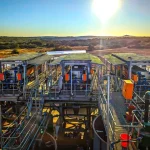
As prices rise, the focus has shifted toward low-cost, environmentally efficient extraction methods. In-situ recovery (ISR) has become the preferred method for many new domestic projects in the Western United States. Unlike traditional open-pit or underground mining, ISR involves circulating oxygenated groundwater through the ore body to dissolve the uranium, which is then pumped to a central processing plant.
This method allows for faster permitting and lower capital expenditures, making it a vital component of the 2026 supply response. However, even with ISR, the timeline and key risks associated with environmental permitting and workforce shortages remain significant hurdles.

2026 Outlook: Base, Bull, and Bear Case
As we look toward the second half of 2026, the trajectory of the uranium market will be dictated by the speed of the Western enrichment build-out and the stability of the remaining Russian waivers.
- Base Case ($140–$160): Prices consolidate at current levels as more ISR production comes online, but supply remains tight enough to prevent any significant drawdown in price.
- Bull Case ($180+): A secondary geopolitical shock: such as further instability in Central Asia or an early revocation of all remaining Russian waivers: sends utilities into a panic-buying phase, pushing prices toward the inflation-adjusted all-time highs of 2007.
- Bear Case ($110–$120): A global economic slowdown reduces industrial electricity demand, and a faster-than-expected ramp-up in Canadian and Australian production eases immediate spot market pressure.
The current environment suggests that the era of “cheap and easy” uranium is over. For operators and investors, the focus has shifted from finding the most pounds to finding the most “secure” pounds. As the Critical Minerals Map for 2026 continues to be redrawn, uranium stands as the cornerstone of the transition to a high-density, carbon-free energy future.