By Penny Langford

As of June 11, 2026, the global energy landscape is witnessing a convergence that few predicted a decade ago: the insatiable appetite of artificial intelligence and the renaissance of nuclear power. While the initial "uranium squeeze" of 2024–2025 focused on supply disruptions and Kazakh production cuts, the 2026 narrative has shifted. Today, the primary driver for long-term contract escalation is the "AI data center premium" and the rapid maturation of Small Modular Reactors (SMRs).
The uranium price forecast 2026 has become a focal point for institutional investors who now view nuclear fuel not just as a commodity, but as the essential infrastructure of the digital age. With spot prices hovering around $85.05/lb and long-term contract prices pushing toward $90/lb, the market is pricing in a future where 24/7 carbon-free baseload power is the world's most valuable asset.
The Data Center Dilemma: Why AI Needs Nuclear
The 2026 demand profile for uranium is being fundamentally reshaped by hyperscalers. Companies like Microsoft, Amazon (AWS), and Alphabet have moved beyond simple renewable energy credits. In the first half of 2026, we have seen a record number of Power Purchase Agreements (PPAs) specifically tied to nuclear restarts and SMR deployments.
The reasoning is simple: AI data centers require massive, constant loads that intermittent sources like wind and solar cannot provide without prohibitive battery storage costs. A single large-scale AI training facility can consume as much electricity as a small city. For these tech giants, nuclear energy provides the only scalable, zero-carbon solution that aligns with their 2030 net-zero mandates.
This corporate demand is creating what analysts call "uncovered requirements" for utilities. According to recent filings, the volume of future uranium needs not yet under contract has hit a 15-year high. Utilities are no longer just buying for their current fleets; they are securing fuel for the next generation of reactors that will power the AI revolution.


SMRs: The "Secret" Catalyst for 2026
While large-scale reactors like those in China and the UAE provide the bulk of global capacity growth, SMRs are the strategic catalyst for the current price targets. In 2026, SMRs have moved from the "pilot project" phase to a viable commercial reality.
These reactors, such as those being developed by NuScale and backed by private equity, offer a smaller footprint and shorter construction timelines than traditional 1GW+ plants. For the uranium market, SMRs represent a high-growth "tail" of demand. Even though their current physical burn is lower than the legacy fleet, they have triggered a race for "fuel security" among Western nations.
The geopolitical bifurcation of the fuel cycle has only intensified this. As Western utilities distance themselves from Russian enrichment and conversion services, the demand for "friendly" uranium has skyrocketed. This has led to a flurry of M&A activity, such as the Cameco and Orano Cigar Lake consolidation, as majors move to secure the highest-grade assets in stable jurisdictions.
Uranium Price Forecast 2026: The Base, Bull, and Bear Case
As we move through the second half of 2026, the market balance remains precarious. Primary production in 2025 reached approximately 173 million lbs, but primary demand has surged to 204 million lbs. This persistent 31 million lb deficit is being filled by dwindling secondary supplies and strategic inventories.
The 2026 Price Target Framework
| Case | Price Target (End of 2026) | Primary Driver |
|---|---|---|
| Bear Case | $75.00 – $80.00 | Rapid production ramp-up in Namibia and Kazakhstan; softening AI demand. |
| Base Case | $92.00 – $95.00 | Steady utility contracting; continued supply-side constraints; modest SMR progress. |
| Bull Case | $110.00 – $125.00 | New geopolitical supply disruptions; massive tech-utility nuclear partnerships; accelerated SMR permitting. |
The consensus among market analysts is that the Base Case is the most likely. Trading Economics models suggest uranium will reach $91.50/lb within the next 12 months, supported by a "wall of demand" that cannot be avoided by late-moving utilities. For a deeper look at the technology driving this shift, see our analysis on Small Modular Reactors and the 2026 uranium outlook.

Supply Chain Realities: Why Mines Can’t Keep Up
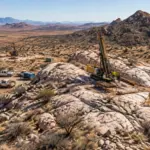
Despite the high prices, bringing new uranium production online remains a multi-year challenge. Exploration breakthroughs are occurring: such as the recent acquisition of 23 breccia pipe targets in Arizona: but the timeline from discovery to "yellowcake in a drum" remains 7 to 10 years in most Western jurisdictions.
Operational hurdles also persist. Labor shortages in skilled mining engineering and the rising cost of specialized equipment have inflated the "incentive price" for new mines. In 2024, many thought $80/lb was the magic number to trigger a supply flood. In June 2026, it appears that $90/lb is the new floor required to justify large-scale capital expenditure in greenfield projects.
Market Snapshot: June 2026
- Spot U₃O₈: $85.05/lb
- Term Contract Price: $90.00/lb
- Global Deficit (Annualized): 31.5 Million lbs
- Operating Reactors: 441
- Reactors Under Construction: 62 (Led by China and India)
Strategic Implications for Investors and Operators
For mining operators, the 2026 environment is one of "maximize and M&A." With valuations for junior explorers often lagging behind the spot price, we expect to see further consolidation as mid-tiers and majors look to replenish their pipelines. This "consolidate or perish" mentality is a hallmark of the 2026 mining M&A supercycle across all critical minerals.
For investors, the key is distinguishing between "story stocks" and companies with a clear path to production. The AI/SMR narrative is powerful, but physical fuel delivery is what drives utility contracts. Companies with permitted projects in Tier-1 jurisdictions (Canada, USA, Australia) are commanding significant premiums as the market prioritizes security of supply over theoretical resources.

Conclusion: The New Nuclear Reality
Uranium is no longer just a "contrarian bet" or a "niche energy play." In June 2026, it has cemented its role as the backbone of the technological frontier. The demand from AI data centers and the logistical advantages of SMRs have created a floor for prices that was unthinkable five years ago.
While volatility will remain a feature of the spot market, the fundamental supply-demand imbalance is too severe for prices to return to historical lows. As utilities move to bridge the "uncovered requirement" gap, the uranium price forecast 2026 points toward a sustained era of high-value nuclear fuel, rewarding those who positioned themselves before the "AI Moment" became mainstream.
About the Author: Penny Langford is a lead market analyst for Skillings Mining Intelligence, specializing in critical minerals, the energy transition, and nuclear fuel cycles.