By Penny Langford
Social Media Snippet (LinkedIn/X):
Consolidation is rewriting the US uranium map. Myriad Uranium's move to 100% ownership at Copper Mountain, Wyoming, marks the first time this high-grade district has been unified in 50 years. With Russian imports banned and domestic demand surging, Wyoming is reclaiming its crown as the heart of US energy security. #Uranium #Mining #EnergySecurity #Wyoming
The transition of the United States toward energy independence has reached a critical inflection point in 2026. As the demand for carbon-free baseload power accelerates: driven largely by the explosive growth of AI-integrated data centers: the spotlight has returned to the vast, windswept plains of Wyoming. Once the dominant producer of domestic nuclear fuel, the state is witnessing a structural renaissance. At the center of this revival is the consolidation of the Copper Mountain district, a move that signals a broader shift in how US uranium assets are being de-risked and prepared for the next decade of production.
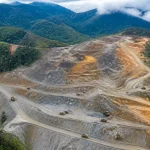
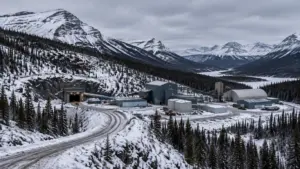
In early 2026, the announcement of the merger between Myriad Uranium and Rush Rare Metals effectively unified the Copper Mountain district for the first time in over half a century. By acquiring Rush’s 25% stake, Myriad now holds 100% control over an 18,351-acre land package that contains some of the most significant historical uranium discoveries in North America. This consolidation is not merely a corporate transaction; it is a strategic realignment that addresses the fragmentation that has hampered the district’s development since the late 1970s.
The Strategic Value of Consolidation
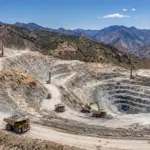
For decades, the Copper Mountain district was a patchwork of claims and interests, a byproduct of the uranium crash that followed the Three Mile Island incident in 1980. Before that downturn, industry giants including Union Pacific and Southern California Edison had invested roughly $125 million (in inflation-adjusted dollars) into the area. They identified multiple deposits and advanced plans for large-scale conventional mining operations.

When the market retracted, those interests were splintered. The Myriad-Rush merger removes the structural discounts typically applied to split-ownership projects. For operators and investors, 100% control means simplified permitting, streamlined exploration logistics, and a clear path toward potential feasibility studies. In a market where uranium prices have broken out past $150/lb, the ability to move quickly from exploration to development is a primary competitive advantage.

Historical Foundations and Modern Estimates
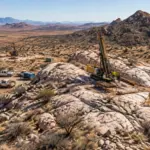
The Copper Mountain project is built on a foundation of extensive historical data. Between the 1950s and the 1970s, more than 2,000 boreholes were drilled across the property. The Arrowhead Mine, a historical producer on the site, yielded approximately 500,000 pounds of uranium oxide (U₃O₈) before operations ceased.
Current analysis by Myriad Uranium, backed by a technical report filed in April 2026, points to a substantial historical resource estimate. Across seven identified deposits: including the massive Canning deposit: the area is estimated to hold between 16.5 million and 26.7 million pounds of uranium.
| Project Metric | Detail (As of May 2026) |
|---|---|
| Total Area | 18,351 Acres (7,426 Hectares) |
| Claims | 966 Unpatented Federal Lode Claims |
| Historical Production | ~500,000 lbs U₃O₈ (Arrowhead Mine) |
| Historical Estimates | 16.5M – 26.7M lbs U₃O₈ |
| Current Ownership | 100% Myriad Uranium |
| Active Drill Program | 4,500 Meters (Stage 2) |
These figures place Copper Mountain among the most significant "ready-to-work" districts in the United States. Unlike greenfield projects that require years of grassroots exploration, the challenge at Copper Mountain is one of validation and expansion.
Validating the "World-Class" Address
The 2026 exploration season is already underway. Myriad’s Stage 2 drilling program, consisting of 4,500 meters, is designed to test these historical estimates and explore deeper mineralization that was previously overlooked. This follows a maiden drill program in late 2025 that, according to Myriad CEO Thomas Lamb, surpassed expectations and confirmed the high-grade nature of the sandstone-hosted deposits.

The focus of the current program extends beyond the Canning deposit. Prospect areas such as Mint/Allard, Midnight, and the Bonanza Trend are being re-evaluated using modern geophysical surveys that were unavailable to Union Carbide and other 1970s-era explorers. The goal is to build a cohesive geological model that supports a district-scale mining operation rather than a series of disconnected pits.
The US Supply Map and Geopolitical Drivers
The consolidation in Wyoming cannot be viewed in isolation from the geopolitical climate. The US ban on Russian uranium (H.R. 1042) has fundamentally altered the domestic supply map. With Russia previously supplying nearly 20% of the enriched uranium used by the US nuclear fleet, the industry is now in a race to secure domestic feedstocks.
This policy shift has turned projects like Copper Mountain from "speculative exploration" into "strategic reserves." The US government has signaled increased support for domestic mining through various incentives aimed at critical minerals and energy security. As noted in recent Skillings Mining Review analysis, the intersection of government policy and junior mining activity is creating a floor for valuations that did not exist five years ago.

Wyoming’s Infrastructure Advantage
One of the primary reasons Wyoming remains the epicenter of the US uranium renaissance is its existing infrastructure and regulatory clarity. Unlike other jurisdictions that may face prolonged legal challenges or lack specialized labor, Wyoming has a long-standing history of uranium mining. The state’s "Agreement State" status with the Nuclear Regulatory Commission (NRC) allows for a more streamlined permitting process for certain types of extraction.
Furthermore, the proximity to existing processing facilities and a workforce trained in heavy industrial operations provides a "plug-and-play" environment for companies like Myriad. As the industry looks to address the looming deficit in critical minerals, the speed to market offered by Wyoming’s ecosystem is a major factor in project viability.
2026 Market Outlook and Beyond
The outlook for the remainder of 2026 remains bullish for domestic uranium operators. Market intelligence suggests that several long-term contracts between utilities and producers are nearing expiration, forcing a return to the spot market where prices have remained buoyant.
The consolidation of the Copper Mountain district serves as a bellwether for the industry. It reflects a maturing market where junior miners are moving past the "land grab" phase and into the "operational efficiency" phase. For investors, the focus has shifted from who owns the most ground to who has a unified, high-grade district with a clear path to production.

As Myriad Uranium continues its Stage 2 drilling and moves toward an updated resource statement, the results will be closely watched by those looking to gauge the strength of the US domestic supply chain. The renaissance in Wyoming is no longer a future possibility; it is a present reality, driven by a combination of historical geological wealth and modern strategic necessity.
The Copper Mountain district, unified for the first time in 50 years, stands as a testament to the resilience of the Wyoming mining sector and its indispensable role in the US energy future.
Skillings Mining Review has been the trusted voice of the mining industry since 1912. For more in-depth analysis of the uranium market and other critical minerals, explore our About Us page or subscribe to our daily market intelligence.