The mining industry is full of projects that look spectacular on a PowerPoint slide but wither under the heat of a Definitive Feasibility Study (DFS). It is the stage where “geological potential” meets “financial reality.” For the Kingking Copper-Gold Project in the Philippines, that reality just got a $2.37 billion price tag and a world-class engineering partner to back it up.

Stantec, a global leader in integrated infrastructure and mining solutions, has been selected to lead the DFS for what is shaping up to be one of the most significant copper-gold developments in Southeast Asia. This isn’t just another technical report. It is the final blueprint for a project that aims to produce 4.4 billion pounds of copper and nearly 7 million ounces of gold over a 38-year lifespan.
In a world obsessed with the energy transition, assets of this scale are no longer optional: they are essential. But as we have seen in other jurisdictions, having the ore in the ground is only half the battle. Executing at this scale requires more than just a shovel; it requires a surgical approach to infrastructure and logistics.
The Brutal Reality of the Copper Gap
Most analysts like to talk about the “copper crunch” as if it is a simple mathematical deficit that can be solved by turning a dial. It isn’t. The industry is facing a structural crisis where the demand for electrification is colliding with the exhaustion of Tier-1 assets and a decades-long drought in major discoveries.
The copper price forecast for 2026 suggests we are heading toward a $13,000 milestone, driven by exactly this kind of structural deficit. Projects like Kingking are the industry’s answer to that pressure. With total reserves estimated at 960 million tonnes, Kingking isn’t just a regional play; it’s a global heavyweight.
More Read

During the first five years of operation alone, the project is expected to average 284 million pounds of payable copper and 333,000 ounces of payable gold annually. That would position it as one of the top 10 copper-producing mines on a copper-equivalent basis worldwide. That’s not a rounding error. That’s a cornerstone asset.


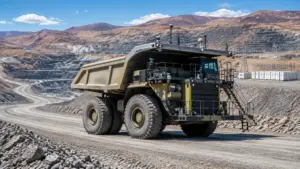
Modern mineral processing plant facilities are essential for handling the 960 million tonnes of reserves projected at Kingking.
Stantec’s Mandate: Pit-to-Port Integration
The selection of Stantec to lead the DFS is a strategic signal to the markets. St. Augustine Gold and Copper, the project’s developer, isn’t just looking for a resource estimate. They need an integrated “pit-to-port” solution.
More Read
The Kingking project, located in Pantukan, Davao de Oro, faces the classic challenges of large-scale mining in the Pacific: high rainfall, complex topography, and the need for robust logistics to move concentrate to global markets. Stantec’s role involves designing the entire ecosystem, from the open-pit mine and processing facilities to the port infrastructure required for export.
This integrated approach is becoming the gold standard for projects in frontier or emerging jurisdictions. You cannot build a world-class mine and then figure out the logistics as an afterthought. You design for the exit. For Kingking, that means ensuring that the 4.4 billion pounds of copper can actually reach the smelters that are starving for feed.
The Economics: A $4.18 Billion Bet
The numbers coming out of the updated Preliminary Feasibility Study (PFS) published in mid-2025 are, frankly, aggressive. We are looking at an after-tax Net Present Value (NPV) of $4.18 billion at a 7% discount rate.
The Internal Rate of Return (IRR) stands at 34.20%, with a payback period of just 1.9 years. In an industry where 10-year payback periods are common for massive infrastructure bets, a sub-two-year window is an anomaly. It reflects the high-grade nature of the early years of the mine plan and the significant gold credit that helps offset the $2.37 billion initial capital expenditure.
But let’s be clear: $2.37 billion is a massive hurdle. This isn’t a “junior” project in the traditional sense; it is a major industrial undertaking. Beyond the initial build, another $798 million in sustaining capital is projected over the 38-year life of the mine. This is a multi-generational asset.

Navigating the Philippine Mining Landscape
The Philippines has long been a “sleeping giant” in the mining world. It has some of the highest mineral densities on the planet, yet its mining industry has been hamstrung for years by regulatory uncertainty and policy shifts.
That narrative is changing. The Kingking project has been listed as a top priority by the Philippine Mines and Geosciences Bureau. It already holds its Environmental Compliance Certificate (ECC) and a Declaration of Mining Project Feasibility (DMPF). Crucially, it has secured Free and Prior Informed Consent (FPIC) from the indigenous communities in the Pantukan area.
In 2026, social license is just as important as the grade of the ore. Without it, you don’t have a mine; you have a lawsuit. The fact that Kingking has cleared these hurdles before the DFS is even completed is a massive de-risking event.
However, we have seen this story before. The road from a “priority project” to a producing mine in the Philippines is rarely a straight line. Investors are watching closely to see if the current administration maintains its pro-mining stance as the project moves toward its final investment decision (FID).
Technical Sophistication and Water Management
One of the most overlooked aspects of massive copper projects is water. While the Philippines doesn’t face the same “Andean thirst” seen in the deserts of Chile and Peru, managing water in a tropical environment is a different kind of nightmare. It’s about volume and quality, not just scarcity.
The industry is learning that desalination and advanced water management are not just for the desert; they are part of a broader trend toward water security in mining. Stantec’s design will have to account for the massive rainfall and potential seismic activity of Mindanao, ensuring that tailings storage and waste management meet modern ESG standards.

The Gold Factor: Financing the Copper
While the world is screaming for copper, the gold at Kingking is what makes the economics sing. With 6.9 million ounces in reserves, the project is essentially a world-class gold mine that happens to produce a massive amount of copper.
In the first five years, the project will rank as one of the top 25 gold producers globally. This gold production acts as a natural hedge. When copper prices fluctuate: and they will: the gold credits significantly lower the C1 cash costs, making the project resilient to commodity price cycles.
This “bi-metallic” advantage is exactly what makes Kingking attractive to the majors. We are currently seeing a consolidation in the industry where copper-gold porphyries are the primary targets for M&A.
2026 Outlook: The Road to Production
The DFS is the final bridge. Once Stantec delivers the study, the focus shifts to financing and construction.
The strategic calculus here isn’t subtle:
- Reserves: 960 Mt.
- Life of Mine: 38 years.
- Payback: Under 2 years.
- Geography: Priority status in the Philippines.
But the challenges remain. Building a $2.3B project in a remote part of Mindanao requires a Herculean effort in workforce mobilization and supply chain management. The industry is currently struggling with a skilled labor shortage that has delayed projects from Panama to Perth.

Core samples showing the mineralization of copper-gold porphyry deposits, representing the underlying value of the Kingking reserves.
The Bottom Line
The Kingking project is no longer a “maybe.” With Stantec leading the DFS and the Philippine government providing tailwinds, it is moving into the execution phase.
For the broader market, this is a litmus test. If Kingking can be successfully financed and built, it will signal a new era for Philippine mining. If it gets bogged down in technical or regulatory delays, it will reinforce the skeptics’ view that these “world-class” deposits are better left in the ground.
The data points to a massive win, but as any seasoned mining executive will tell you: the rocks don’t lie, but the infrastructure usually does. Stantec’s job is to ensure the infrastructure is as solid as the geology.