The mining industry isn’t just digging holes anymore: it’s rewriting its entire playbook. Right now, 85% of top North American mining and minerals organizations publicly disclose their ESG and sustainability performance data. That’s not a PR stunt. That’s a fundamental shift in how this sector operates, attracts capital, and earns its social license to exist.

For decades, mining companies could largely ignore the environmental mess they left behind and the communities they displaced. Those days are done. Investors, regulators, and the communities living next to mine sites have all figured out the same thing: extraction without accountability is a liability waiting to explode.
So here’s your crash course on sustainable mining and why ESG has become the non-negotiable baseline for anyone serious about the industry’s future.
What ESG Actually Means in the Mining Context
ESG stands for Environmental, Social, and Governance: three interconnected pillars that basically ask: are you wrecking the planet, treating people fairly, and running your company with integrity?
In mining, these aren’t abstract corporate buzzwords. They translate into very concrete operational realities.
More Read



Environmental covers everything from carbon emissions and water usage to biodiversity protection and land rehabilitation. Mining operations consume enormous amounts of water and energy. They disrupt ecosystems. The environmental pillar forces companies to measure, report, and actually reduce these impacts: not just apologize for them later.
Social means engaging with indigenous communities, respecting human rights, ensuring worker safety, and contributing meaningfully to local economies. Mining operations often exist in remote areas where companies become de facto governments. The social pillar demands they take that responsibility seriously.
More Read

Governance addresses transparency, ethical decision-making, and regulatory compliance. This is where you catch the bribery, the accounting tricks, and the board-level negligence that creates disasters.
None of these operate in isolation. A company with great environmental practices but terrible community relations will still face protests, lawsuits, and operational shutdowns. ESG works as a system or not at all.
The Tailings Problem Nobody Can Ignore
If you want to understand why sustainable mining matters, start with tailings.
Tailings are the waste materials left over after ore processing: a slurry of water, chemicals, and fine particles that gets stored behind massive dams. When these dams fail, the results are catastrophic. The 2019 Brumadinho disaster in Brazil killed 270 people when a tailings dam collapsed without warning. That single event rewrote global expectations for mine safety standards practically overnight.

The industry now operates under intense scrutiny regarding tailings management. The Global Industry Standard on Tailings Management (GISTM), developed after Brumadinho, requires independent reviews, enhanced monitoring, and emergency preparedness plans that actually work.
Here’s the uncomfortable truth: there are thousands of tailings facilities worldwide, many built decades ago using engineering standards we’d now consider reckless. Bringing these up to modern mine safety standards costs billions. But the alternative: another dam collapse with communities downstream: costs far more in lives, lawsuits, and the industry’s remaining credibility.
Companies that take tailings management seriously aren’t just being good corporate citizens. They’re protecting themselves from existential risk.
Why Investors Suddenly Care About Trees and Community Meetings
Follow the money, and you’ll understand ESG’s rapid adoption.
Major institutional investors: pension funds, sovereign wealth funds, the asset managers controlling trillions in capital: have decided that ESG performance predicts long-term financial returns. A mine that poisons its local water supply will eventually face regulatory shutdown, litigation, and reputational damage that destroys shareholder value. Better to invest in companies that avoid those outcomes entirely.
BlackRock, the world’s largest asset manager, has been explicit about this. So have the major banks that finance mining projects. If you can’t demonstrate credible ESG performance, good luck raising capital at competitive rates.
This isn’t just pressure from Western institutions either. China’s Belt and Road Initiative has started incorporating sustainability requirements into its overseas mining investments. The expectation of responsible operations is going global.
The Frameworks That Actually Matter
Saying “we care about sustainability” means nothing without measurement and accountability. That’s where standardized frameworks come in.

Towards Sustainable Mining (TSM) is probably the most rigorous standard specific to the mining sector. Developed by the Mining Association of Canada, TSM requires participating facilities to assess and publish their performance annually against specific indicators. It covers tailings management, biodiversity conservation, energy and emissions management, indigenous relations, and community outreach. The assessments are externally verified, and poor performers get called out publicly.
The Global Reporting Initiative (GRI) provides a broader sustainability reporting framework used across industries. Mining companies use GRI standards to disclose everything from water withdrawal to labor practices in a format that allows comparison across companies and sectors.
The Sustainability Accounting Standards Board (SASB) takes a more investor-focused approach, identifying the ESG factors most likely to affect financial performance in specific industries. For metals and mining, SASB highlights greenhouse gas emissions, energy management, water management, waste and hazardous materials, workforce health and safety, and community relations as material issues.
Then there are the UN Sustainable Development Goals (SDGs), which provide a high-level framework connecting corporate activities to broader global objectives like clean water, decent work, and climate action.
Smart mining companies use multiple frameworks simultaneously: TSM for operational specifics, GRI for comprehensive disclosure, SASB for investor communications, and SDGs for strategic alignment.
What Good ESG Performance Actually Requires
Let’s get practical. Sustainable mining isn’t achieved through annual reports and corporate pledges. It requires fundamental changes in how mines operate day-to-day.
Water stewardship means closed-loop systems that recycle process water, real-time monitoring of discharge quality, and engagement with local communities about shared water resources. In water-stressed regions: which is where many mines operate: this becomes a matter of operational survival.
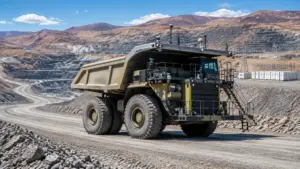
Emissions reduction requires electrification of mining fleets, renewable energy procurement, and efficiency improvements across operations. Some companies are targeting net-zero emissions by 2050. Others are already using solar-powered equipment and battery-electric haul trucks.
Biodiversity protection involves baseline assessments before mining begins, progressive rehabilitation during operations, and long-term monitoring after closure. The goal isn’t zero impact: mining inherently disturbs land: but minimized, mitigated, and offset impact.
Community engagement means free, prior, and informed consent from indigenous peoples, benefit-sharing agreements that actually deliver economic value to local residents, and grievance mechanisms that communities trust to resolve disputes fairly.
Safety culture requires leading indicators, not just lagging ones. How many near-misses were reported and investigated? How many safety observations were made by workers? These metrics predict whether a mine will have a fatality, not just record one after it happens.
The Business Case Beyond Compliance
Here’s where it gets interesting. Companies that genuinely embrace sustainable mining often discover operational benefits they didn’t expect.
Energy efficiency investments reduce costs. Water recycling decreases dependence on increasingly scarce freshwater sources. Strong community relations prevent the work stoppages and protests that can shut down operations for months. Good governance catches problems before they become crises.

There’s also the talent question. The next generation of mining engineers, geologists, and executives increasingly wants to work for companies they’re proud of. Organizations with strong ESG performance have an easier time recruiting and retaining skilled workers in a competitive labor market.
And increasingly, customers care too. Automakers sourcing battery metals, electronics manufacturers buying copper, and construction companies purchasing steel all face their own sustainability pressures. They want supply chains they can defend publicly. Mining companies that can demonstrate responsible practices become preferred suppliers.
Where the Industry Goes From Here
ESG in mining isn’t a fad. The regulatory environment continues to tighten worldwide. The European Union’s sustainability taxonomy, proposed SEC climate disclosure rules in the United States, and similar initiatives in Canada, Australia, and beyond are hardcoding ESG expectations into legal requirements.
The mining industry will always involve extracting finite resources from the earth. That tension between extraction and sustainability will never fully resolve. But the companies that thrive in the coming decades will be those that minimize their footprint, engage authentically with communities, and operate with the kind of transparency that builds trust rather than eroding it.
For anyone entering or investing in the mining sector today, understanding ESG isn’t optional; it’s foundational. The new industry standard demands nothing less.
For more coverage of mining industry trends and sustainability developments, explore our latest articles and news coverage.
By Penny Laneford and Salini Krishnan