Washington isn't playing around anymore. After years of critical minerals task forces, white papers, and congressional hearings that produced more talk than tonnage, the federal government has shifted into capital deployment mode. Real dollars. Real timelines. Real consequences for anyone who assumed permitting reform was dead in committee.

The numbers tell the story: $10 billion in EXIM financing for mineral stockpiles, $2.5 billion for a strategic reserve mechanism that looks like it might actually work, and over $2 billion in graphite project commitments. That's just the headline stuff. Underneath sits a sprawling multi-agency architecture designed to route federal capital through five different pathways, reducing the single-point failure risk that's killed projects before.
This isn't stimulus. It's strategic repositioning. And it's happening faster than most mining executives expected.
The Funding Landscape: Where the Money's Going
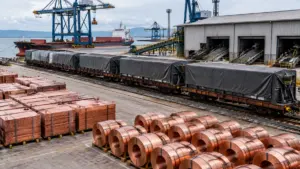
Project Vault represents the clearest signal yet that the U.S. government views mineral security as a financing problem, not just a policy problem. The Export-Import Bank committed $10 billion in loan guarantees, paired with $2 billion in private co-financing, to stockpile cobalt, lithium, and other battery metals. That's real balance sheet capacity aimed at smoothing supply volatility while establishing a Western price benchmark that isn't tied to Chinese spot markets.
The structure matters. EXIM financing traditionally funds exports. Using it for strategic stockpiling represents a material reinterpretation of the agency's mandate, one that required explicit White House backing. The message to miners: if you're producing in allied jurisdictions and willing to sell into U.S.-controlled offtake, there's patient capital available at rates commercial banks won't touch.


Then there's the Strategic Resilience Reserve, introduced in January 2026 with rare bipartisan support. The $2.5 billion authorization allows the federal government to purchase critical minerals above prevailing market prices during supply crunches and recycle the proceeds from eventual resale back into new purchases. It's a price stabilization mechanism dressed up as a reserve program, designed to prevent the boom-bust cycles that throttle long-term mine investment.
The political calculus isn't subtle. Democrats get supply chain resilience and climate-critical materials secured. Republicans get mining jobs and reduced dependence on adversarial nations. Everyone gets to claim they're outcompeting China.
Graphite financing through EXIM tells you which commodities Washington thinks are under-supplied. Letters of Interest totaling $2.07 billion: $670 million for Graphite Creek in Alaska, $1.4 billion for advanced graphite materials manufacturing in Ohio: represent the largest single-commodity federal commitment outside uranium. Graphite doesn't get headlines like lithium, but it's the silent bottleneck in every battery supply chain model. China controls 70% of natural graphite and 100% of the spherical graphite coating process. The U.S. has exactly zero domestic production at commercial scale. These commitments aim to change that by 2028.
The Department of Energy added $134 million specifically for rare earth element supply chains, targeting separation and processing rather than mining. That's a deliberate choice. The U.S. has rare earth deposits. What it lacks is the midstream infrastructure to convert concentrate into separated oxides without shipping material to China. This funding prioritizes the chokepoint, not the front end.
Policy Shifts That Actually Accelerate Timelines
Two structural changes are compressing project development cycles in ways that matter more than dollar figures.
Uranium's late-2025 designation as a Critical Mineral wasn't just symbolic. It unlocked preferential financing through the Loan Programs Office, streamlined environmental review under NEPA fast-track provisions, and opened eligibility for Defense Production Act Title III funding. More importantly, it signaled to utilities and reactor developers that fuel procurement is now a White House priority, not just an industry problem.

The immediate impact: utilities that underbought uranium in 2025: contracting only 75 million pounds against 185 million pounds in annual requirements: are now scrambling to lock in long-term supply before the Section 232 review in Q2 2026 potentially triggers import restrictions or tariffs. That's not speculative demand. That's unavoidable catch-up buying compressed into 18 months.
The multi-agency funding architecture is the quiet revolution. Instead of forcing every project through a single approval pathway, the federal government is now deploying capital through five parallel channels: Department of Energy (Loan Programs Office), Department of Defense (DPA Title III), Department of Commerce, USDA Rural Development, and the International Development Finance Corporation, plus EXIM. Each agency has different mandates, risk tolerances, and approval timelines.
What that means in practice: if your rare earth project doesn't fit DOE's technology-focused criteria, you can pivot to DFC if you're developing in an allied nation, or Commerce if you're focused on domestic processing. The bureaucratic bottleneck hasn't disappeared, but it's no longer a single chokepoint.
This approach also sidesteps the permitting reform stalemate in Congress. You don't need new legislation if you're just reinterpreting existing agency authorities more aggressively. It's faster and politically less fragile.
Near-Term Winners and Losers
Winners:
Advanced-stage projects with defined resources, completed feasibility studies, and jurisdictional stability suddenly have multiple financing options where six months ago they had zero. If you're a rare earth developer in Australia or graphite project in Alaska with your environmental permits in hand, 2026 is your year. Federal capital is hunting for deployment targets, and the traditional commercial bank hesitation around mining doesn't apply when EXIM or the Loan Programs Office is backstopping credit risk.

Uranium producers with existing capacity and near-term expansion plans are already seeing the contracting surge. Utilities can't wait for 2030 reactor builds to start securing fuel. They're negotiating 10-year offtake agreements now, often at floor prices that guarantee production economics even if spot markets soften. That certainty is worth more than any spot price spike.
Domestic processing and separation plays: anything that takes critical mineral concentrate and turns it into battery-grade or defense-spec material: are suddenly viable. The federal funding bias is clear: Washington will finance midstream infrastructure that eliminates Chinese dependencies faster than it will finance new mines. If your business model is "we take rare earth concentrate from Mountain Pass and turn it into separated oxides in Texas," you're exactly what these programs are designed to support.
Losers:
Early-stage exploration projects without resources or pre-feasibility studies are still locked out. Federal capital might be more available, but it's not indiscriminate. You need to be shovel-ready or very close to it. If you're still drilling targets and hoping to ride a commodity bull market into financing, these programs don't help you.
Projects in jurisdictions with unstable permitting regimes or rising resource nationalism are effectively disqualified from U.S. government-backed financing. The International Development Finance Corporation will fund projects in allied nations, but "allied" is increasingly narrowly defined. If your mine is in a country that's hedging between Washington and Beijing, expect to compete for capital without federal support.
Conventional lenders and private equity funds that were positioning to fill the critical minerals financing gap are now competing with subsidized federal capital that doesn't require the same returns. That squeezes their opportunity set and forces them either toward riskier projects or earlier-stage deals where federal programs won't go.
Key Takeaways
-
$15+ billion in federal commitments across stockpiling, reserves, and project-specific financing represents a material escalation from policy statements to balance sheet deployment, with EXIM, DOE, and DFC leading capital allocation.
-
Uranium's Critical Mineral designation unlocked fast-track permitting and preferential financing, while utilities' 110-million-pound supply gap for 2026-2027 is forcing immediate long-term contracting at prices that support new production.
-
Multi-agency funding pathways (DOE, DoD, Commerce, DFC, EXIM) reduce single-point approval failures and allow projects to match financing sources to their specific development stage and jurisdiction.
-
Midstream processing infrastructure (graphite coating, rare earth separation, lithium refining) is receiving disproportionate federal support because it eliminates Chinese dependencies faster than new mine development.
-
Advanced-stage projects in stable jurisdictions with completed feasibility studies now have access to patient federal capital at rates commercial lenders won't offer, compressing traditional financing timelines by 12-18 months.
What to Watch This Week
Section 232 uranium review expected by end of Q2 2026 could trigger import restrictions or tariffs on Russian and Chinese uranium, accelerating domestic and allied procurement. Any leaked details will move spot prices immediately.
Graphite Creek Alaska permitting decision from the Bureau of Land Management is due before March 2026. A positive decision paired with the $670 million EXIM commitment would make it the first commercial-scale natural graphite mine in U.S. history. Rejection would force the entire $2 billion in graphite commitments to pivot toward synthetic production, which costs 3-4x more.
Rare earth separation facility announcements tied to the $134 million DOE funding. Watch for site selections and offtake partnerships with defense contractors. Any project that can credibly claim "domestic rare earth oxides by 2028" will get strategic interest from both commercial and government buyers.
Strategic Resilience Reserve implementation details, particularly purchase price mechanisms and commodity eligibility. If cobalt and lithium get included with favorable pricing floors, it materially changes the economics of North American battery metal projects. The first purchases under this program will set precedent for the next decade.
The federal government has moved from identifying critical mineral dependencies to actively financing their elimination. Projects that align with that agenda and can move fast are entering a fundamentally different capital environment. The clock is already ticking on first-mover advantage.
For context on how export restrictions are reshaping global supply chains, see our analysis of rare earth export controls. For more on the policy dollars behind the rhetoric, see the U.S. government’s $1.6B rare earths push. And as federal funding drives consolidation among U.S. developers, our mining M&A trends 2026 outlook breaks down what buyers are paying for, and why.